DCPulse
Artificial intelligence is changing how data centers are designed, built, operated, and expanded. The rapid development of AI models and the growing demand for high-performance computing are placing greater demands on the physical infrastructure that supports digital services. As a result, infrastructure literacy is becoming an increasingly important capability for organizations across the data center ecosystem.
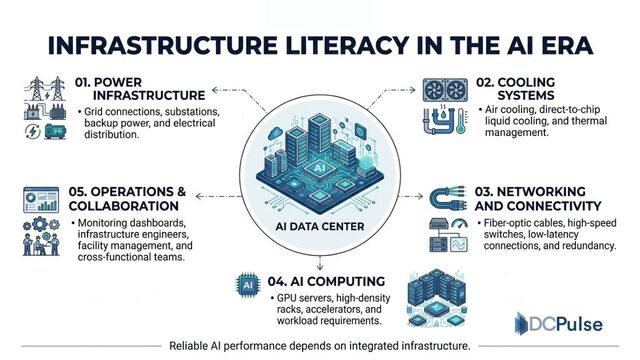
Infrastructure literacy refers to the ability to understand how computing systems interact with power distribution, cooling, networking, physical facilities, energy supply, and operational processes. In the AI era, this knowledge extends beyond traditional IT expertise. Data center operators, cloud providers, technology companies, developers, and infrastructure investors increasingly need to understand how decisions in one part of the system affect the performance and reliability of the entire facility.
The importance of this understanding is growing as AI workloads introduce new requirements for computing density, energy consumption, thermal management, and connectivity. A data center is no longer simply a building filled with servers. It is an integrated infrastructure environment in which digital performance depends on the coordination of physical, electrical, mechanical, and computational systems.
AI Workloads Are Changing Data Center Requirements
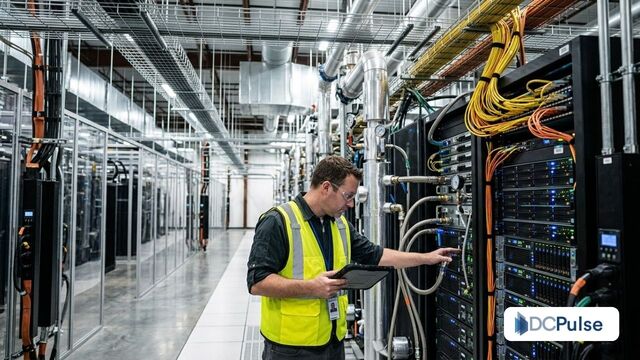
Traditional enterprise computing and many cloud workloads have operated within established infrastructure designs. AI training, inference, and high-performance computing can introduce different demands, particularly when large numbers of accelerators operate together.
These workloads can require substantial power delivery, high-bandwidth networking, and cooling systems designed to manage concentrated heat. The infrastructure requirements also vary according to the type of AI application, the computing hardware involved, and the operating profile of the workload.
Infrastructure literacy helps organizations understand these differences before committing to facility designs or deployment strategies. A team evaluating AI hardware, for example, must consider more than processor performance. Rack power capacity, electrical distribution, cooling architecture, network topology, and equipment compatibility can all influence whether the proposed deployment is practical.
Without this broader understanding, organizations risk treating AI infrastructure as a straightforward hardware upgrade when it may require significant changes to the underlying facility.
Power Infrastructure Is Becoming a Strategic Priority
Electricity availability has become a central consideration in data center development. AI infrastructure can require substantial electrical capacity, while new facilities must also account for grid connections, substations, backup systems, power distribution equipment, and the timelines associated with utility infrastructure.
For developers and operators, infrastructure literacy means understanding the relationship between planned IT capacity and the power systems required to support it. A site with suitable land and fiber connectivity may still face development constraints if sufficient electrical capacity is unavailable or grid upgrades take longer than anticipated.
The distinction between utility capacity, facility power capacity, and usable IT load is particularly important. These measurements describe different aspects of a data center's ability to support computing equipment and should not be treated as interchangeable.
Energy procurement also involves considerations beyond securing an electricity supply. Renewable energy agreements, storage systems, backup generation, grid flexibility, and energy efficiency can influence operating costs and sustainability objectives.
A stronger understanding of these factors can improve site selection, investment planning, and coordination between data center developers, utilities, energy providers, and technology customers.
Cooling Knowledge Is Essential for High-Density Computing
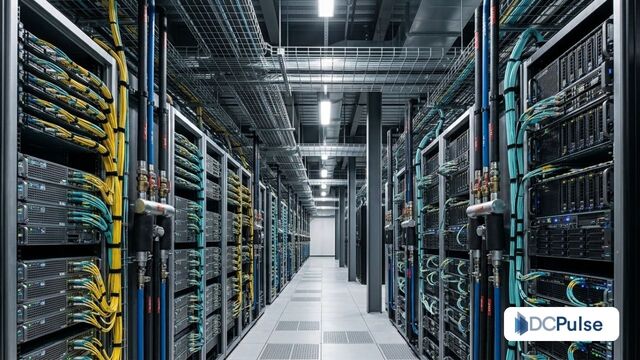
Cooling has become another critical area of infrastructure literacy as AI deployments introduce higher heat loads and more demanding thermal conditions. The suitability of a cooling system depends on equipment specifications, rack density, environmental conditions, facility design, and operational requirements.
Air cooling remains relevant across many data center environments, while direct-to-chip liquid cooling and other liquid-based approaches are increasing and important considerations for certain high-density computing deployments. These technologies have different requirements for heat transfer, fluid distribution, equipment integration, maintenance, and monitoring.
Infrastructure teams need to understand how cooling decisions affect the wider facility. A liquid cooling installation, for example, may require changes to piping, heat rejection systems, controls, maintenance procedures, and the interfaces between IT equipment and facility infrastructure.
The ability to evaluate these dependencies is important during both new construction and retrofits. Existing data centers may have available floor space but still lack the electrical distribution or thermal infrastructure required for a particular AI deployment.
Infrastructure literacy therefore helps distinguish between nominal building capacity and the practical ability to operate modern computing equipment reliably.
Networking and Connectivity Shape AI Performance
AI infrastructure depends on more than computing power. Large-scale training systems and distributed AI environments require communication between accelerators, servers, storage systems, and other components. Network design can therefore influence workload performance, scalability, and utilization.
High-bandwidth interconnects, low-latency communication, fiber infrastructure, switching capacity, and network redundancy are important considerations for facilities supporting demanding AI applications. The appropriate architecture depends on the workload and the scale of the deployment.
Connectivity also matters at the regional level. Data centers rely on terrestrial fiber routes, internet exchanges, telecommunications providers, and, where relevant, submarine cable systems to connect users, cloud platforms, and other facilities.
A location with strong power availability may not offer the same advantages if connectivity is limited or network routes lack sufficient diversity. Similarly, a well-connected facility may face operational risks if its external network paths depend heavily on a limited number of routes.
Infrastructure literacy enables developers and operators to evaluate these factors together rather than treating networking as a separate technical consideration.
Collaboration Between IT and Facilities Teams
The growing complexity of AI infrastructure is increasing the importance of collaboration between IT teams and facilities engineering teams. Historically, responsibilities for servers, networks, electrical systems, and mechanical infrastructure have often been divided among different departments or contractors.
AI deployments can expose the limitations of these organizational boundaries. Hardware selection affects power consumption and heat output, while cooling and electrical constraints can influence equipment configuration and deployment schedules.
A coordinated approach allows IT architects, electrical engineers, mechanical specialists, network engineers, energy managers, and operations teams to assess requirements before implementation. Shared infrastructure knowledge can also help procurement teams evaluate equipment compatibility and identify potential bottlenecks earlier in the planning process.
This collaboration is especially relevant when organizations adapt existing facilities for AI workloads. Retrofitting decisions require a realistic understanding of the building's current capabilities, the limitations of installed systems, and the modifications needed to support new equipment.
Common technical terminology, shared design assumptions, and clearly defined responsibilities can reduce misunderstandings across teams and improve the quality of infrastructure decisions.
Infrastructure Literacy Matters for Investment and Site Selection
Data center investment decisions increasingly involve a combination of digital demand and physical infrastructure constraints. Land availability, grid access, construction requirements, water resources, cooling options, fiber connectivity, permitting, and equipment lead times can all affect project feasibility.
Investors and developers with a strong understanding of these dependencies are better positioned to assess whether a proposed project can support its intended workload and expansion plans. They can also distinguish between announced capacity, planned development, installed electrical infrastructure, and operational IT capacity.
These distinctions matter when evaluating projects marketed for hyperscale cloud computing or AI applications. A large site or a substantial power allocation does not automatically demonstrate that a facility is ready to accommodate a specific deployment.
Infrastructure literacy also supports more informed discussions with utilities, local authorities, equipment suppliers, and prospective customers. Clearer technical assessments can help organizations identify development risks before they become expensive design or scheduling problems.
For data center markets competing to attract AI infrastructure, the availability of skilled personnel who understand both digital systems and physical infrastructure can be an important consideration alongside land, energy, and connectivity.
Skills Development Must Extend Beyond Traditional IT
The expansion of AI infrastructure creates a need for broader technical understanding across the data center workforce. Network and systems engineers may benefit from learning more about electrical capacity, cooling constraints, and facility operations. Facilities professionals may need a deeper understanding of AI hardware requirements, workload behavior, and high-performance networking.
Training does not require every employee to become an expert in every discipline. The objective is to develop enough cross-functional knowledge for teams to recognize dependencies, ask informed questions, and involve the appropriate specialists before making decisions.
Digital monitoring and infrastructure management tools can support this process by connecting information about power consumption, temperatures, equipment utilization, network performance, and system health. When these measurements are interpreted together, operators can gain a clearer view of facility performance and potential constraints.
Organizations can strengthen infrastructure literacy through cross-functional training, joint design reviews, operational exercises, and documented procedures for evaluating new workloads. These practices are relevant to new facilities as well as established data center portfolios.
The Future of Data Centers Depends on Integrated Thinking
The AI era is making the relationship between computing and physical infrastructure more visible. Performance improvements at the chip or software level cannot be considered independently of electricity supply, thermal management, networking, and facility operations.
Infrastructure literacy provides a framework for understanding these relationships. It can help data center operators evaluate new workloads, developers plan more realistic projects, and technology companies make better-informed decisions about where and how AI systems are deployed.
As AI adoption expands, the most effective infrastructure strategies will require coordination across the entire value chain. Computing hardware, energy systems, cooling technologies, connectivity, construction, and operations must be planned around the requirements of the intended workload.
For the global data center industry, infrastructure literacy is therefore becoming more than a specialized engineering concern. It is a practical capability that supports reliability, investment discipline, efficient resource use, and long-term readiness for increasingly demanding digital infrastructure.