DCPulse
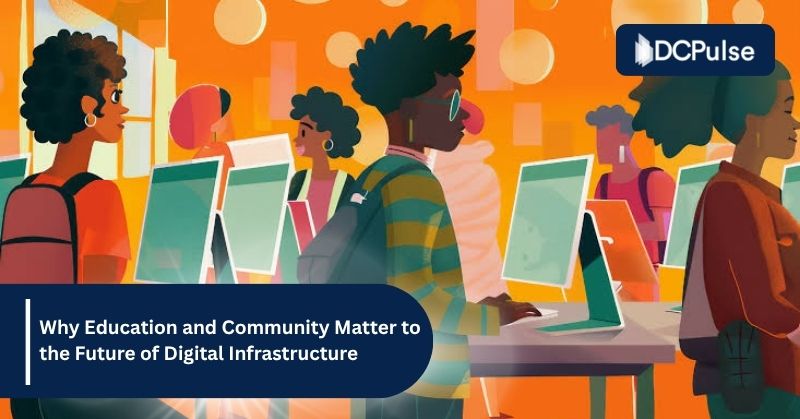
Digital infrastructure has become a foundation of modern economic activity, supporting cloud computing, artificial intelligence, online services, financial systems, telecommunications, and global data exchange. Behind these technologies are data centers, fiber-optic networks, energy systems, and specialized engineering teams that keep digital services operating. As demand for computing capacity grows, education and community engagement are becoming important factors in the long-term development of the digital infrastructure industry.
The expansion of data centers requires more than investment in buildings, servers, power systems, and cooling technologies. It also depends on a workforce capable of designing, constructing, operating, and maintaining complex facilities. At the same time, local communities influence how infrastructure projects are received, developed, and integrated into regional economies.
Education and community engagement can help bridge the gap between increasingly sophisticated technology and the people responsible for supporting it. Together, they can strengthen workforce readiness, improve public understanding, and support the sustainable development of digital infrastructure.
Education Is Building the Next Generation of Infrastructure Talent
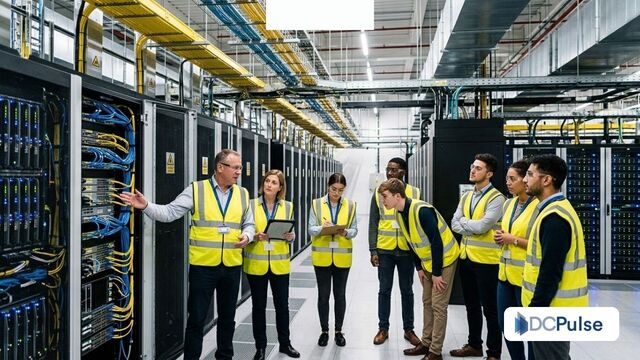
The data center industry relies on professionals across a broad range of disciplines. Electrical engineers, mechanical engineers, network specialists, cybersecurity professionals, construction workers, facility technicians, and operations managers all contribute to the delivery of reliable digital services.
As AI workloads and high-density computing introduce new infrastructure requirements, these roles continue to evolve. Facilities may require more sophisticated cooling arrangements, greater electrical capacity, advanced monitoring systems, and specialized network architectures. Preparing workers for these environments requires education that connects theoretical knowledge with practical infrastructure challenges.
Universities, technical colleges, vocational institutions, and industry training programs can help develop these capabilities. Courses covering electrical systems, mechanical engineering, networking, cloud computing, and energy management provide foundations for careers across the digital infrastructure ecosystem.
Practical training is equally important. Laboratory exercises, equipment demonstrations, apprenticeships, internships, and industry-led workshops can help students understand how infrastructure systems operate in real-world environments. Such experiences can also introduce students to career opportunities that may not be widely understood outside the technology and engineering sectors.
Digital Infrastructure Needs More Than Software Skills

Public discussions about technology often focus on software development, artificial intelligence, and digital applications. However, these services depend on a substantial physical infrastructure layer that receives less attention.
Data centers illustrate this relationship clearly. Computing equipment requires electricity, cooling, connectivity, physical security, and continuous operational oversight. A software engineer may develop an advanced AI application, but its delivery at scale also depends on the infrastructure supporting the underlying computing workload.
Education can help make these connections more visible. Students studying computer science can benefit from learning about data center architecture, power distribution, thermal management, and network reliability. Engineering students can gain a broader understanding of how their specializations contribute to cloud platforms and AI infrastructure.
This interdisciplinary approach is particularly relevant as organizations seek to deploy increasingly demanding computing systems. A stronger understanding of the relationship between digital services and physical facilities can encourage better collaboration between software teams, infrastructure engineers, energy specialists, and facility operators.
Community Engagement Can Strengthen Local Support
Data center development can create opportunities for local economies, including construction activity, technical employment, infrastructure investment, and demand for supporting services. However, the effects of a project vary according to its location, scale, design, and operational requirements.
Communities may also have questions about electricity demand, water consumption, land use, noise, construction traffic, and the long-term benefits of a proposed facility. These concerns deserve clear explanations and meaningful opportunities for public participation.
Early engagement can help developers communicate project requirements, explain anticipated impacts, and understand local priorities. Public meetings, community briefings, educational events, and transparent project information can make discussions more constructive.
Effective engagement does not mean that every community will support every project. Instead, it provides a framework for addressing concerns, clarifying trade-offs, and improving communication between developers, local authorities, residents, and other stakeholders.
For the digital infrastructure industry, public understanding is especially important because data centers can be physically located in communities whose residents depend on the digital services those facilities support.
Partnerships Between Industry and Education
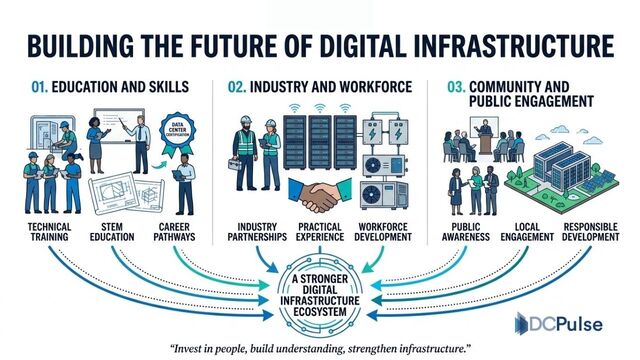
Collaboration between infrastructure companies and educational institutions can help align training with the industry's practical needs. Employers understand the technical competencies required in their facilities, while colleges and universities provide established learning environments and pathways for developing those skills.
Partnerships can include curriculum development, technical workshops, internships, apprenticeship programs, guest lectures, facility visits, and sponsored laboratory equipment. These initiatives can give students a clearer picture of industry requirements and help employers connect with emerging talent.
Local workforce development organizations can also play a role by connecting training providers with employers and identifying opportunities for people entering the industry from other technical occupations. Professionals with experience in electrical maintenance, industrial automation, telecommunications, and mechanical systems may possess transferable skills relevant to data center operations.
However, successful programs require more than short-term recruitment initiatives. Training must reflect changing technology requirements, while employers need to provide realistic information about qualifications, working conditions, career progression, and the range of available roles.
A stronger relationship between education and industry can help create clearer pathways from foundational learning to specialized infrastructure careers.
Education Can Improve Public Understanding of AI Infrastructure
The growth of artificial intelligence has increased public attention on the computing resources required to develop and operate AI systems. Yet the relationship between AI services and physical infrastructure remains unfamiliar to many people.
Educational initiatives can explain how data centers support AI training, inference, cloud computing, and digital communications. They can also introduce the role of power systems, cooling technologies, fiber networks, and energy efficiency in determining how these facilities operate.
This knowledge can support more informed discussions about infrastructure investment and resource use. For example, understanding the distinction between a facility's electrical capacity and its actual IT load can help audiences interpret project announcements more accurately.
Schools, universities, industry associations, and community organizations can contribute through accessible learning materials, public seminars, technical demonstrations, and career awareness programs. The objective is not to turn every participant into an infrastructure specialist but to make the industry's technologies, requirements, and trade-offs easier to understand.
Building More Inclusive Infrastructure Careers
The future workforce must be prepared for a range of technical and operational responsibilities. Entry pathways should therefore extend beyond traditional university engineering programs to include vocational education, technical certifications, apprenticeships, and opportunities for experienced workers to develop new skills.
Clear information about these pathways can help students and career changers identify suitable roles. It can also help employers reach a broader talent pool and reduce the assumption that every digital infrastructure career requires the same academic background.
Industry outreach can introduce young people to electrical engineering, cooling systems, networking, construction management, and critical facility operations before they make career decisions. Exposure to real infrastructure environments can make these occupations more tangible and demonstrate how they contribute to essential digital services.
A broader approach to workforce development can help the industry respond to changing technical requirements while creating opportunities for people with different educational backgrounds and professional experiences.
A Shared Responsibility for the Digital Future
The future of digital infrastructure will depend on continued investment in computing capacity, reliable energy systems, connectivity, and advanced facility technologies. Equally important will be the people who design and operate these systems and the communities in which infrastructure projects are developed.
Education can prepare workers to manage increasingly complex facilities, while industry partnerships can connect learning with practical requirements. Community engagement can help developers understand local priorities and explain the implications of infrastructure projects more clearly.
Neither education nor engagement can eliminate every workforce challenge or resolve every disagreement over development. Both, however, can create a stronger foundation for informed decision-making and long-term cooperation.
As AI, cloud computing, and digital services continue to expand, the data center industry has an opportunity to treat education and community relationships as integral parts of infrastructure planning. The strongest digital infrastructure ecosystems will be those that invest not only in physical capacity, but also in the knowledge, skills, and public understanding needed to support it.