DCPulse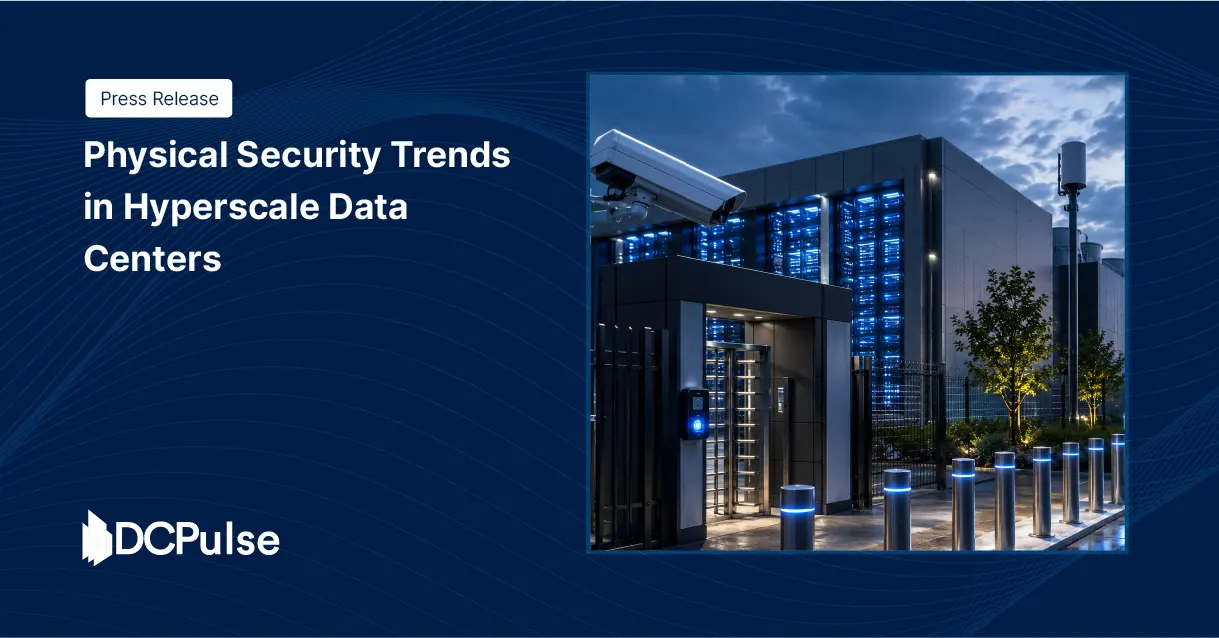
Physical security in hyperscale data centers is no longer just about fences and guards; it is becoming a technology-driven, multi-layered defense system.
As hyperscale facilities grow in size, complexity, and strategic importance, the risks associated with physical breaches, insider threats, and infrastructure disruption are increasing. These facilities now house critical workloads, AI infrastructure, and sensitive data, making them high-value targets not just for cyberattacks but for physical intrusion and sabotage.
At the same time, the scale of hyperscale campuses, often spanning multiple buildings and locations, makes traditional security approaches insufficient. Static measures such as perimeter fencing and badge access are no longer enough to secure highly distributed and high-density environments.
This is driving a shift toward intelligent, integrated security architectures, where surveillance, access control, and real-time monitoring work together as a unified system.
The result is a fundamental change;
Physical security is no longer a supporting function; it is becoming a core operational layer, critical to ensuring the resilience and trustworthiness of hyperscale data center infrastructure.
What Defines the Current Landscape of Physical Security in Hyperscale Data Centers?
The current landscape of physical security in hyperscale data centers is defined by growing infrastructure risk, expanding attack surfaces, and increased investment in layered security systems.
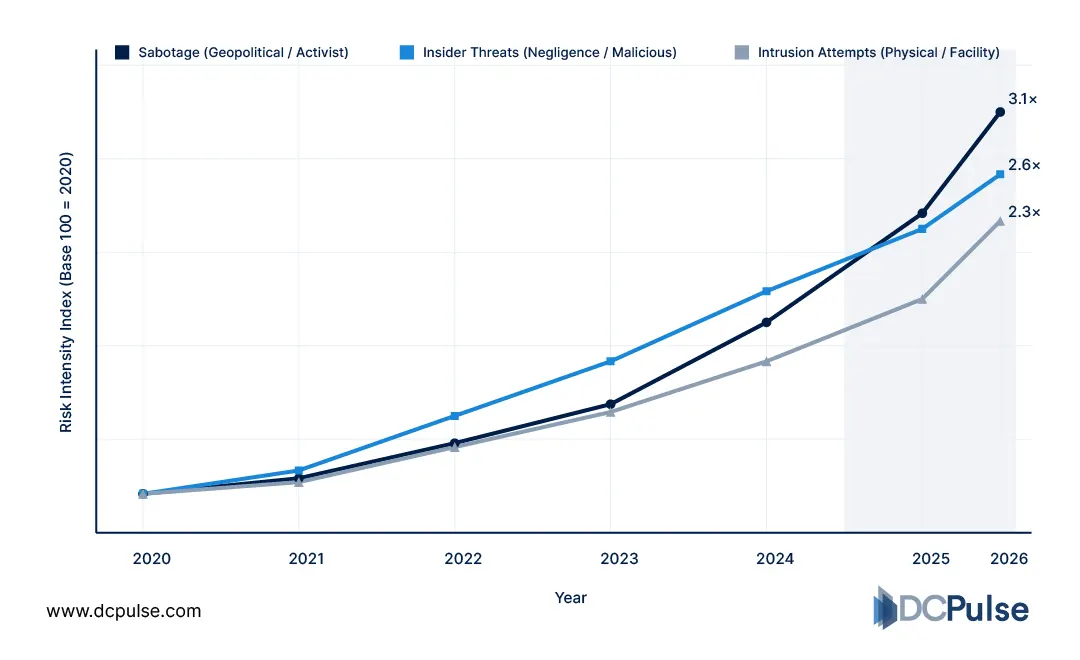
At the risk level, threats are becoming more complex. Research from the Uptime Institute shows that while physical security controls are widely implemented, the likelihood of sabotage and unauthorized access has increased, driven by larger facility footprints and more sophisticated intrusion methods.
Physical Security Risk Intensity Index (2020-2026)
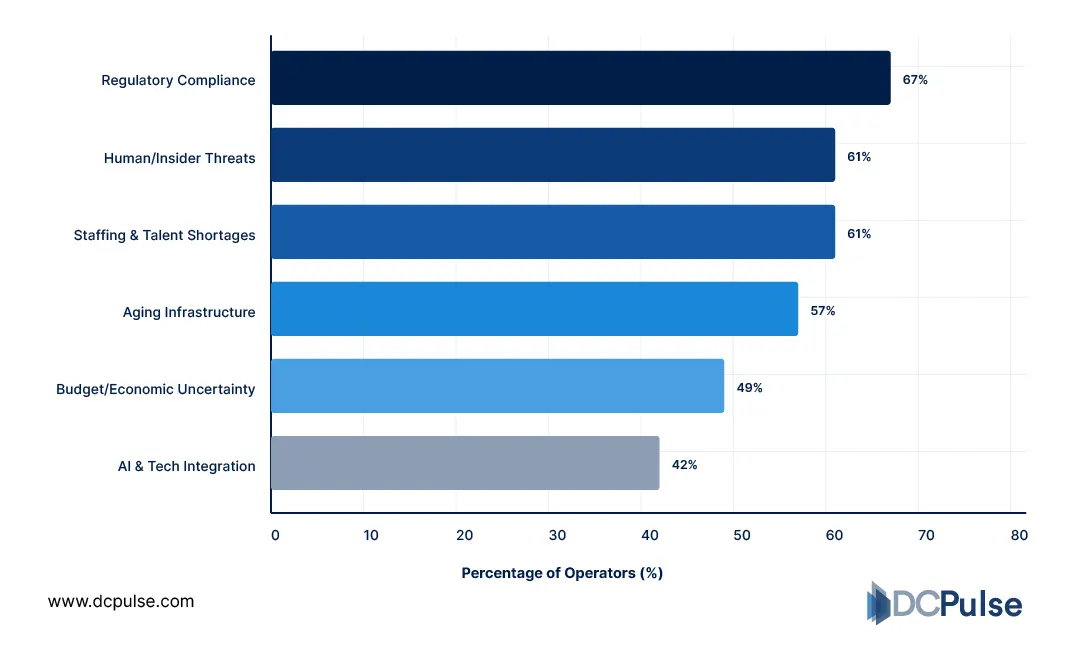
At the same time, hyperscale expansion is increasing operational complexity. The Security Industry Association highlights that rapid data center growth is introducing integration challenges, outdated security specifications, and fragmented systems, which can weaken overall physical security posture if not modernized.
Key Challenges in Data Center Physical Security Systems
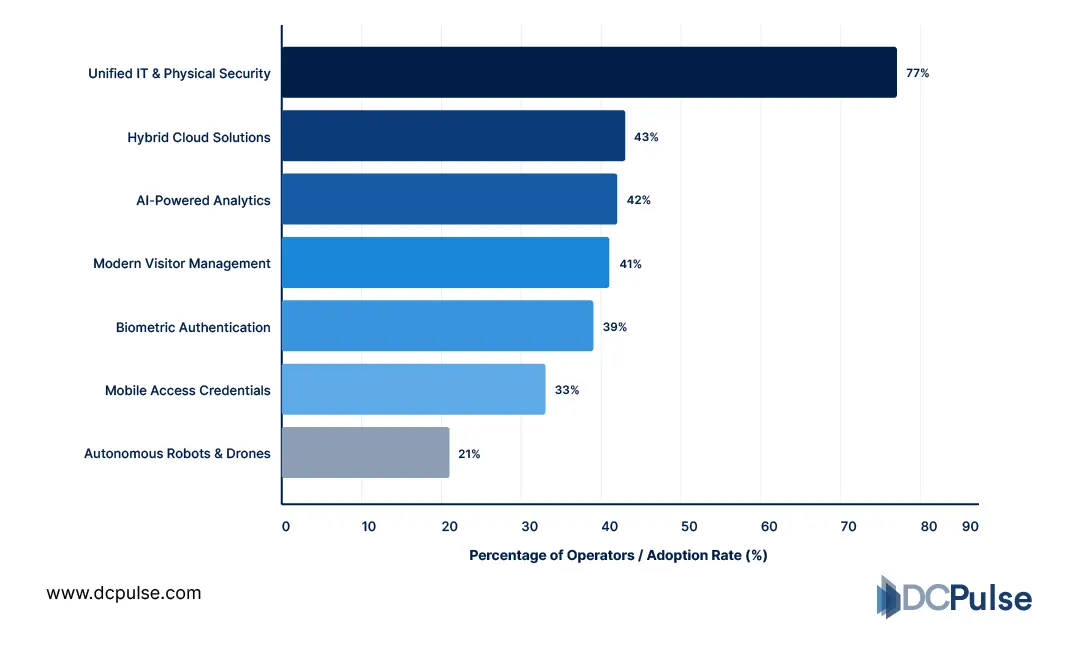
Investment is rising in response. According to Grand View Research, data center operators, especially in IT and telecom, are increasingly deploying advanced access control, biometric systems, and continuous surveillance, driven by the need to protect high-value infrastructure and sensitive data.
Adoption of Advanced Physical Security Technologies (%)
Operationally, this is reflected in a layered security model. Most facilities now implement multiple physical perimeters and controlled access zones, combining infrastructure, monitoring systems, and procedural controls to mitigate risk.
The pattern is clear;
Physical security in hyperscale data centers is no longer static; it is evolving into a complex, risk-driven, and continuously monitored system, shaped by both the scale of infrastructure and the sophistication of emerging threats.
What Innovations Are Reshaping Physical Security in Hyperscale Data Centers?
Physical security in hyperscale data centers is being reshaped by innovations focused on integration, automation, and intelligent monitoring, driven by the increasing complexity of modern facilities.
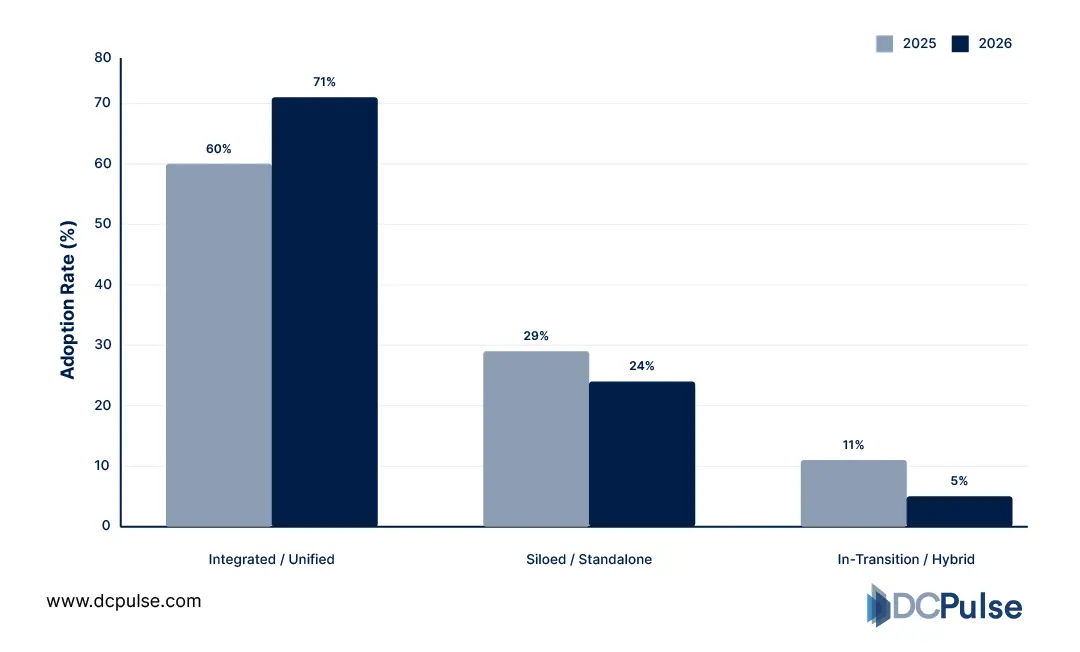
A major shift is the move toward integrated security systems. According to the Security Industry Association, one of the biggest challenges and opportunities in data center security today is the transition from siloed systems to unified platforms, where surveillance, access control, and monitoring are centrally managed.
Adoption of Integrated vs. Siloed Security Systems (%)
At the same time, the role of automation is expanding. Research from the Uptime Institute highlights that increased automation and remote management are changing the security model, requiring continuous monitoring and tighter control over both physical and human access points.
Another key innovation is the adoption of advanced access control technologies, including biometrics and multi-factor authentication. Market data shows rising deployment of these systems, particularly in high-security environments, as operators move beyond traditional badge-based access.
Adoption of Biometric and Advanced Access Systems (%)
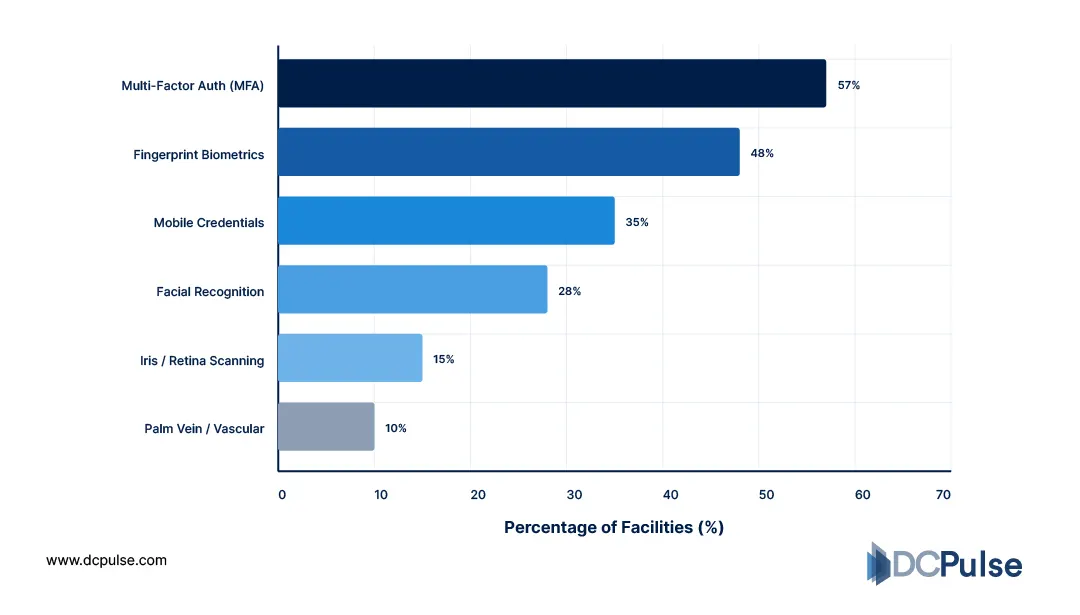
These developments are converging toward a broader transformation. Physical security is no longer limited to perimeter defense; it is becoming a continuously monitored, data-driven system where infrastructure, personnel, and processes are all part of a unified security architecture.
The shift is clear; physical security in hyperscale data centers is evolving from isolated controls to integrated, intelligent systems designed to manage risk dynamically in increasingly complex and distributed environments.
Who Is Leading Physical Security Advancements in Hyperscale Data Centers?
Advancements in physical security in hyperscale data centers are being driven by a combination of hyperscale operators and a rapidly expanding security technology ecosystem, shaped by rising infrastructure value and risk.
At the operator level, companies such as Amazon Web Services, Microsoft, and Google are leading adoption by implementing multi-layered, defense-in-depth security architectures across large-scale campuses. These facilities typically deploy multiple physical perimeters, controlled access zones, and continuous monitoring systems, reflecting industry best practices highlighted by the Uptime Institute.
Adoption of Multi-Layer Security Architectures in Hyperscale Facilities (%) - April 2026
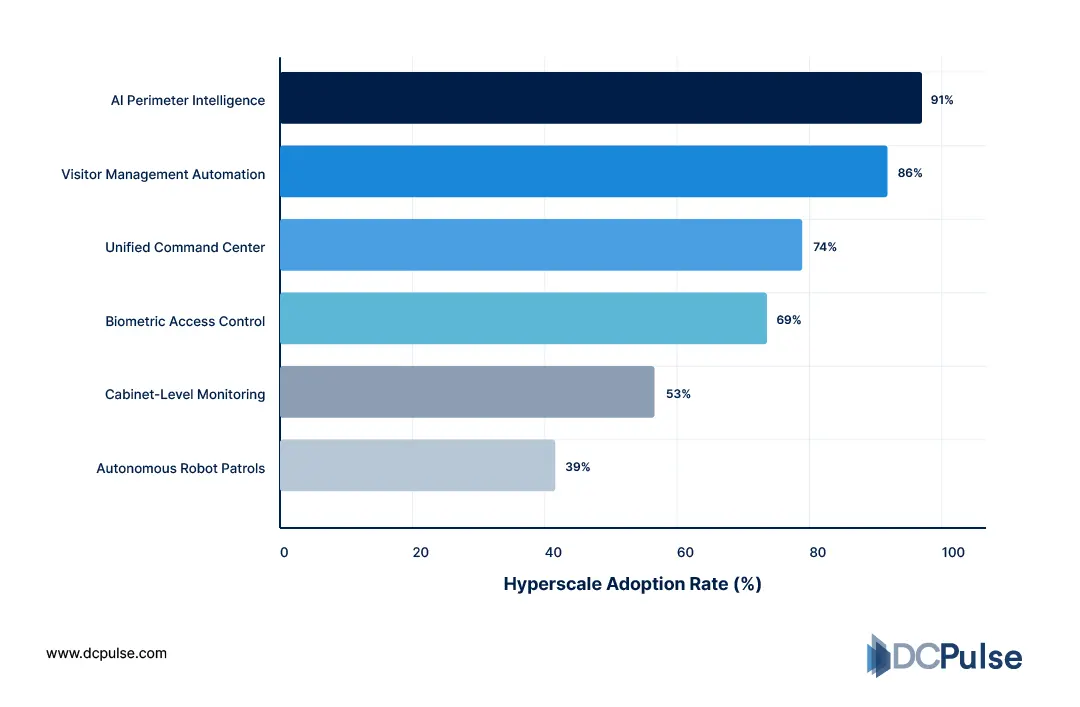
At the market level, investment is accelerating. The global data center physical security market was valued at ~USD 2.4 billion in 2025 and is projected to reach ~USD 7.3 billion by 2033, driven by demand for advanced surveillance, access control, and monitoring technologies.
This growth is being enabled by a broader ecosystem of security vendors providing biometric systems, video surveillance, and integrated monitoring platforms, which are increasingly deployed in IT and telecom environments where infrastructure value and sensitivity are highest.
At the same time, operational complexity is rising. Uptime Institute research highlights that the expansion of automation and remote operations is increasing the attack surface across physical, human, and digital layers, necessitating more coordinated and integrated security strategies.
The implication is clear.
A single player does not define leadership in physical security; it is driven by a combination of hyperscale operators and technology providers, collectively building more advanced, scalable, and integrated security systems to protect critical digital infrastructure.
What Will Define the Future of Physical Security in Hyperscale Data Centers?
Physical security in hyperscale data centers is moving toward a future defined by intelligence, integration, and continuous risk management.
As infrastructure scales and becomes more distributed, static security models will become increasingly inadequate. Future environments will require systems that can adapt in real time, combining physical controls with data-driven insights to detect and respond to threats more effectively.
At the same time, the convergence of physical, cyber, and operational security will become more pronounced. Rather than operating in silos, these domains will increasingly function as a unified framework, enabling a more comprehensive approach to infrastructure protection.
Automation will also play a central role. As facilities expand and staffing models evolve, automated monitoring and response systems will be critical in maintaining consistent security coverage across large and complex environments.
However, the transition will be gradual. Traditional measures such as perimeter security and access control will remain essential, but they will be augmented by more advanced, integrated capabilities.
The direction is clear:
Physical security will evolve from a set of controls into a dynamic, intelligence-driven system, becoming a foundational component of resilient and scalable hyperscale data center operations.