Pranav Hotkar
AI data centers are no longer being built where connectivity is strongest. Increasingly, they are being built where power is available. As AI workloads push infrastructure power demand to unprecedented levels, access to electricity is becoming more valuable than proximity to major cities or traditional network hubs.
For decades, data centers were strategically positioned near dense population centers to reduce latency and improve connectivity. But the rise of large-scale AI training and inference clusters is beginning to reverse that logic. Facilities consuming hundreds of megawatts of power now require not only massive electrical capacity but also long-term energy stability, grid access, and room for future expansion.
This shift is reshaping the geography of digital infrastructure. Regions with abundant power generation, lower energy costs, and access to renewable resources are emerging as prime destinations for next-generation AI campuses. In many cases, energy availability, not fiber density, is becoming the primary constraint on deployment.
As a result, AI infrastructure planning is evolving from a network-driven model into an energy-driven one, redefining where the future of compute will physically exist.
Why is energy availability becoming the biggest constraint for AI data centers?
AI infrastructure is dramatically increasing the power demands placed on data centers, forcing operators to rethink where large-scale facilities can realistically be deployed. Unlike traditional enterprise workloads, AI training and inference clusters operate at significantly higher rack densities and require continuous power delivery. The International Energy Agency (IEA) notes that hyperscale AI data centers can exceed 100 MW of power demand, while the largest announced facilities are projected to consume electricity equivalent to millions of households.
This rapid growth is colliding with grid limitations. The IEA reports that global data center electricity consumption reached roughly 415 TWh in 2024 and could more than double by 2030, increasing pressure on utilities, transmission infrastructure, and regional power systems. In many markets, grid connection timelines and power availability are becoming major deployment bottlenecks for AI infrastructure.
Rack Density & Power Demand (May 2026)
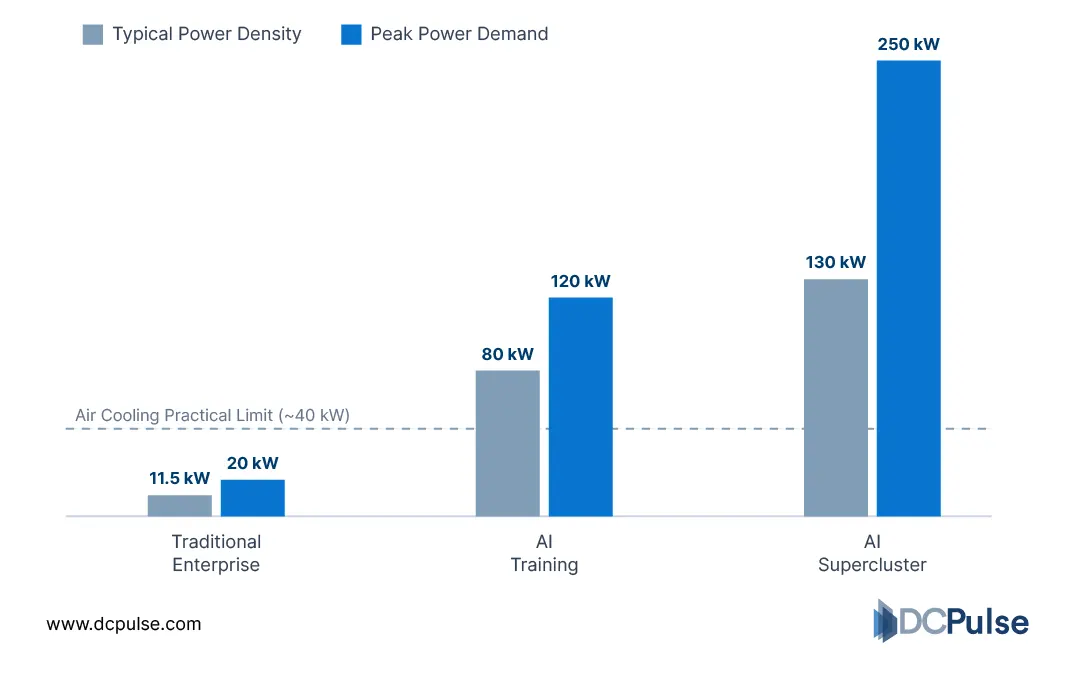
As a result, site selection priorities are shifting. Instead of focusing primarily on proximity to urban centers and network hubs, operators are increasingly targeting regions with abundant power generation, stronger transmission infrastructure, and long-term energy availability.
(Map): Global Emerging AI Infrastructure & Energy Corridors (2026)
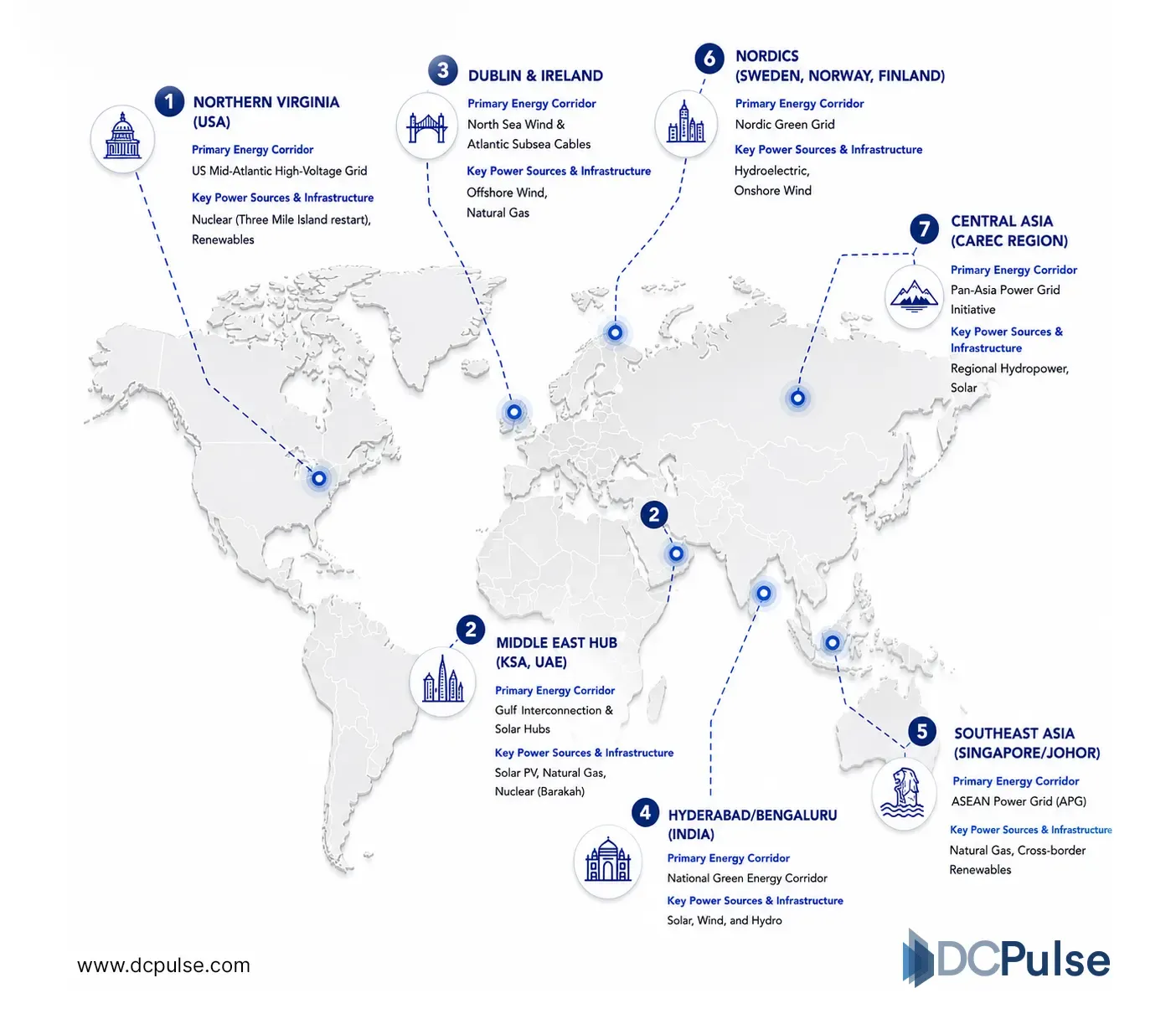
This shift reflects a broader transformation in infrastructure planning: energy availability is no longer just an operational requirement; it is becoming the defining factor that determines where AI compute can scale.
How are AI data centers adapting to energy and grid constraints?
AI data centers are increasingly being redesigned around energy efficiency and grid adaptability rather than traditional deployment models centered primarily on connectivity. One of the biggest shifts is the adoption of liquid cooling technologies to support high-density AI infrastructure. Lenovo notes that advanced liquid cooling systems can significantly improve thermal efficiency for AI workloads while supporting much higher rack densities than conventional air-cooled environments.
Data Center Cooling Performance & Efficiency (2026)
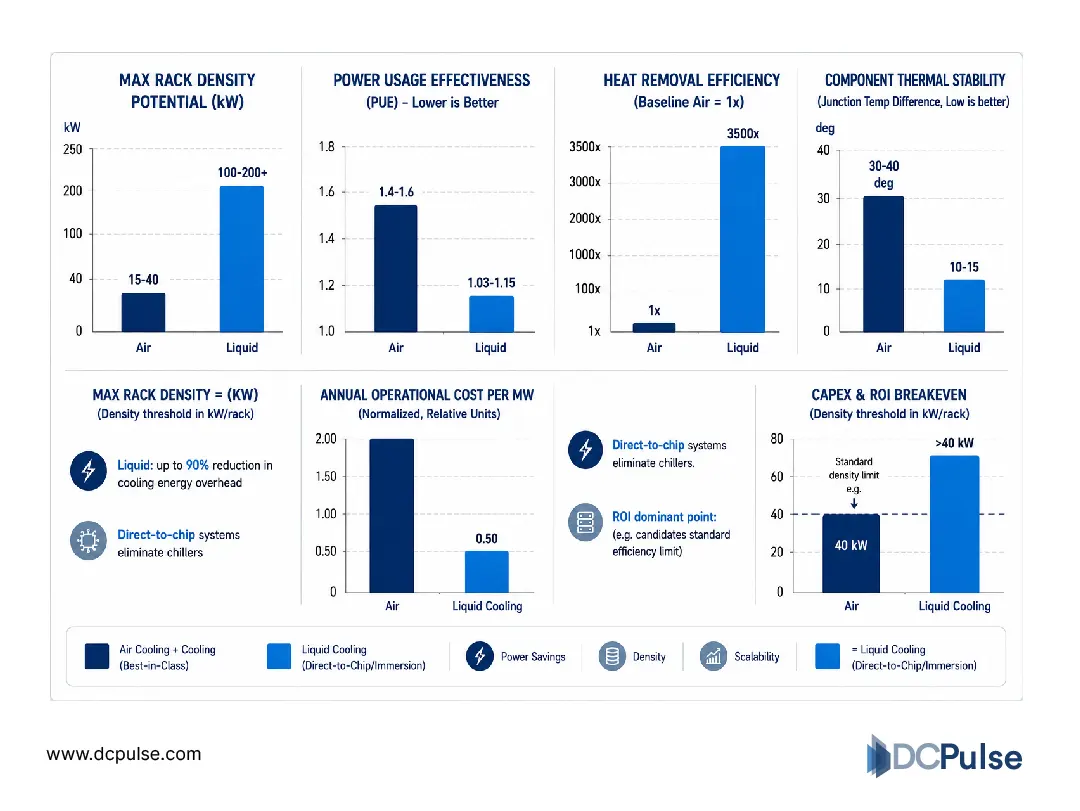
Operators are also exploring new infrastructure architectures built around long-term energy access and grid resilience. The Electric Power Research Institute (EPRI) states that rapid AI expansion is increasing pressure on utilities and transmission systems, driving interest in colocating AI infrastructure near large-scale generation resources and strengthening on-site energy systems.
At the operational level, energy-aware computing strategies are beginning to emerge. Google Research has demonstrated carbon-aware workload shifting approaches that can move certain computing tasks to locations or times with lower grid carbon intensity, improving sustainability without reducing compute output.
Together, these developments show that AI infrastructure is evolving into a more energy-aware model, where compute scalability depends increasingly on how effectively operators can integrate power, cooling, and grid resilience into infrastructure design.
Which companies are reshaping AI infrastructure around energy access?
Major technology companies are increasingly aligning AI infrastructure expansion with long-term energy availability, reflecting how power access is becoming central to deployment strategy.
Microsoft has expanded its focus on securing large-scale energy capacity to support future AI growth, including long-term renewable procurement agreements and exploration of advanced nuclear energy partnerships. The company has stated that future data center expansion depends heavily on reliable access to large volumes of carbon-free electricity.
Google is integrating carbon-aware computing and regional energy balancing into its infrastructure strategy, shifting certain workloads based on hourly carbon-free energy availability across its global data center network.
Amazon Web Services continues to expand renewable energy procurement globally while investing in infrastructure regions with stronger long-term power scalability. AWS has also increased focus on grid resilience and energy diversification as AI workloads accelerate infrastructure demand.
Beyond hyperscalers, utilities and infrastructure providers are increasingly partnering with operators to develop dedicated substations, transmission upgrades, and energy corridors designed specifically to support hyperscale AI campuses.
Hyperscaler AI Energy & Infrastructure Comparison (2026)
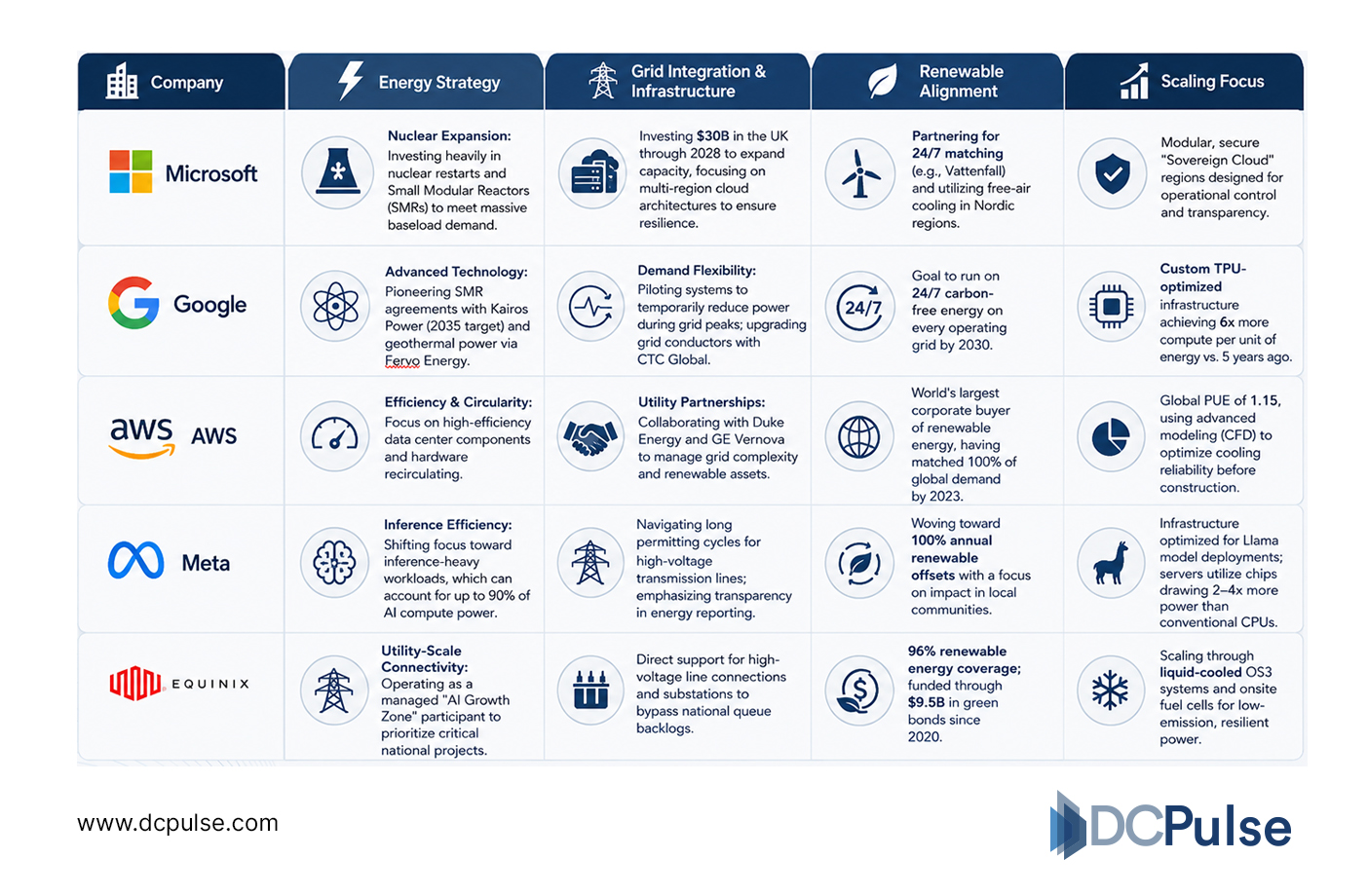
Together, these developments show that the future geography of AI infrastructure is being shaped as much by electricity access and grid capacity as by connectivity or land availability.
What will determine where the next generation of AI data centers gets built?
The future expansion of AI infrastructure will depend less on traditional data center advantages and increasingly on access to scalable, reliable electricity. As AI workloads continue pushing power demand higher, energy availability is emerging as the primary factor shaping where next-generation compute can realistically be deployed.
This shift is redefining infrastructure strategy. Regions with strong generation capacity, modern transmission networks, and long-term energy stability are gaining strategic importance, while areas facing grid congestion and power shortages risk becoming constrained despite strong connectivity advantages.
At the same time, infrastructure planning is becoming more tightly linked to energy planning. Cooling systems, substations, transmission upgrades, and energy storage are no longer secondary operational considerations; they are becoming core components of AI scalability itself.
The implications extend beyond the data center industry. Access to electricity, grid modernization, and energy resilience are increasingly becoming competitive factors in the global AI race, influencing where capital, compute capacity, and future digital ecosystems will concentrate.
Ultimately, the next generation of AI infrastructure will not be defined only by compute performance or semiconductor capability. It will also be defined by which regions can deliver the energy systems capable of sustaining AI at scale.