Pranav Hotkar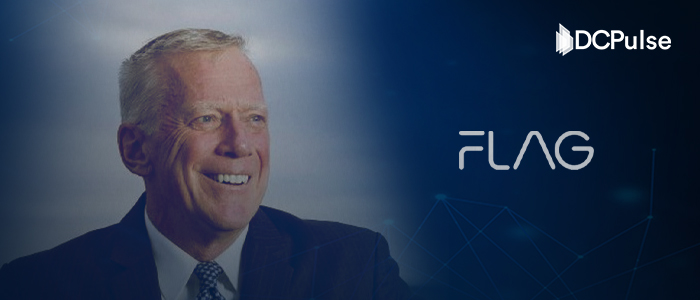
London - 15 December 2025 - Subsea cable operator FLAG has expanded its trans-Pacific network capacity to support surging data centre traffic between Asia and North America, acquiring a dedicated fibre pair on the ECHO submarine cable system in a move aimed at improving latency, resilience, and control over high-capacity routes. The expansion reflects growing demand from hyperscale and enterprise data centre operators for predictable, low-latency connectivity across the Pacific corridor.
FLAG said the fibre pair, acquired from Google on the ECHO system, will link Singapore directly with landing points in California and Guam, creating a new high-performance route designed to carry large volumes of cloud, AI, and content delivery traffic.
The ECHO cable is expected to be ready for service in mid-2026 and is designed to deliver a latency of around 165 milliseconds between Singapore and the US West Coast, making it one of the fastest trans-Pacific paths available for data-intensive workloads.
The company plans to integrate the new trans-Pacific capacity with its existing India Asia Express subsea investment, effectively creating a continuous fibre corridor from India through Southeast Asia and onward to the United States.
FLAG said this end-to-end route will enable customers to scale data centre interconnection and international traffic flows while reducing reliance on congested or multi-hop networks.
Carl Grivner, chief executive of FLAG, said the investment strengthens the company’s ability to meet the evolving requirements of global data centre customers, particularly those running latency-sensitive and mission-critical applications.
In an interview with TahawulTech, Grivner noted that owning the fibre pair gives FLAG greater operational control and long-term capacity certainty, which is increasingly important as AI workloads drive sustained growth in cross-border data movement.
The expansion follows FLAG’s broader repositioning over the past year, including a rebrand from Global Cloud Xchange and a renewed focus on subsea and terrestrial infrastructure that supports cloud and data centre ecosystems. Industry observers say the company’s strategy reflects a wider shift among network operators toward securing dedicated fibre assets as hyperscalers seek greater visibility and performance guarantees across international routes.
Demand for trans-Pacific connectivity has accelerated as data centre capacity continues to grow across Southeast Asia and India, while US-based cloud providers expand regional availability zones.
Analysts note that direct fibre ownership, rather than leased capacity, is becoming a differentiator for operators seeking to serve customers with strict performance and resilience requirements.
Once live, the ECHO-based route will add to a limited pool of direct Singapore-to-US connections, reinforcing Singapore’s role as a key aggregation hub for Asia-Pacific data centre traffic and underlining the strategic importance of subsea infrastructure in supporting the global digital economy.