Pranav Hotkar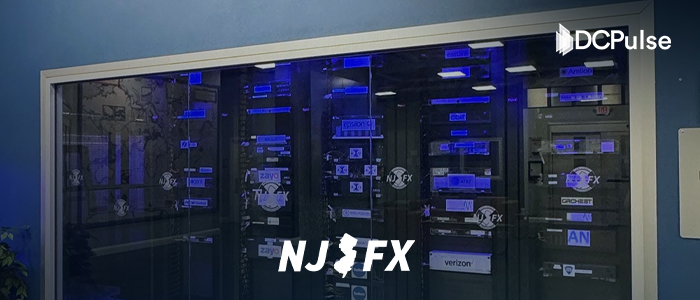
Wall Township, New Jersey, United States - December 9, 2025 - NJFX has announced a major expansion of its subsea cable landing campus, launching “Project Cool Water,” a high-density, liquid-cooled data hall designed specifically to support next-generation AI infrastructure. The development positions NJFX as the first purpose-built cable landing station campus in North America, engineered to house liquid-to-the-chip GPU clusters.
CEO Gil Santaliz said the move reflects a strategic shift in where AI infrastructure will take root. “The vision for NJFX has always been to support U.S. critical infrastructure with purpose-built assets that matter to our global economy,” he noted. With inference workloads rising and data sovereignty requirements tightening, Santaliz believes AI will need to “follow the network, all the way to the subsea cable landing.”
The new 10-megawatt hall will deliver 8 MW of IT load at an expected PUE of 1.25, backed by a power agreement with utility JCP&L, supported through a USD 3 million deposit and targeting delivery by late 2026.
The expansion marks a new phase for NJFX, which already hosts four subsea cables linking North America to Europe and South America, and operates within 7 milliseconds of more than 100 million U.S. residents. With over 35 network operators on-site, the campus provides low-latency pathways for inference-driven AI and Generative AI applications.
Santaliz framed the development in terms of national resilience. “This new design ensures that subsea cables and global network carriers can continue to scale, now with an advanced data hall engineered for the AI era,” he said. “Our technical and security teams, working with federal, state, and local partners, remain committed to supporting the critical infrastructure of the United States.”
The project also highlights a broader shift in subsea infrastructure. Historically minimal, landing stations are increasingly evolving into full-scale compute hubs. NJFX’s early bet on pairing a Tier III facility with a subsea landing is now being extended through high-density liquid-cooling capability, a feature Santaliz argues traditional carrier hotels cannot support due to floor-load and building-design limits.
As preparations advance, NJFX reports active conversations with multiple potential customers. According to Santaliz, the goal is to “finalise their requirements” and deliver customizable high-density space for AI deployments.
With a new 25-MW transformer underway, part of a long-planned upgrade with JCP&L, NJFX says the expansion will also improve local grid resilience across Monmouth County, reinforcing the strategic role cable landings will play in the AI era.
.jpg)