Pranav Hotkar
On a modern factory floor, milliseconds matter. A vibration spike in a turbine, a temperature deviation in a molding unit, or a sudden latency delay in a robotic arm can mean the difference between uninterrupted production and costly downtime. For decades, manufacturing relied on centralized systems to collect and analyze operational data, often discovering issues only after performance degraded. Today, that model is changing.
Industrial IoT (IIoT) sensors now blanket production lines, generating continuous streams of telemetry from machines, tools, and environmental systems. But the real transformation is happening closer to the equipment itself. Edge computing is moving analytics from distant data centers to on-site processing nodes, enabling manufacturers to detect anomalies, optimize workflows, and respond to disruptions in real time. Instead of shipping raw data to the cloud and waiting for instructions, machines can now act almost instantly on local intelligence.
This convergence of IIoT and edge infrastructure is redefining manufacturing economics. It reduces latency, strengthens operational resilience, and lays the groundwork for predictive and eventually autonomous production environments.
Edge Is Becoming Native to the Factory Floor
Industrial IoT in manufacturing is no longer structured around sending raw production data to distant cloud environments. The architectural shift now underway is toward embedding compute directly at the operational layer, inside machines, along production lines, and at the plant control tier.
Siemens describes its Industrial Edge platform as enabling applications to run “directly at the machine level” while remaining centrally manageable across sites. The model allows localized data processing while maintaining enterprise integration.
Schneider Electric’s EcoStruxure architecture combines connected products, edge control, and analytics, positioning edge control as the layer enabling real-time automation decisions within facilities.
Rockwell Automation integrates localized processing through its FactoryTalk ecosystem, supporting on-site data analysis within industrial control environments before forwarding structured insights upstream.
Intel frames industrial edge as critical for workloads such as machine vision and predictive maintenance, where processing data closer to equipment reduces latency and bandwidth strain.
Across these vendors, the architectural convergence is clear: compute is embedded at machine, production-line, and plant-control layers, while the cloud acts as a coordination and analytics overlay rather than the primary execution layer.
Industrial Edge Stack Integration - Vendor Comparison
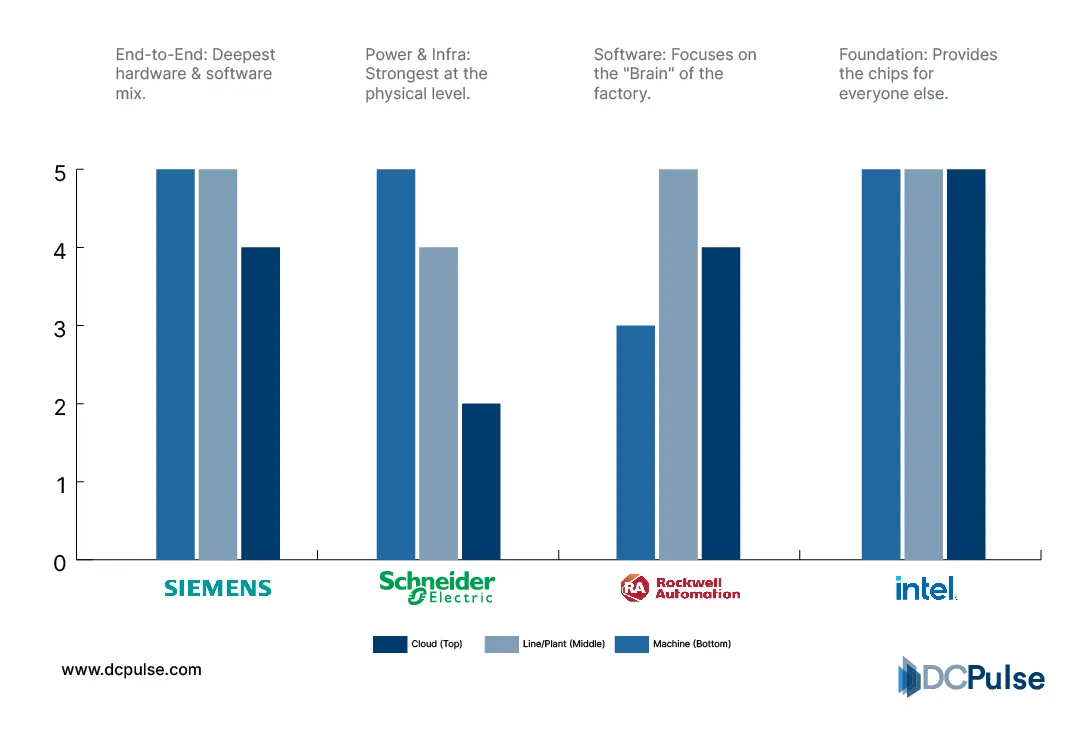
This structural alignment confirms the current landscape. Edge computing is no longer an experimental add-on; it is becoming a foundational component of industrial automation architecture, setting the stage for predictive and autonomous manufacturing systems.
From Connected Machines to Intelligent, Distributed Plants
Edge compute is no longer just part of factory infrastructure; it is becoming intelligence embedded into operations. The leading innovations reshaping manufacturing are AI at the edge, private 5G networks, and containerized operational workloads, each enabling faster, smarter, and more adaptive decisions.
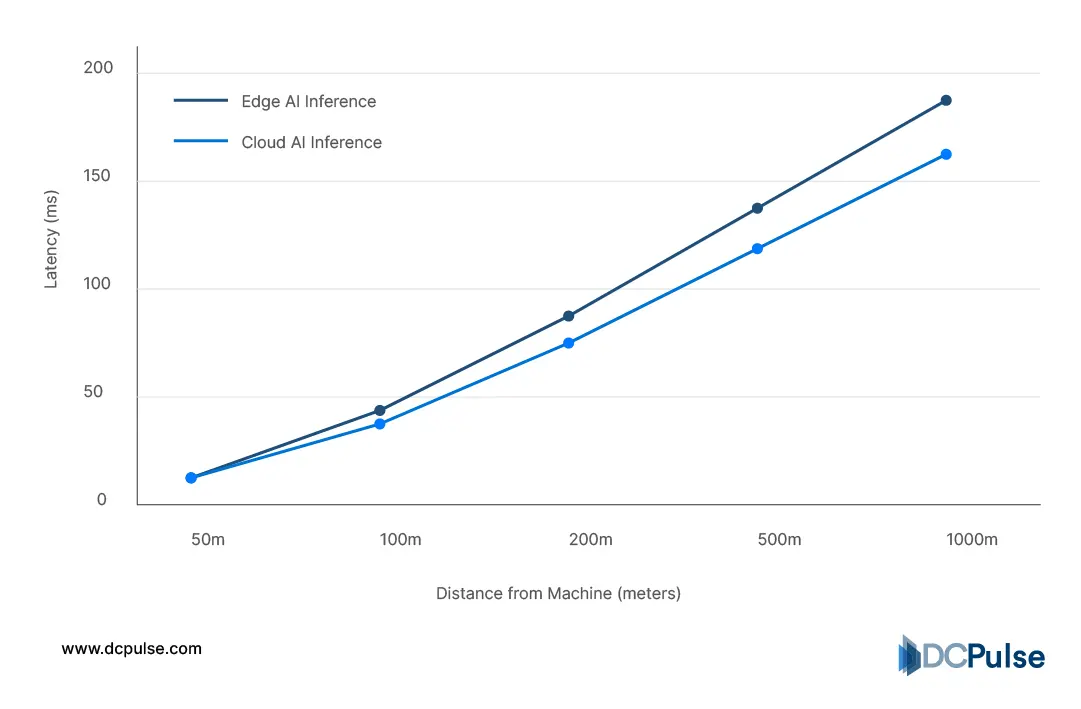
AI at the Edge is transforming high-volume, latency-sensitive tasks. NVIDIA’s industrial AI solutions process vision inspection and robotic inference directly on-site, avoiding cloud delays. Machines detect defects or adjust operations in milliseconds, increasing quality and uptime.
Intel highlights edge AI for predictive maintenance and sensor data analysis, allowing machines to act on insights before issues escalate.
Latency Comparison: Edge AI vs. Cloud AI (2026)
Private 5G networks provide deterministic connectivity for robotics, autonomous guided vehicles (AGVs), and real-time machine vision. Ericsson’s private 5G solutions ensure ultra-reliable, low-latency performance across large factory floors without complex cabling.
Containerized operational workloads allow applications to run consistently across edge nodes and central data centers. Red Hat’s Kubernetes-based solutions enable predictive maintenance, vision inspection, and analytics applications to be portable, resilient, and scalable across distributed manufacturing sites.
Industrial Compute Workload Distribution: 2015 vs. 2025
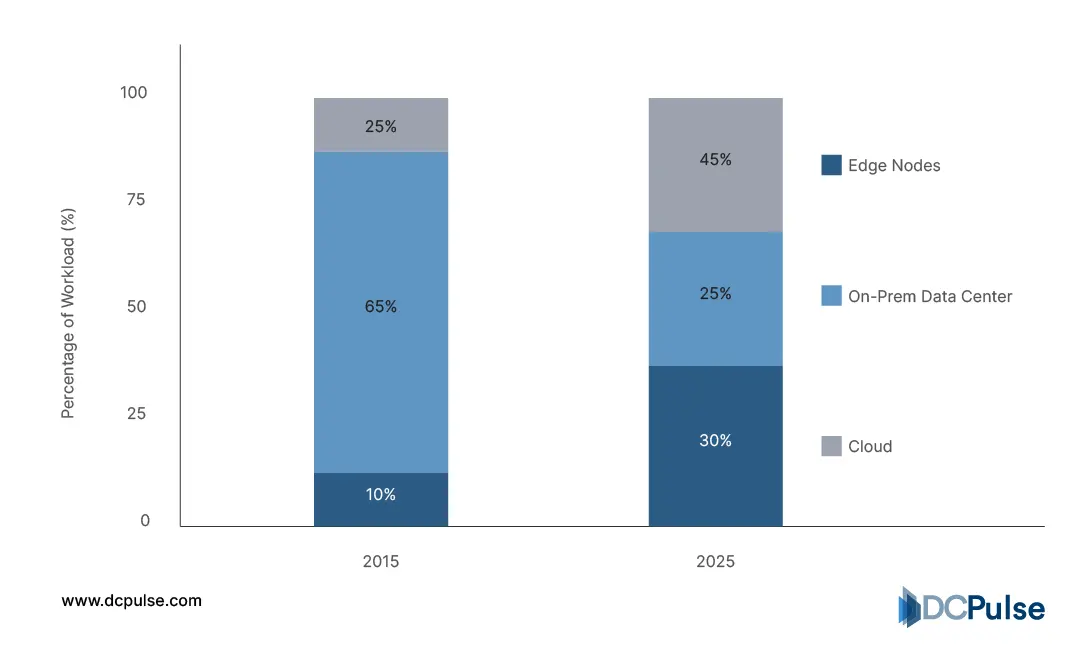
These three innovations converge to create distributed intelligence at the edge, enabling real-time adaptive operations, predictive maintenance, and autonomous decision-making. Modern factories are evolving from connected systems into self-optimizing manufacturing environments.
Designing the Autonomous Plant: Architecture and Orchestration
Building on emerging innovations, modern factories are now designed around purpose-built architectures that integrate AI, private 5G, and containerized workloads into a cohesive operational environment. These architectures focus on distributed intelligence, minimizing latency, and enabling predictive and adaptive decision-making.
Edge-First Architecture, deploying compute at the machine, line, and plant levels, ensures that AI inference, analytics, and process control happen locally. Siemens’ MindSphere Industrial Edge supports this by running analytics modules directly on machines while integrating with enterprise systems for centralized oversight.
Orchestrated containerization, Red Hat OpenShift Edge, enables industrial workloads to run consistently across distributed environments. Container orchestration ensures applications like predictive maintenance, robotics vision, and energy optimization are portable and resilient, allowing factories to scale or reconfigure production lines rapidly.
Deterministic Connectivity with Private 5G: Ericsson’s private 5G networks provide ultra-low-latency communication between edge nodes, machines, and mobile robotics, enabling autonomous coordination of equipment across large facilities.
Global Private 5G Industrial Deployment (2026 Metrics)
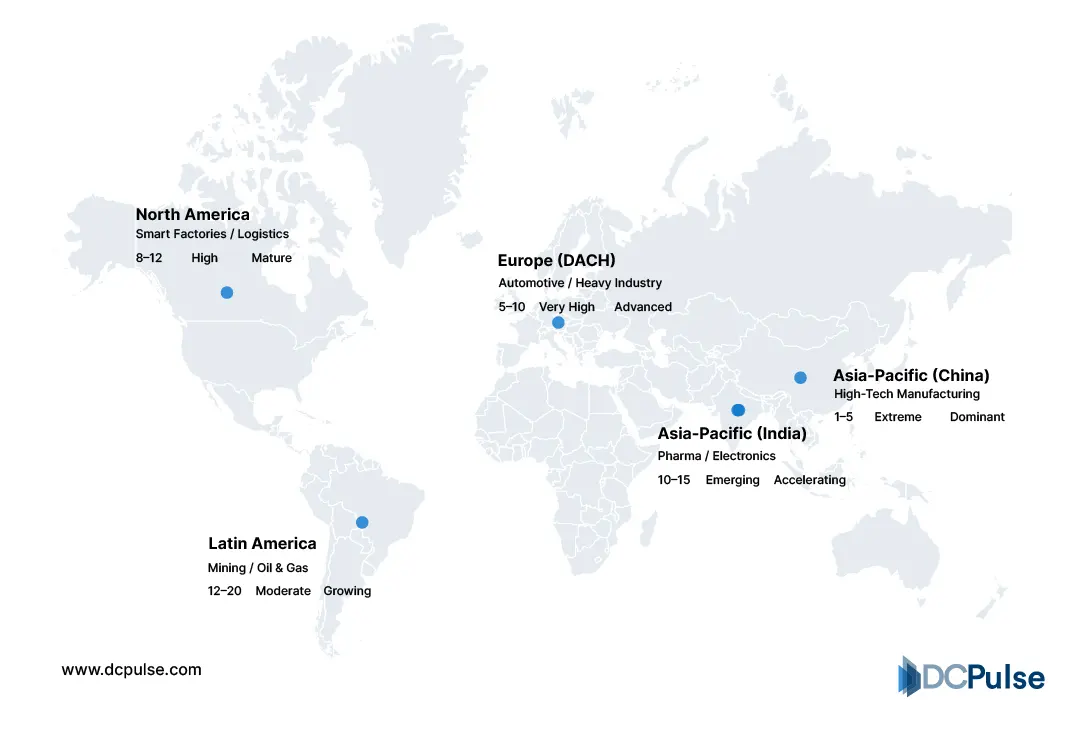
By combining edge AI, container orchestration, and deterministic networking, manufacturers can achieve adaptive factories that continuously optimize production processes, reduce downtime, and respond autonomously to operational anomalies. These architectures are no longer conceptual: early deployments are demonstrating measurable improvements in throughput, energy efficiency, and predictive maintenance performance.
Scaling Intelligent Operations Across Industries
The integration of edge AI, private 5G networks, and containerized workloads is redefining what modern manufacturing can achieve. Factories are no longer reactive; they are predictive and adaptive, responding in real time to operational anomalies, production demands, and energy constraints. This shift enables higher throughput, reduced downtime, and more efficient resource use.
As adoption grows, manufacturers are exploring scalable frameworks to deploy these technologies across multi-site operations. Early pilots indicate that localized AI inference can reduce latency by up to 70%, while private 5G ensures uninterrupted communication for mobile robotics and automated guided vehicles. Containerized workloads allow rapid scaling of software applications across edge nodes, enabling distributed intelligence without reconfiguring IT systems at each facility.
Looking forward, the convergence of these technologies positions industrial operators to transition from automated to autonomous factories, where intelligence is embedded in processes rather than applied externally. Organizations that implement these architectures early are likely to achieve competitive advantage through operational agility, predictive maintenance, and fully optimized production systems.