Pranav Hotkar
The energy grid is undergoing a fundamental shift, one that data centers are increasingly at the center of.
As renewable energy sources like solar and wind scale rapidly, they are introducing a new challenge: variability.
Power generation now fluctuates based on weather and time of day, while demand, especially from data centers, continues to rise steadily. This mismatch is becoming more pronounced as AI workloads drive unprecedented energy consumption across digital infrastructure.
Traditionally, data centers have been treated as constant, inflexible loads, drawing power from the grid without adapting to its conditions. But that model is starting to change.
A new concept is emerging: grid-interactive data centers.
Instead of acting solely as energy consumers, these facilities are designed to respond dynamically to grid conditions, adjusting workloads, leveraging on-site energy storage, and even feeding power back when needed. In theory, this transforms data centers from grid stressors into grid stabilizers.
But this shift is not straightforward.
Balancing uptime requirements with grid responsiveness introduces operational and economic complexity. As renewable penetration increases, the question is no longer whether data centers will impact grid stability.
It’s whether they can actively support it without compromising performance.
Why Power Stability Is a Growing Challenge
The core challenge facing modern power systems is simple: renewable energy is variable, while data centers require constant power.
Solar and wind generation depend on weather conditions and time of day, meaning electricity supply can fluctuate significantly. The International Energy Agency explains that as renewable penetration increases, power systems must deal with greater variability and uncertainty in supply, making it harder to maintain a stable balance between electricity generation and demand.
Daily Grid Challenge: Renewable Variability vs Steady Demand
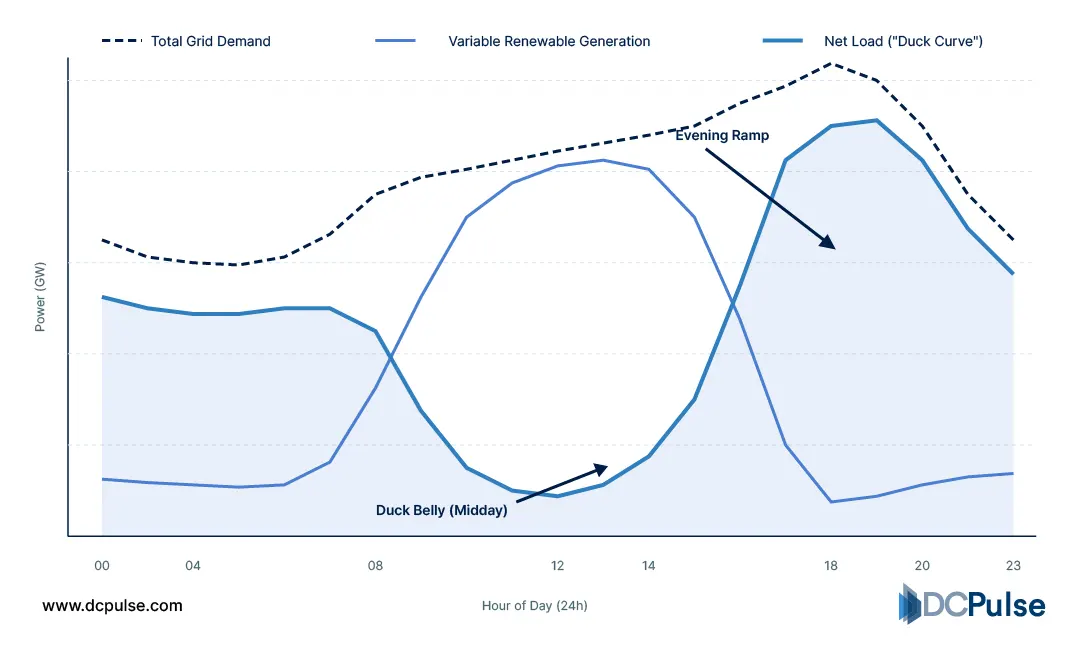
This variability is not theoretical; it directly impacts grid operations. Renewable output can fluctuate rapidly, changing within hours or even seconds, requiring constant adjustments to maintain a balance between supply and demand and prevent instability.
At the same time, electricity demand is rising rapidly. According to the International Energy Agency, global electricity demand is increasing due to factors such as electrification and the expansion of data centers, adding further pressure on already strained grids.
Drivers of Rising Global Electricity Demand (2022-2030)
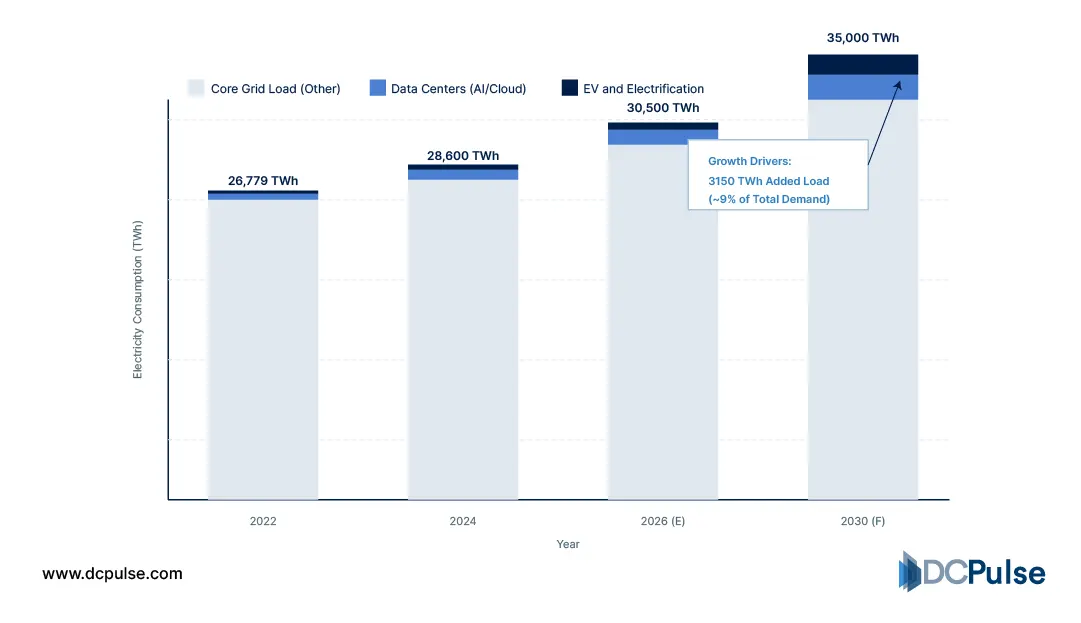
This creates a fundamental mismatch. Data centers operate 24/7 and require uninterrupted power, while renewable generation cannot always meet that demand consistently. Industry analysis highlights that balancing continuous data center load with fluctuating renewable supply is a key challenge, often requiring grid support or backup systems.
The result is a grid under pressure, where maintaining stability is becoming more complex as both renewable adoption and data center demand accelerate simultaneously.
From Passive Load to Active Grid Partner
Grid-interactive data centers are enabled by a set of innovations that allow them to adjust how and when they consume electricity, rather than acting as fixed loads.
The most important of these is demand response. According to the International Energy Agency, demand response involves shifting or reducing electricity use to balance supply and demand, especially when renewable generation is variable.
Similarly, the U.S. Department of Energy explains that large energy users can reduce or shift consumption during peak periods in response to grid signals or pricing incentives.
Another key innovation is load shifting. Instead of running all workloads continuously, data centers can move non-urgent tasks, such as AI training or batch processing, to periods when electricity is more abundant or cheaper. This aligns energy usage with renewable availability and reduces strain on the grid.
Carbon-Aware Workload Scheduling (2023-2030+)
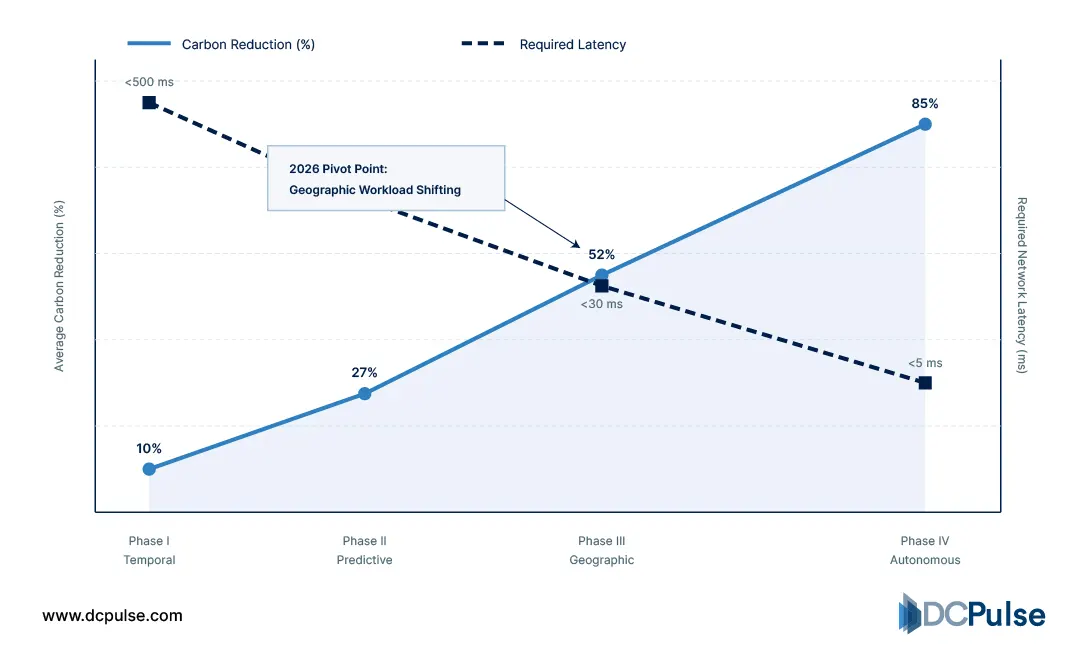
On-site systems, such as battery storage, further enhance flexibility. These systems allow data centers to draw less power from the grid during peak demand or maintain operations when supply fluctuates.
Finally, these capabilities enable data centers to provide grid services, such as balancing supply-demand fluctuations, something traditionally handled by power plants. Demand flexibility is increasingly recognized as a key tool for maintaining grid reliability as renewable energy grows.
Together, these innovations are transforming data centers into flexible energy participants, capable of supporting grid stability instead of just consuming power.
Who’s Leading the Shift? Industry Adoption
The transition toward grid-interactive data centers is already underway, led primarily by hyperscalers and supported by utilities exploring new ways to balance increasingly complex power systems.
Google is one of the most active players in this space. The company has been working on making its data centers more responsive to grid conditions, including shifting certain computing tasks to times and locations where cleaner energy is available.
Microsoft is also advancing grid-interactive strategies through its broader sustainability and energy programs, exploring ways to integrate data center operations with grid needs and renewable energy supply. Utilities are beginning to collaborate with large data center operators to treat them as flexible energy assets rather than fixed loads. Programs focused on demand response and load flexibility are allowing data centers to participate in grid balancing efforts, especially during peak demand periods.
Industry analysis highlights that demand-side flexibility from large consumers like data centers is becoming increasingly important as renewable energy adoption grows.
Contribution to grid stability Generation vs. demand-side flexibility
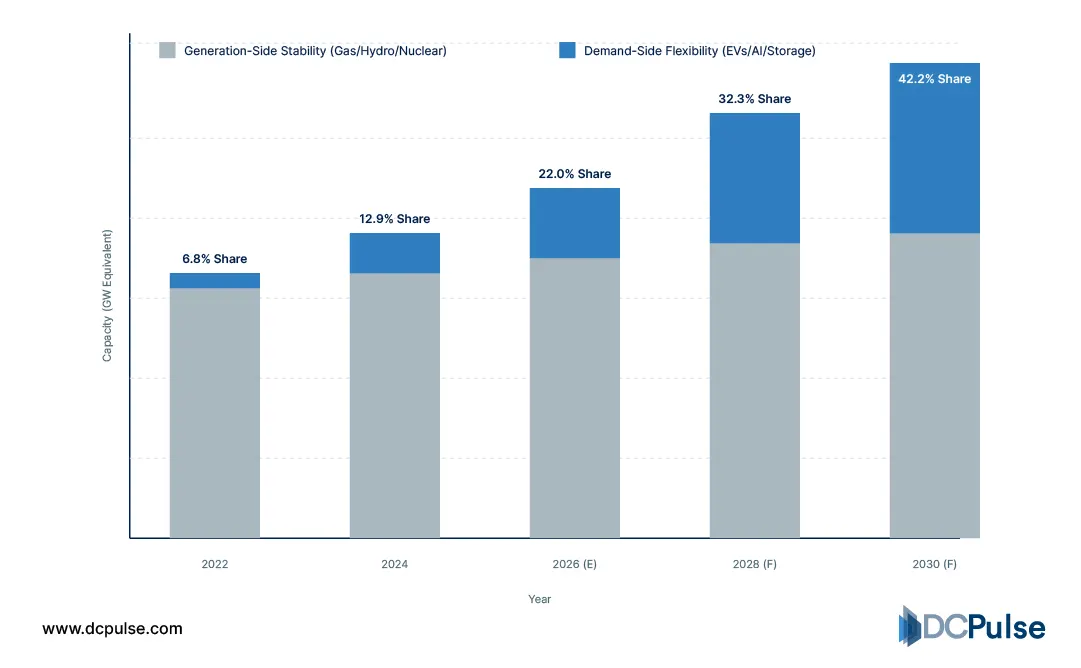
However, most implementations are still in early or limited stages. While pilot programs and targeted deployments are expanding, fully integrated, large-scale grid-interactive data center networks are not yet widespread.
The pattern is clear: the foundation is being built, but the transition from experimental programs to standard practice is still in progress.
Can Data Centers Become Grid Assets Instead of Liabilities?
Data centers can become valuable grid assets, but only under the right conditions.
The core idea behind grid-interactive data centers is simple: instead of consuming power at a constant rate, they adjust usage based on grid needs. In theory, this helps balance renewable energy fluctuations and reduces stress during peak demand. In practice, however, the transition is not straightforward.
The biggest challenge is reliability. Data centers are built to deliver uninterrupted service, and any changes in power usage must not impact performance. This limits how much flexibility operators can realistically offer to the grid.
There are also economic and regulatory barriers. Participating in energy markets, demand response programs, or grid services requires the right incentives and infrastructure, which are not yet fully developed in many regions.
That said, the potential is significant. By shifting non-critical workloads, using on-site energy storage, and responding to grid signals, data centers can support stability without compromising operations.
The most likely outcome is gradual adoption. Leading operators will integrate grid-interactive capabilities where feasible, while broader adoption will depend on policy support and market evolution.
Data centers won’t fully replace traditional grid infrastructure, but they can become an important part of how it adapts to a renewable future.