Pranav Hotkar
The race to scale AI is creating a new kind of environmental challenge, one measured not in data, but in carbon.
As data centers expand to support increasingly compute-intensive workloads, their energy consumption is rising sharply. While the industry has made significant progress in improving efficiency and adopting renewable energy, total emissions remain a growing concern, especially as demand accelerates. The conversation is now shifting from reducing impact to eliminating it entirely.
That shift has given rise to a more ambitious goal: carbon-negative data centers.
Unlike net-zero, which balances emissions through offsets, carbon-negative infrastructure aims to remove more carbon from the atmosphere than it emits. It’s a bold vision, one that requires not just cleaner energy but fundamental changes in how data centers are powered, built, and operated.
But ambition does not guarantee feasibility.
Achieving carbon-negative status at scale would require breakthroughs in energy sourcing, carbon removal, and supply chain decarbonization, all within a tight timeline. As 2030 targets approach, the gap between commitment and capability is becoming harder to ignore.
The question is no longer whether data centers can reduce their carbon footprint.
It’s whether they can go beyond zero and do it fast enough to matter.
How Carbon-Intensive Are Data Centers Today?
Despite major efficiency improvements, data centers remain a growing source of emissions due to rising demand, especially from AI workloads. Globally, data centers account for roughly 1-1.5% of total electricity consumption, with usage continuing to climb as digital services expand.
Global Data Center Electricity Consumption (2015-2030)
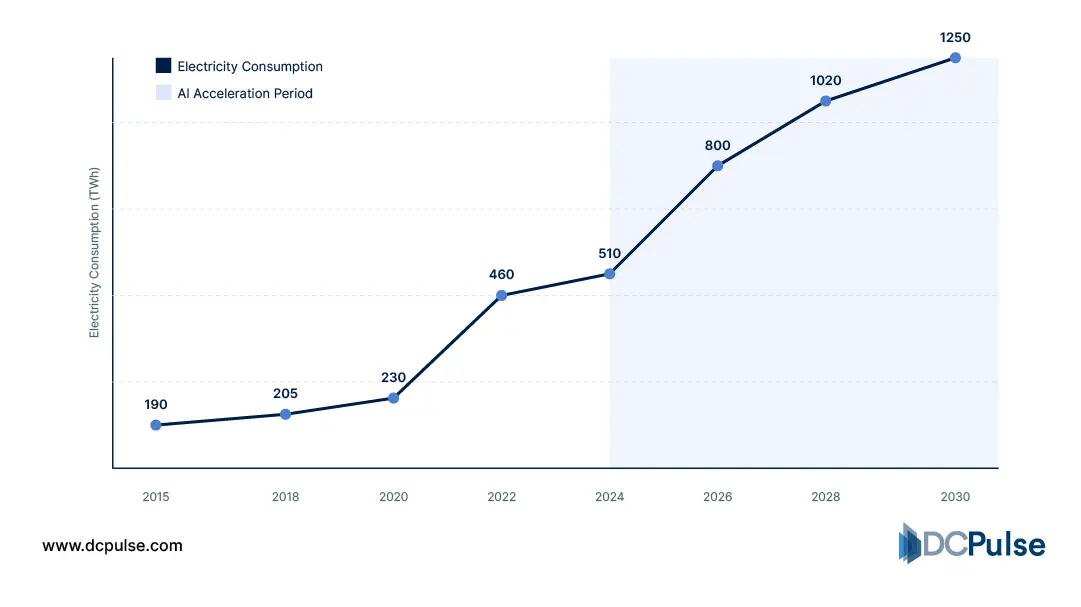
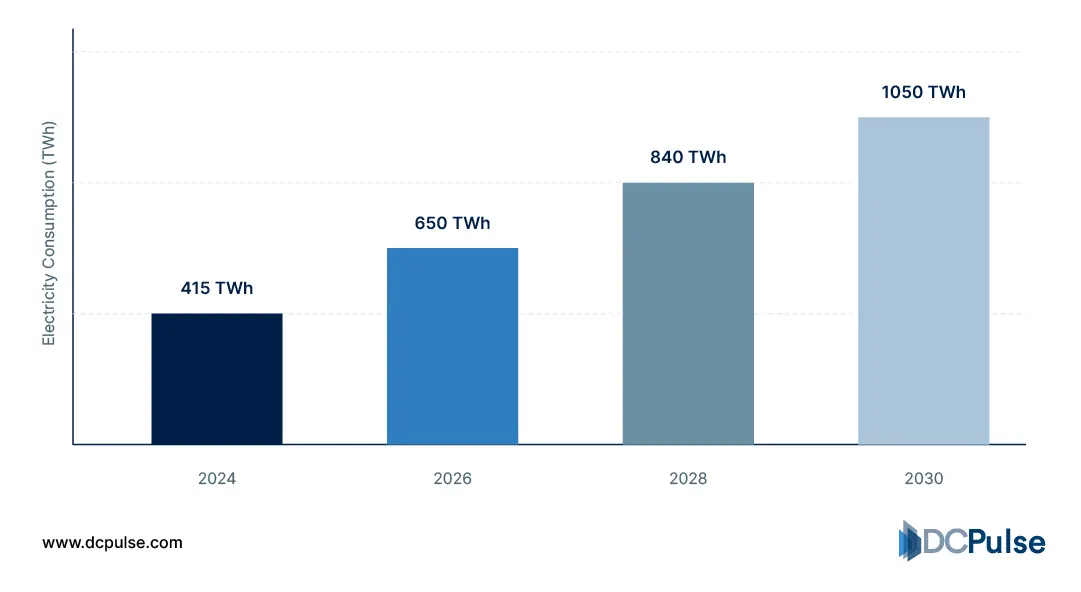
This share is expected to increase significantly. Recent projections estimate global data center electricity use could reach ~945 TWh by 2030, nearly doubling from current levels, driven largely by AI infrastructure expansion.
Data Center Power Demand Forecast (2024-2030)
Emissions are closely tied to how this energy is sourced. While hyperscalers are investing heavily in renewables, most data centers still rely on grid electricity that includes fossil fuel generation. As a result, Scope 2 emissions (electricity-related) dominate the carbon footprint, often outweighing direct operational emissions.
Data Center Emissions Breakdown (2026 Profile)
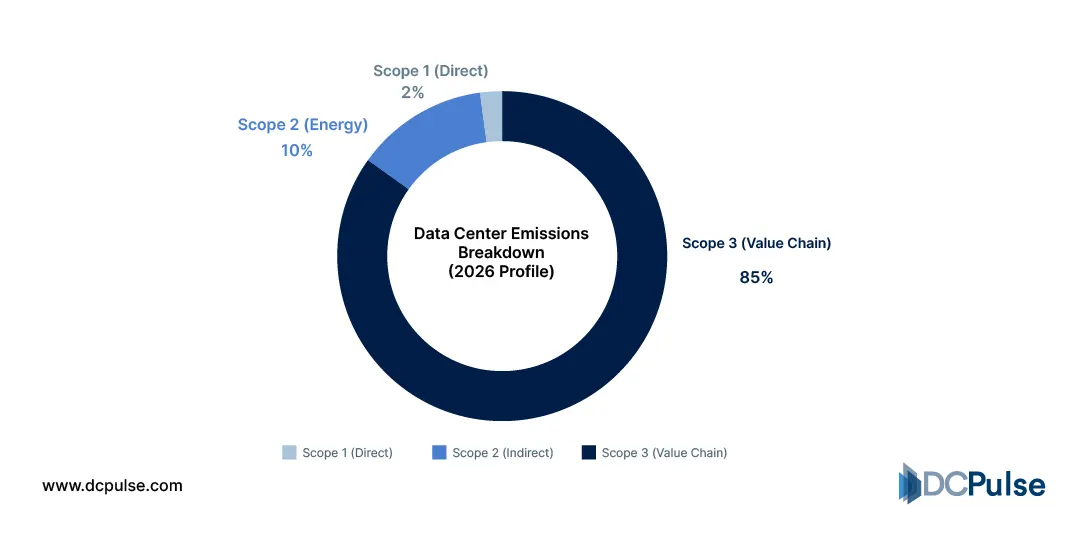
In addition, Scope 3 emissions, from hardware manufacturing, supply chains, and construction, add a significant but less visible layer of carbon impact, particularly as AI accelerates demand for new infrastructure.
The result is a paradox: efficiency has improved, but total emissions pressure is rising. This makes the leap from carbon reduction to carbon-negative far more complex than industry commitments suggest.
What Would It Take to Go Carbon-Negative?
Reaching carbon-negative status requires more than reducing emissions; it demands removing more carbon than is produced across the entire data center lifecycle. This fundamentally shifts the challenge from efficiency to system-wide decarbonization.
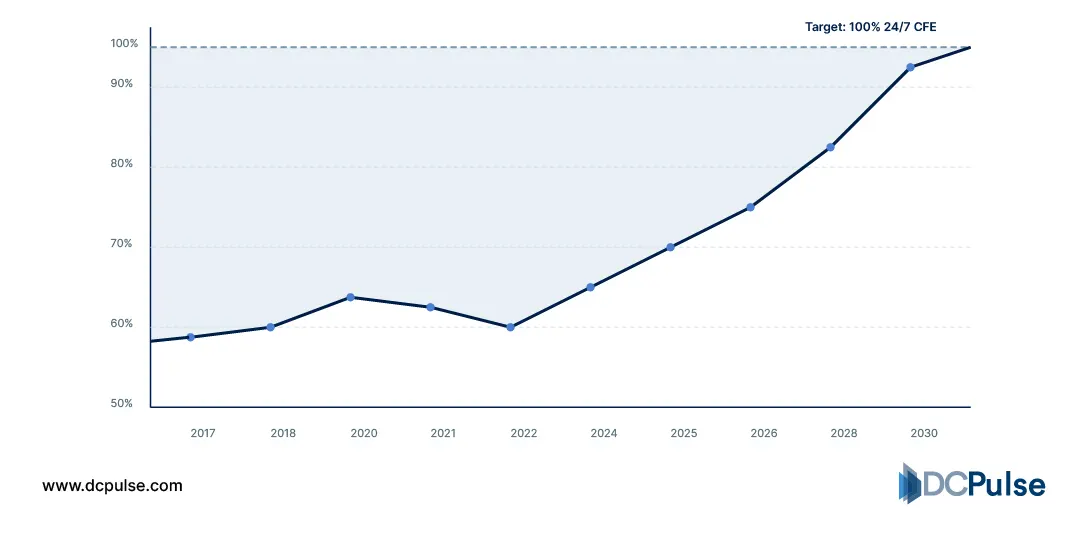
The first requirement is moving beyond annual renewable matching to 24/7 carbon-free energy. Instead of offsetting emissions with renewable credits, data centers must align their electricity consumption with clean energy availability in real time. This approach is increasingly seen as critical to eliminating Scope 2 emissions tied to grid dependency.
Annual vs. 24/7 Carbon-Free Energy (CFE) Matching
Second, carbon-negative goals depend heavily on carbon removal technologies, not just offsets. Solutions like direct air capture (DAC) are designed to physically remove CO₂ from the atmosphere, but they remain expensive and limited in scale compared to global emissions.
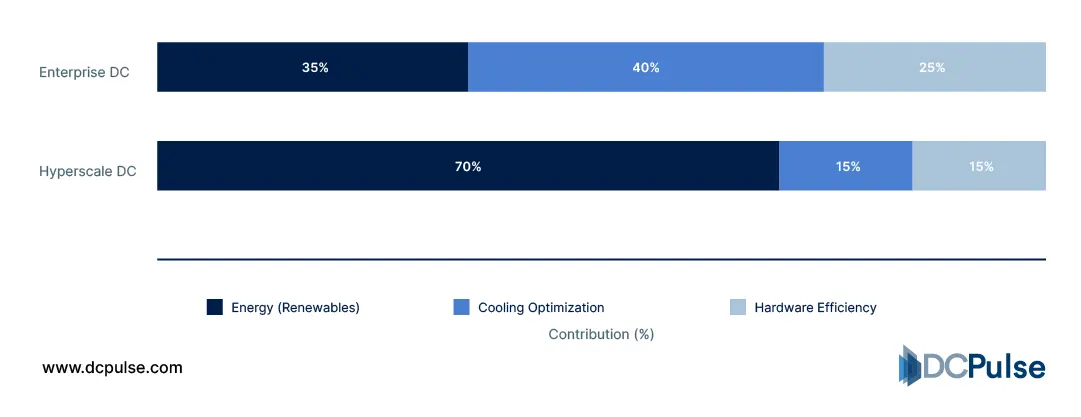
Efficiency improvements also play a critical role. Advanced cooling systems, optimized hardware utilization, and energy-efficient designs can significantly reduce operational emissions, lowering the total carbon that needs to be offset or removed.
Emissions Reduction Contributors (%)
Finally, Scope 3 emissions, including construction, hardware manufacturing, and supply chains, must be addressed. These often represent a substantial portion of total emissions, yet remain the hardest to control due to their indirect nature.
Together, these requirements highlight the scale of the challenge: achieving carbon-negative data centers is not a single innovation but a coordinated transformation across energy, technology, and supply chains.
Who’s Trying? Inside the Industry Push
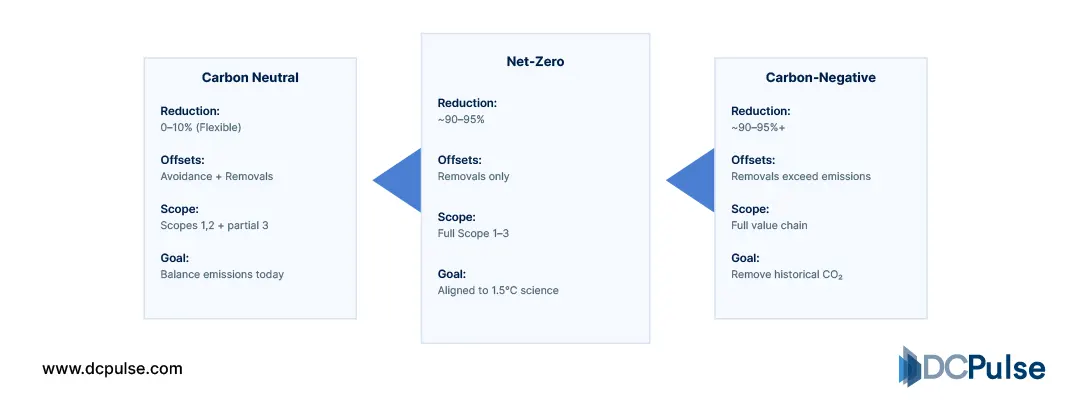
The push toward carbon-negative data centers is being led by a small group of hyperscalers, with Microsoft taking one of the most aggressive positions in the industry. The company has committed to becoming carbon negative by 2030, meaning it aims to remove more carbon from the atmosphere than it emits, a target that goes beyond conventional net-zero goals.
This ambition is supported by a broader sustainability strategy that includes eliminating emissions across operations, supply chains, and infrastructure.
Comparison of Carbon Targets
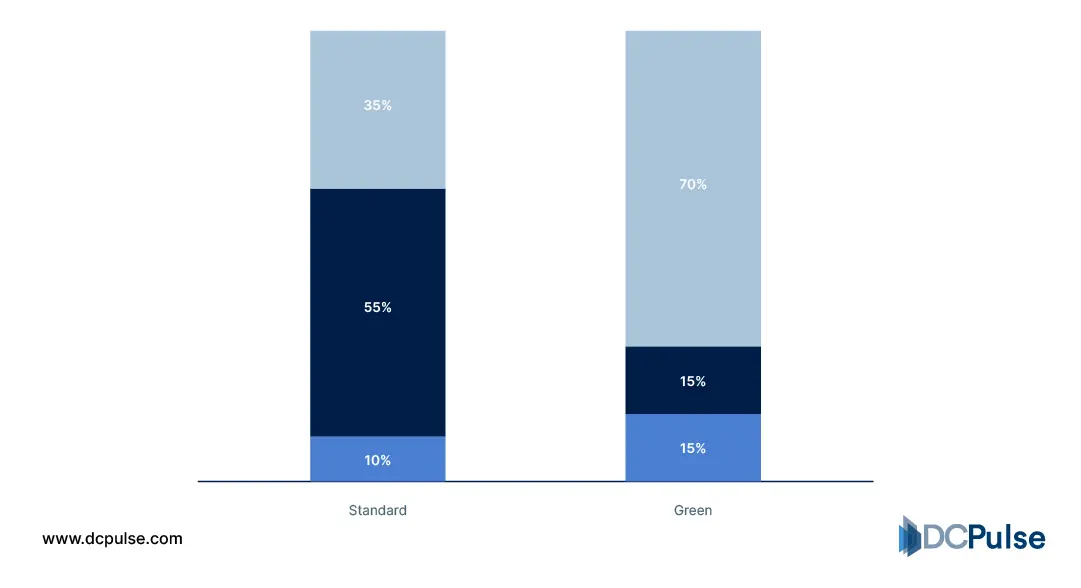
A key part of this approach is the decarbonization of data center operations. Microsoft is focusing on reducing emissions from energy use, materials, and construction while scaling renewable energy integration across its facilities.
Emissions Sources Breakdown - Operations vs Energy vs Construction
Crucially, the company is also investing in carbon removal, recognizing that emissions cannot be fully eliminated through efficiency and clean energy alone. Its carbon removal program focuses on scaling technologies that physically remove CO₂ from the atmosphere rather than relying on traditional offsets.
However, while these initiatives are substantial, they are still evolving. Carbon removal technologies remain limited in scale, and achieving full lifecycle decarbonization across global data center operations presents significant challenges.
The result is a clear signal: real progress is being made, but carbon-negative data centers remain an ambition in motion rather than a fully realized industry standard.
Can Data Centers Become Carbon-Negative by 2030?
Carbon-negative data centers are technically possible, but not at industry scale by 2030.
The technologies required to achieve carbon-negative operations already exist in some form. Renewable energy procurement, advanced efficiency measures, and emerging carbon removal solutions together create a viable pathway. Leading hyperscalers have demonstrated that significant emissions reductions are achievable, and early investments in carbon removal signal a shift beyond traditional offset-based strategies.
However, scaling these solutions across the global data center ecosystem presents a far greater challenge. The availability of 24/7 carbon-free energy remains limited in many regions, making real-time clean power matching difficult. At the same time, carbon removal technologies, while promising, are still expensive and not yet deployed at the scale required to offset large volumes of emissions.
Another critical barrier lies in Scope 3 emissions. Decarbonizing supply chains, construction materials, and hardware manufacturing requires coordination across industries, many of which are still in early stages of their own transition.
The most realistic outcome is a partial transition. Hyperscalers may achieve carbon-negative status within controlled environments or specific regions, but widespread adoption across the industry will take longer.
By 2030, carbon-negative data centers will exist, but they will be exceptions, not the norm.