DCPulse
The rapid expansion of artificial intelligence is reshaping the requirements of global digital infrastructure. As businesses adopt generative AI, cloud providers expand computing capacity, and technology companies invest in increasingly powerful AI systems, data centers are facing a new set of operational and financial challenges. The infrastructure required to support AI workloads extends beyond conventional server capacity, placing greater demands on electricity supply, cooling systems, network connectivity, and long-term capital investment.
Unlike traditional enterprise computing, AI infrastructure often depends on high-performance accelerators operating in densely configured environments. These systems require substantial computing resources and carefully engineered facilities capable of supporting demanding power and thermal requirements. As a result, the growth of AI is testing how quickly the data center industry can expand while maintaining operational efficiency, financial sustainability, and reliable service delivery.
AI Workloads Are Reshaping Data Center Requirements
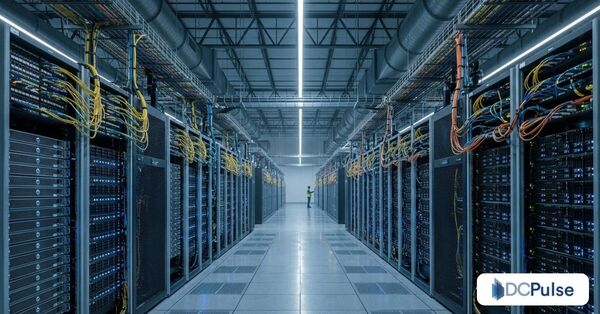
The changing nature of computing workloads is influencing how data centers are designed, developed, and operated. Traditional facilities have historically supported a broad mix of enterprise applications, storage, networking, and cloud services. AI infrastructure introduces additional requirements, particularly for GPU-intensive training and inference environments.
Large-scale AI training requires interconnected computing systems that can process substantial volumes of data. These environments depend on high-performance processors, specialized accelerators, memory infrastructure, and low-latency networking. The resulting infrastructure must support coordinated computing across multiple servers and, in some cases, multiple data center facilities.
Inference workloads create a different set of infrastructure considerations. As AI applications become integrated into business software, search platforms, customer services, and industrial systems, computing demand can become more distributed and continuous. This creates opportunities for additional data center capacity closer to users, enterprise networks, and cloud service regions.
For operators, the challenge is no longer simply providing additional rack space. Facilities must accommodate changing rack densities, power distribution requirements, cooling architectures, and network configurations. Existing buildings may require substantial upgrades before they can support newer AI infrastructure.
Power Availability Emerges as a Critical Constraint
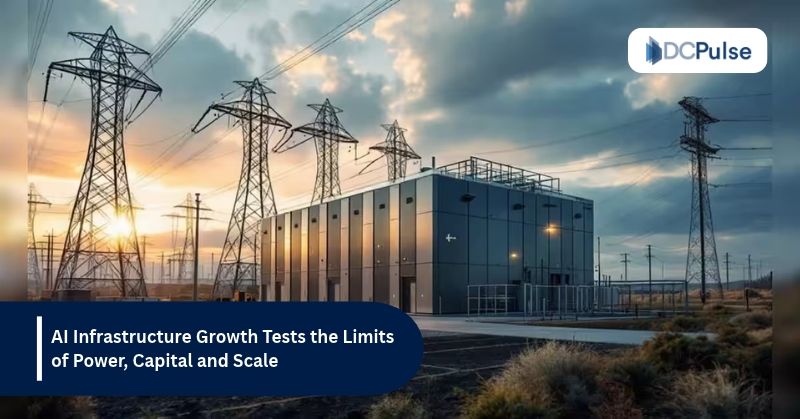
Electricity availability is becoming one of the most important considerations in AI data center development. High-performance computing environments require reliable power delivery, while increasing equipment density can place additional pressure on electrical infrastructure.
The challenge begins before a data center becomes operational. Developers must evaluate grid capacity, connection timelines, substation requirements, transmission infrastructure, and the availability of suitable power agreements. In markets where electricity infrastructure is already under pressure, securing sufficient capacity can become a significant obstacle to project development.
Grid connection delays can also affect construction schedules and investment planning. A data center building may be physically ready, but without an adequate and reliable electricity connection, its computing infrastructure cannot operate at the intended capacity.
Consequently, power availability is increasingly influencing decisions about where new facilities are developed. Locations with access to established electricity infrastructure, opportunities for additional generation, and supportive regulatory environments can become more attractive to developers.
On-site generation, battery energy storage systems, and alternative energy arrangements are also receiving attention as potential components of data center power strategies. However, these solutions involve their own engineering, financial, and regulatory considerations. They do not automatically eliminate dependence on the wider electricity grid.
For data center operators, the priority is developing a resilient power strategy that balances immediate capacity requirements with long-term energy security.
Cooling Architecture Faces Higher Thermal Demands
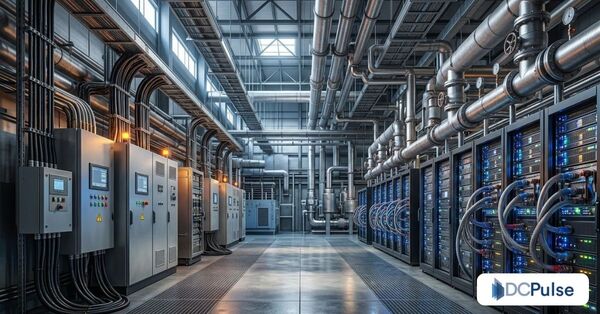
Power consumption and cooling requirements are closely connected. As AI servers become more computationally intensive, the heat generated within data center environments creates additional demands on thermal management systems.
Conventional air-based cooling can remain suitable for many enterprise and cloud workloads. However, high-density AI deployments may require more advanced approaches to maintain appropriate operating temperatures and equipment performance.
Liquid cooling is gaining importance in this context. Direct-to-chip liquid cooling and other liquid-based configurations can help remove heat from high-performance processors more efficiently than conventional air-based approaches in suitable applications.
The adoption of liquid cooling also introduces additional infrastructure considerations. Data center developers must account for coolant distribution systems, heat exchangers, pumps, monitoring equipment, maintenance procedures, and compatibility with IT hardware.
Retrofitting existing facilities can be particularly complex. Older buildings may not have been designed to accommodate the plumbing, structural arrangements, and electrical requirements associated with high-density AI deployments.
Cooling decisions also influence overall facility efficiency. Operators must evaluate how thermal management systems affect energy consumption, water requirements, maintenance costs, and operational resilience. The most appropriate solution will depend on workload characteristics, climate conditions, facility design, and equipment specifications.
Capital Requirements Challenge Infrastructure Expansion
The financial requirements of AI infrastructure are creating another layer of complexity for the data center industry. Developing large-scale facilities involves substantial investment in land, construction, electrical systems, cooling equipment, networking infrastructure, and computing hardware.
AI-focused facilities can introduce additional capital requirements because of their specialized power and thermal configurations. High-performance accelerators and associated networking equipment also represent significant technology investments.
For developers and operators, the financial challenge extends beyond initial construction costs. Long-term operating expenses include electricity, equipment maintenance, cooling operations, network services, staffing, and infrastructure upgrades.
Financing structures must also account for the changing economics of AI computing. Hardware generations evolve, customer requirements shift, and the commercial value of available computing capacity can change over the useful life of a facility.
This creates questions around investment timing and infrastructure utilization. Building too little capacity may limit opportunities to serve growing AI demand, while developing too much capacity without sufficient customer commitments can expose operators to financial pressure.
Partnerships between cloud providers, data center operators, infrastructure investors, energy companies, and equipment suppliers are therefore becoming important elements of expansion strategies. Different participants can contribute financing, technical expertise, customer demand, or access to energy infrastructure.
Networking Becomes Central to AI Infrastructure Performance
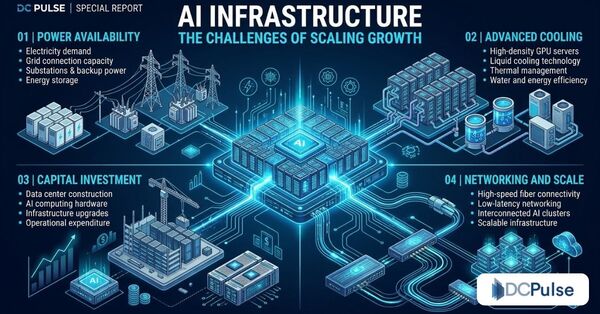
The expansion of AI computing is also increasing the importance of high-performance networking. Large AI clusters depend on communication between processors, storage systems, and other computing resources. Network performance can influence how effectively these systems operate.
High-bandwidth, low-latency connectivity is particularly important for distributed training environments, where large volumes of data move between interconnected accelerators. Network bottlenecks can affect overall computing efficiency, making network architecture an important consideration during facility planning.
Within data centers, operators must consider switching infrastructure, optical connectivity, cabling density, and network topology. These requirements can influence rack layouts, equipment placement, and the physical design of computing halls.
Connectivity between facilities is another consideration. As AI infrastructure expands across regions, organizations may need to coordinate computing resources, data storage, and cloud services across geographically distributed environments.
This creates additional opportunities for fiber network providers, interconnection platforms, and telecommunications companies. Data centers are increasingly becoming interconnected components of broader AI computing ecosystems rather than isolated facilities providing server space.
Existing Data Centers Face Upgrade Decisions
The expansion of AI infrastructure does not mean every new requirement will be addressed through greenfield development. Existing data centers remain important assets, particularly in established digital infrastructure markets with access to customers, fiber networks, and electricity infrastructure.
However, operators must assess whether their current facilities can support higher-density computing. Electrical distribution systems, backup power infrastructure, cooling capacity, floor loading, and network connectivity may all require evaluation.
Some facilities may be suitable for partial modernization, while others could face technical or economic limitations. The decision to retrofit or construct a new facility depends on the condition of existing infrastructure, available power capacity, customer requirements, and the cost of upgrades.
Phased development may offer another approach. Operators can introduce additional electrical and cooling capacity as customer demand develops, provided the building design and supporting infrastructure allow for future expansion.
This flexibility can help reduce the risk of committing substantial capital before demand is sufficiently established. It also places greater importance on modular engineering, scalable power distribution, and adaptable cooling systems.
Sustainability and Energy Strategy Remain Important
The growing energy requirements of AI infrastructure are bringing sustainability considerations further into data center planning. Operators face the challenge of supporting expanding computing demand while managing electricity consumption, emissions, water use, and environmental impact.
Renewable energy procurement can form part of a broader strategy, but the availability and characteristics of renewable generation must be considered alongside the continuous power requirements of data centers.
Energy storage, improved cooling efficiency, heat reuse, and more effective power management can contribute to infrastructure optimization. Their practical value depends on local energy markets, site conditions, technical feasibility, and operating requirements.
Transparency around energy consumption and environmental performance is alsoz becoming increasingly relevant to customers and infrastructure investors. Organizations evaluating data center services may consider not only available computing capacity but also the energy strategy supporting that capacity.
For operators, sustainability is therefore connected to both infrastructure performance and long-term commercial positioning.
The Next Phase of AI Growth Will Depend on Infrastructure Readiness
The expansion of AI is creating opportunities across the global data center ecosystem, but the pace of development will depend on more than demand for computing power. Electricity availability, cooling technology, financing, networking, construction capacity, and regulatory conditions will all influence how quickly infrastructure can be delivered.
The competitive position of data center operators may increasingly depend on their ability to coordinate these requirements. Access to suitable land and customer demand will remain important, but reliable power, scalable facility design, and efficient operations will become equally significant considerations.
For cloud providers and AI companies, infrastructure availability can influence where computing resources are deployed and how services are delivered. For developers and investors, it creates a need for more detailed assessments of project feasibility, capital exposure, and long-term demand.
AI infrastructure growth is ultimately testing the industry's ability to scale physical infrastructure at the same pace as technological development. The next stage of expansion will not be determined by computing hardware alone. It will depend on whether the digital infrastructure industry can deliver the power, cooling, connectivity, and financial foundations required to support increasingly demanding AI workloads.