DCPulse
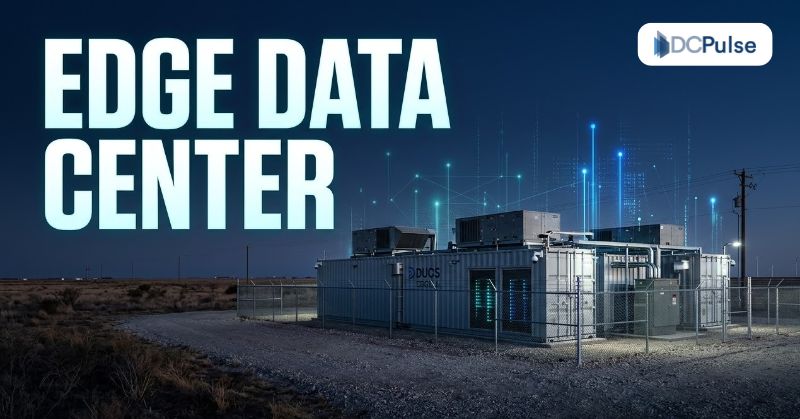
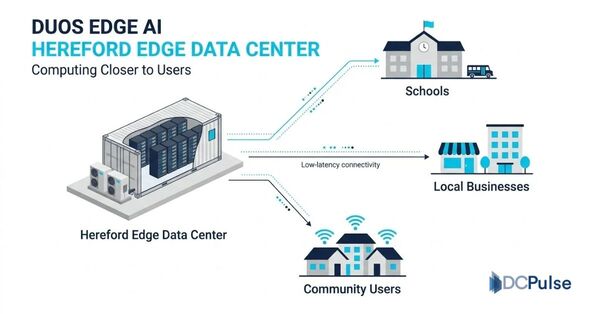
The growing demand for distributed computing infrastructure is bringing greater attention to edge data centers, which place computing resources closer to businesses, users, and connected devices. Duos Edge AI's planned open house at its Hereford Edge Data Center offers an opportunity to highlight this infrastructure model and introduce visitors to the facility's approach to edge computing and AI-focused digital infrastructure.
Edge facilities are becoming an important part of the broader data center ecosystem as organizations seek alternatives and complements to centralized cloud environments. Their role is particularly relevant for applications that depend on lower latency, local data processing, network reliability, and the ability to operate closer to where data is generated.
The Hereford Edge Data Center open house also puts the spotlight on the physical infrastructure supporting distributed AI workloads, including the facilities, power systems, connectivity, and operational considerations associated with deploying computing capacity outside traditional hyperscale campuses.
Hereford Facility Highlights Distributed Infrastructure Model
The Hereford facility is part of Duos Edge AI's strategy to deploy modular data center infrastructure in rural and underserved markets. The company announced the facility in January 2026 through a partnership with Hereford Independent School District (Hereford ISD), positioning the deployment as a local computing and connectivity resource for the district and surrounding community.
Located at 601 N. 25 Mile Avenue in Hereford, Texas, the facility is designed to provide on-premises computing and connectivity. Its intended applications include educational technology, cloud-based learning platforms, regional business services, and emerging AI-enabled workloads.
The deployment reflects a different approach to digital infrastructure expansion. Rather than depending entirely on large campuses concentrated in major metropolitan markets, modular edge facilities can extend computing resources to smaller communities where proximity, connectivity, and practical deployment requirements are important.
For school districts and regional organizations, locally positioned infrastructure could support applications that require faster access to computing resources or more direct connections to local networks. The model also offers an opportunity to introduce advanced infrastructure into communities that may not attract large-scale hyperscale development.
Open House to Showcase Edge Data Center Operations
The open house was announced for June 18, 2026, from 9:00 a.m. to 11:00 a.m. Central Time. The event was intended to bring together local leaders, education stakeholders, business representatives, partners, and technology professionals for a tour and introduction to the facility's modular infrastructure.
The event's emphasis on community participation reflects the increasingly local nature of digital infrastructure development. Data centers are no longer viewed exclusively as large industrial projects serving cloud platforms and enterprise customers. Smaller facilities are also becoming part of regional technology strategies involving education, public services, connectivity providers, and local businesses.
Facility tours can provide a practical view of how computing equipment, network infrastructure, power delivery, environmental management, and security systems come together in an operational environment. For communities considering similar deployments, these details can help explain the physical requirements and potential uses of edge infrastructure.
The Hereford open house also provides a platform for Duos Edge AI to demonstrate how its modular design can be deployed in locations outside conventional data center hubs.
Modular Design and Infrastructure Deployment
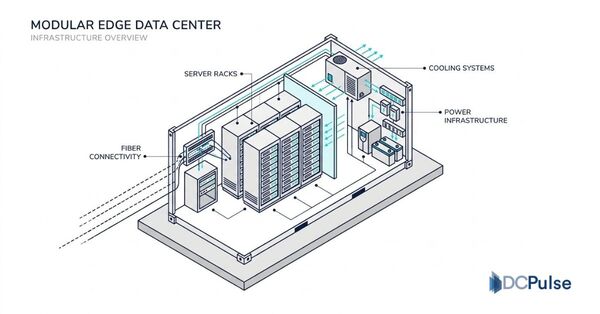
Modularity is central to the edge data center model. Prefabricated infrastructure can potentially reduce the complexity associated with building conventional facilities from the ground up, allowing equipment and supporting systems to be deployed in smaller footprints and adapted to local requirements.
Duos Edge AI describes its facilities as modular systems designed for deployment closer to end users, with integration into existing network infrastructure. The approach is aimed at locations where customers need computing capability but may not have the scale, resources, or demand to support a conventional data center development.
The deployment model places emphasis on repeatability, scalability, and the ability to bring infrastructure online with fewer site-development requirements than a traditional large facility. Actual deployment timelines, capacity, and configurations will depend on location-specific requirements, utility availability, equipment, and network connectivity.
For digital infrastructure operators, modular deployments could offer another way to address demand from distributed workloads. The approach may be particularly relevant where businesses require local processing, network aggregation, or infrastructure that can be expanded as usage grows.
Power, Cooling, and Rural Infrastructure Considerations
Power availability and cooling requirements remain central to any data center deployment, including smaller edge facilities. Rural locations can offer different infrastructure conditions from major data center markets, but dependable electricity and fiber connectivity remain essential for supporting continuous computing services.
Duos Edge AI stated that the Hereford facility operates using grid power and does not require water for cooling. These characteristics are relevant in regions where water availability, infrastructure costs, and environmental considerations can influence data center development.
The water-free cooling approach is particularly notable in the Texas Panhandle, where infrastructure planning must account for local resource conditions. However, power reliability, backup systems, equipment protection, and thermal management remain important considerations for maintaining availability in edge environments.
The company's modular design also aims to simplify deployment by reducing the need for extensive traditional construction. For operators, this model could help extend infrastructure into markets where conventional data center projects may be difficult to justify economically.
AI Infrastructure Beyond Major Data Center Markets
AI infrastructure development is increasingly creating demand for computing resources beyond centralized hyperscale campuses. While large AI training workloads are typically associated with major facilities equipped with extensive power and cooling infrastructure, edge deployments can support selected applications that benefit from local processing.
Education, healthcare, industrial operations, regional businesses, and connected systems may require computing resources closer to their users or data sources. Local infrastructure can support certain real-time applications, data handling requirements, and connectivity services without routing every workload to a distant facility.
The Hereford deployment illustrates how edge computing providers are exploring regional infrastructure opportunities. Its connection with the school district highlights the potential overlap between digital infrastructure investment, educational technology, community connectivity, and workforce development.
The model does not replace large-scale cloud or AI campuses. Instead, distributed edge facilities could complement centralized infrastructure by supporting workloads that are sensitive to latency, connectivity, location, or local operational requirements.
Regional Connectivity and Digital Infrastructure Growth
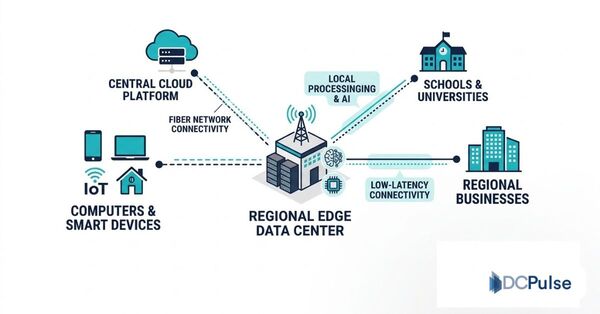
Fiber connectivity is a critical requirement for edge data centers, particularly when facilities are intended to support businesses, institutions, and network providers. The ability to connect to reliable upstream networks determines how effectively local computing resources can integrate with cloud platforms and wider digital ecosystems.
Regional edge facilities may also create opportunities for network providers to extend connectivity services, establish interconnection points, and serve customers in areas that are less concentrated with traditional data center infrastructure.
For communities such as Hereford, the development of local computing infrastructure can help strengthen the digital foundation required for technology adoption. The benefits will depend on service availability, customer demand, connectivity partnerships, and the types of workloads that the facility ultimately supports.
A Broader Role for Smaller Data Center Deployments
Duos Edge AI's Hereford project reflects the wider evolution of data center development, where infrastructure strategies increasingly include smaller, distributed facilities alongside centralized campuses. The growing interest in edge computing is creating opportunities for modular deployments that target regional demand and specialized applications.
The Hereford open house was scheduled for June 18, 2026, giving invited stakeholders an opportunity to examine the facility and learn about the company's deployment approach. While the long-term value of the project will depend on utilization, customer adoption, network performance, and operational reliability, it highlights how data center infrastructure is expanding into markets beyond established technology hubs.
For the broader digital infrastructure industry, rural edge facilities represent an emerging deployment model that connects computing capacity with local demand. As AI adoption, connected systems, and data-intensive services continue to develop, regional infrastructure may become an increasingly important part of how digital services are delivered.