DCPulse
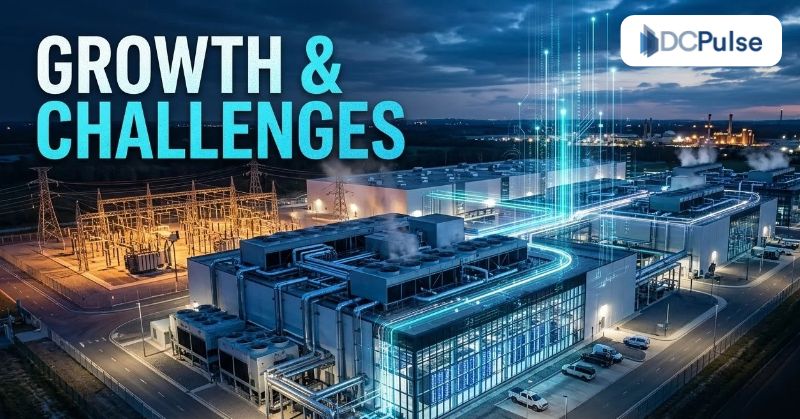
Digital infrastructure is becoming a central part of the global economy as businesses, governments, and consumers increasingly depend on connected services, cloud platforms, artificial intelligence, and digital applications. The expansion of these technologies is driving demand for data centers, fiber-optic networks, computing capacity, energy infrastructure, and advanced cooling systems.
The rapid growth of digital services is creating opportunities for infrastructure operators, technology providers, energy companies, construction firms, and investors. At the same time, the pace of expansion is introducing new challenges involving electricity availability, construction costs, sustainability, network capacity, resource management, and infrastructure planning.
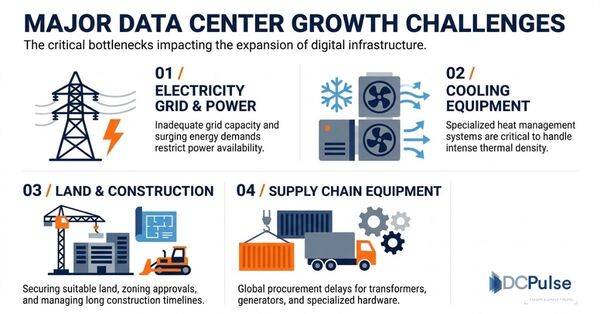
The digital infrastructure industry is entering a period where growth is no longer determined only by computing demand. Access to power, suitable land, connectivity, equipment, and the ability to deliver projects on time are increasingly important factors influencing development decisions.
Rising Demand for Data Center Capacity
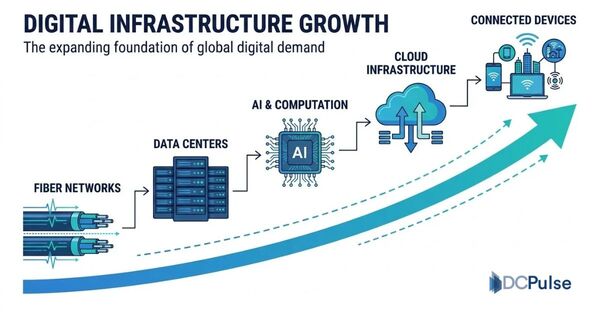
Data centers are becoming increasingly important as organizations move workloads to cloud environments and adopt AI-driven applications. Enterprise software, digital payments, streaming services, online platforms, analytics, and business automation all depend on reliable computing infrastructure.
The growing use of AI is adding another layer of demand. AI training and inference workloads can require specialized accelerators, high-performance servers, advanced networking, and systems capable of managing higher power densities. These requirements are influencing how data centers are designed, built, and operated.
Operators are responding through new campus developments, facility expansions, modernization projects, and investments in high-density computing environments. Hyperscale cloud providers, colocation companies, and enterprise operators are evaluating locations based on infrastructure availability, network access, power capacity, and long-term scalability.
However, demand growth is not always matched by the availability of supporting infrastructure. New facilities can require extensive planning, utility coordination, equipment procurement, construction work, and grid connections. These requirements can make project timelines and development costs more difficult to manage.
Power Availability Becomes a Critical Constraint
Electricity is emerging as one of the most important considerations in digital infrastructure development.
Large data center facilities require substantial and reliable power to operate servers, networking equipment, storage systems, cooling infrastructure, and supporting building systems. AI infrastructure can further increase electricity requirements as operators deploy larger computing clusters and higher-density workloads.
In many markets, developers are facing challenges related to grid capacity, transmission infrastructure, utility connection timelines, and the availability of new power generation. A location with suitable land and connectivity may not necessarily have sufficient electricity capacity available within the required development timeframe.
The situation is encouraging greater coordination between data center operators, utilities, energy developers, and policymakers. Discussions increasingly involve grid upgrades, renewable energy procurement, battery storage, onsite generation, demand management, and alternative approaches to securing dependable power.
Power planning is therefore becoming an early-stage consideration rather than a decision made after the building design is finalized. For developers, the ability to secure a viable energy strategy can influence project location, investment decisions, and deployment schedules.
Cooling Requirements and Energy Efficiency
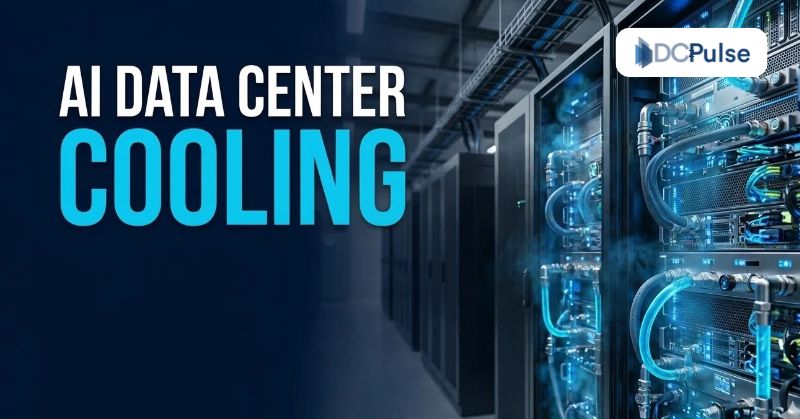
Higher computing densities are placing additional pressure on cooling systems. Traditional air-based cooling remains widely used, but some AI and high-performance computing deployments are introducing requirements that make liquid cooling technologies more attractive.
Cooling infrastructure plays a direct role in facility efficiency, operational reliability, and equipment performance. Data center operators must consider temperature management, airflow, heat transfer, water use, environmental conditions, and the characteristics of the computing equipment installed inside the facility.
Liquid cooling solutions, including direct-to-chip and other liquid-based technologies, are gaining attention as operators prepare for increasingly demanding computing workloads. Their adoption requires careful engineering, integration with IT equipment, maintenance planning, and consideration of facility design.
Efficiency improvements are also extending beyond cooling equipment. Operators are examining power distribution, server utilization, control systems, monitoring technologies, and facility management strategies to reduce unnecessary energy consumption.
The challenge is balancing efficiency objectives with performance, reliability, and the requirements of customers deploying increasingly complex digital workloads.
Connectivity and Network Infrastructure Expansion
Digital infrastructure growth depends on more than data center buildings and electricity. Fiber-optic networks, internet exchanges, subsea cable systems, metro connectivity, and long-distance transmission networks are essential for moving data between users, businesses, cloud platforms, and computing facilities.
The expansion of AI, cloud computing, and distributed digital services is increasing the importance of network performance. Applications may require high bandwidth, low latency, resilient connections, and the ability to transfer large volumes of data between multiple locations.
New data center developments are often influenced by proximity to fiber infrastructure and access to diverse network routes. Connectivity can affect the suitability of a site for cloud services, enterprise workloads, content delivery, AI infrastructure, and other digital applications.
Network expansion also creates opportunities for telecommunications operators, fiber providers, cable infrastructure companies, equipment vendors, and infrastructure investors. However, deployment can involve permitting requirements, construction costs, rights-of-way, and coordination with local authorities.
The long-term growth of digital services will depend on continued investment in both computing facilities and the networks that connect them.
Land, Construction, and Supply Chain Challenges
The physical expansion of digital infrastructure is creating new competition for suitable development sites. Data center projects often require large parcels of land, access to high-voltage electricity, fiber connectivity, transportation infrastructure, and conditions suitable for long-term operations.
In established data center markets, limited land availability and competition from other developments can complicate site selection. Emerging markets may offer new opportunities, but developers still need to assess power infrastructure, connectivity, regulatory frameworks, construction capabilities, and local operating conditions.
Supply chain requirements are another important consideration. Data center construction depends on electrical equipment, transformers, switchgear, generators, cooling systems, servers, networking equipment, and other specialized components. Delays in the availability of critical equipment can affect project schedules and deployment plans.
Construction companies and infrastructure developers are also managing increasingly complex projects. The combination of larger facilities, high-density computing requirements, power infrastructure integration, and specialized cooling systems is creating greater demand for technical expertise and coordination.
The ability to plan projects around equipment availability, workforce requirements, and infrastructure readiness is becoming an important competitive advantage.
Sustainability and Environmental Considerations
The growing footprint of digital infrastructure is bringing greater attention to environmental performance. Electricity consumption, cooling requirements, water use, construction materials, land development, and emissions are becoming important considerations for operators, regulators, customers, and local communities.
Renewable energy procurement is one approach used by data center companies to address energy-related emissions. Operators are exploring renewable power agreements, energy sourcing strategies, and partnerships with energy providers to support their sustainability goals.
Water management is another important issue, particularly in regions facing water stress. Cooling system selection, water recycling, facility design, and local environmental conditions can influence the resource requirements of a data center.
Sustainability strategies are increasingly connected with infrastructure planning. Developers must consider the environmental characteristics of a location alongside electricity availability, connectivity, cost, and operational reliability.
Responsible growth will require solutions that account for the long-term needs of digital services while considering the resources and infrastructure shared with surrounding communities.
New Opportunities for Infrastructure Investment
Despite the challenges, digital infrastructure expansion is creating opportunities across multiple sectors.
Data center development is increasing demand for construction, electrical engineering, cooling technology, energy systems, network infrastructure, monitoring software, and specialized services. Companies supporting the physical and operational requirements of digital infrastructure are becoming part of a broader investment ecosystem.
Energy developers have opportunities to work with infrastructure operators on power generation, renewable energy, storage, and grid integration. Cooling technology providers can develop solutions for higher-density computing environments. Network operators can expand fiber routes and improve connectivity between data center markets.
The growth of AI infrastructure is also creating demand for advanced computing systems, high-speed networking, rack-scale integration, and infrastructure management technologies.
For investors, the sector presents opportunities across both established markets and emerging locations. However, the long development timelines, capital requirements, power constraints, and technology changes make project evaluation increasingly complex.
Successful investments will depend on more than anticipated computing demand. Project execution, access to critical resources, operational efficiency, and the ability to adapt to changing technology requirements will remain important factors.
Changing the Way Data Centers Are Designed
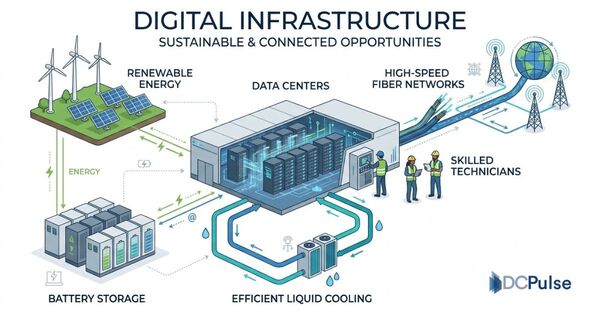
Modern digital infrastructure is evolving as operators prepare for different workload requirements. Traditional enterprise and cloud computing facilities are increasingly being complemented by infrastructure designed for AI training, inference, high-performance computing, and specialized applications.
New facility designs are incorporating considerations such as higher rack power densities, flexible cooling architectures, advanced electrical systems, modular construction, and improved monitoring capabilities.
Modular approaches may help operators standardize parts of development and deployment, while flexible facility designs can support changes in equipment and workload requirements over time. However, the suitability of these approaches depends on project size, customer requirements, location, and operational strategy.
The pace of hardware development is also influencing infrastructure decisions. Operators must consider how facilities will accommodate future server generations, changing power requirements, cooling technologies, and network architectures without requiring extensive redesign.
Adaptability is becoming an important part of long-term infrastructure planning.
Workforce and Skills Requirements
The expansion of digital infrastructure is creating demand for a workforce with expertise across engineering, construction, energy, IT, networking, and facility operations.
Data centers require professionals capable of maintaining electrical systems, managing cooling equipment, monitoring building infrastructure, handling network operations, and supporting computing hardware. AI-focused facilities may introduce additional requirements involving high-performance computing, advanced networking, specialized hardware integration, and thermal management.
The industry also faces the challenge of developing talent in locations where infrastructure investment is expanding faster than the availability of experienced workers.
Training programs, technical education, apprenticeships, and partnerships with local institutions can help build the skills required to support new projects and existing facilities. Workforce development may also provide an opportunity for local communities to participate in the economic activity associated with digital infrastructure investment.
The availability of qualified personnel is likely to remain an important consideration as operators expand their geographic footprint and manage increasingly complex facilities.
Balancing Growth With Infrastructure Readiness
Digital infrastructure expansion is creating a growing need for coordination among developers, utilities, governments, technology providers, network operators, and local communities.
The industry's growth opportunities are significant, but development decisions must account for practical constraints. Electricity capacity, transmission infrastructure, land availability, connectivity, equipment supply, environmental conditions, and workforce readiness can all influence whether projects are commercially and operationally viable.
A more integrated approach to planning may help reduce delays and improve infrastructure coordination. Early engagement with utilities, realistic construction schedules, equipment procurement planning, and flexible facility designs can help developers navigate increasingly complex requirements.
The next phase of digital infrastructure development will depend on the industry's ability to manage these challenges while continuing to support the growing needs of cloud computing, AI, enterprise technology, and connected services.
Conclusion
Digital infrastructure growth is creating new opportunities for data center operators, energy companies, network providers, technology manufacturers, construction firms, and investors. The increasing adoption of AI and cloud services is reinforcing the need for computing capacity, reliable connectivity, and scalable physical infrastructure.
At the same time, electricity constraints, cooling requirements, sustainability expectations, construction complexity, supply chain limitations, and workforce availability are becoming important challenges for the industry.
The future of digital infrastructure will not be determined by computing demand alone. The ability to build efficiently, secure resources, improve energy performance, strengthen connectivity, and plan for long-term operational requirements will shape how the sector expands.
As digital services continue to evolve, infrastructure providers that balance growth with reliability, adaptability, and responsible development will be better positioned to support the next stage of the global digital economy.