Pranav Hotkar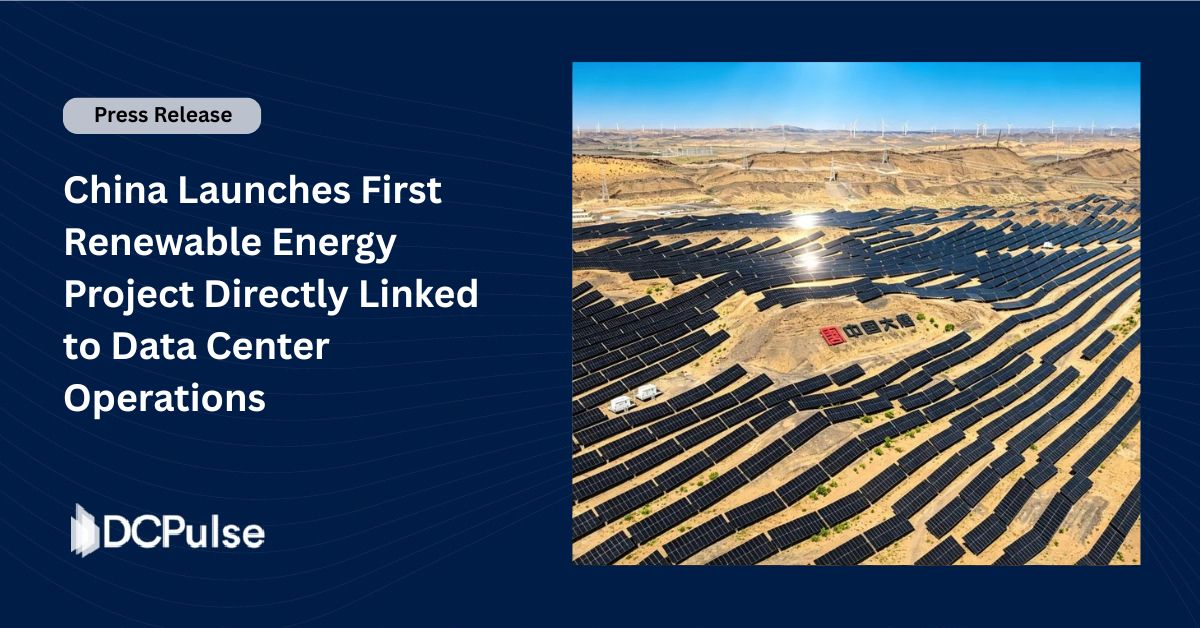
Ningxia, China - May 3, 2026 - China has brought online its first large-scale renewable energy project designed to supply power directly to data centers, marking a significant step in aligning artificial intelligence-driven computing demand with national decarbonization goals.
The project, located in the northwestern region of Ningxia, integrates solar and wind energy generation with a nearby cloud data center hub in Zhongwei. It represents a new infrastructure model in which power generation and computing capacity are coordinated in real-time.
The initial phase includes a 500-megawatt (MW) solar installation, with plans to add up to 1.5 gigawatts (GW) of wind capacity by the end of the year. Once fully operational, the combined system is expected to generate approximately 4.3 billion kilowatt-hours of electricity annually.
Unlike traditional grid-connected models, the project establishes a direct linkage between renewable energy sources and data center operations. This enables workloads to be dynamically shifted based on energy availability, allowing computing tasks to run when renewable supply is abundant or electricity costs are lower.
The initiative is designed to reduce pressure on the power grid while lowering operational costs and carbon emissions. At full capacity, the project is expected to cut emissions by an estimated 3.65 million tonnes annually, reflecting China’s broader push to green its rapidly expanding digital infrastructure.
The launch comes as China faces a surge in electricity demand driven by artificial intelligence and high-performance computing. Data centers are becoming increasingly energy-intensive, prompting policymakers to explore new approaches that integrate clean energy more directly into computing ecosystems.
Ningxia has emerged as a strategic location for such projects due to its abundant renewable resources, particularly solar and wind. The region plays a key role in China’s “east data, west computing” strategy, which aims to shift energy-intensive computing workloads to areas with greater access to clean power.
The project also highlights a broader industry trend toward co-locating data centers with renewable energy assets. By reducing reliance on long-distance power transmission and enabling more efficient energy use, such models are gaining traction as operators seek to balance sustainability with performance demands.
China has set ambitious targets to peak carbon emissions by 2030 while continuing to expand its digital economy. Initiatives like the Ningxia project demonstrate how the country is attempting to reconcile these objectives by tightly coupling energy and data infrastructure.
As global demand for AI computing accelerates, the integration of renewable energy directly into data center operations is expected to play an increasingly important role in shaping the future of sustainable digital infrastructure.