Pranav Hotkar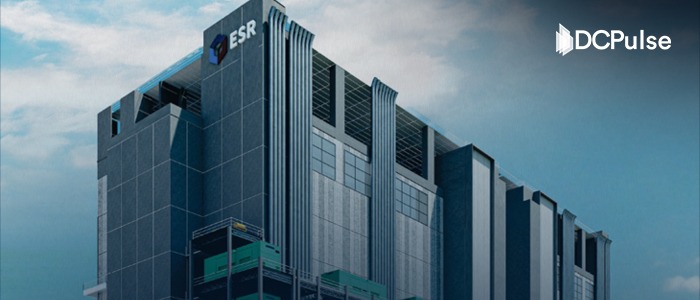
Mumbai, India - February 25, 2026 - ESR Group has announced an INR 900 crore (~USD 100 million) investment to develop its first data center project in India, entering the country’s fast-growing digital infrastructure market with a hyperscale-ready facility in Navi Mumbai.
The project, called ESR Rabale MU1, will be located in the Rabale-Airoli data center corridor and built on a 3.25-acre site. The multi-story facility is designed for an IT load capacity of up to 60 megawatts and has already been pre-leased to a major information and communications technology tenant.
Company leadership said India’s expanding cloud adoption and artificial-intelligence workloads are driving demand for large-scale capacity. “India is one of the most compelling data centre growth markets globally, driven by rapid digital adoption, data localization requirements, and the rise of cloud and AI workloads,” said co-founder and co-CEO Stuart Gibson in the company announcement.
The development marks a diversification move for ESR, traditionally known for logistics and industrial real estate, into digital infrastructure. According to the company, the site was selected for its connectivity ecosystem and power availability within the Mumbai metropolitan region, the country’s primary data center hub.
Abhijit Malkani, CEO of ESR India, said the project represents a milestone in the company’s regional expansion strategy and aligns with enterprise and hyperscale demand in western India.
The Rabale cluster has attracted multiple operators due to submarine cable landings and proximity to financial institutions and technology companies. Industry analysts note that pre-leasing before construction reflects tight capacity conditions in the Mumbai region as AI and cloud providers secure space ahead of deployment timelines.
ESR said the Navi Mumbai facility will operate as a scalable powered-shell campus capable of supporting enterprise, cloud, and AI computing requirements, forming part of the company’s broader Asia-Pacific data center pipeline exceeding 3 gigawatts.
The investment underscores a wider shift among global real estate platforms toward digital infrastructure as compute demand accelerates, with developers prioritizing locations offering both grid readiness and network density to support next-generation workloads.