Pranav Hotkar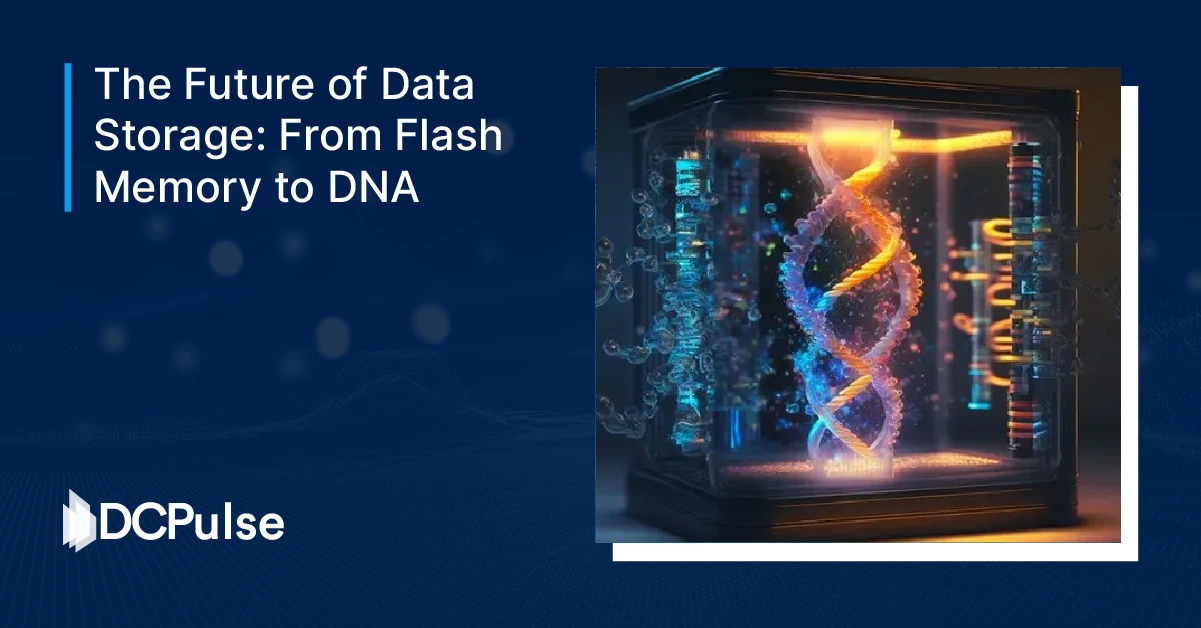
Over the past two decades, the storage hardware that powers modern data centers has undergone a dramatic transformation. Mechanical hard drives once dominated enterprise infrastructure, but the rapid rise of flash memory has reshaped storage architectures across cloud platforms, hyperscale facilities, and enterprise data centers. Flash-based solid-state drives now deliver dramatically faster data access speeds and improved reliability compared with traditional disk-based storage systems.
At the same time, the amount of data being generated worldwide continues to expand at an extraordinary pace. Massive datasets from artificial intelligence systems, video platforms, scientific research, and industrial sensors are placing increasing pressure on existing storage technologies. Data centers must now store and process far larger volumes of information while maintaining performance, efficiency, and long-term reliability.
This challenge is pushing researchers and technology companies to explore entirely new forms of storage media. Beyond advanced flash technologies, experimental approaches such as DNA-based data storage promise the potential to encode enormous quantities of digital information within microscopic biological structures.
While still in early stages of development, these innovations hint at a future in which the foundations of data storage may look very different from today’s flash-driven infrastructure.
Flash Storage Becomes the Backbone of Modern Data Centers
The architecture of modern data centers has increasingly shifted toward flash-based storage as organizations seek faster and more reliable ways to manage growing volumes of digital information. Solid-state drives (SSDs), which use NAND flash memory rather than spinning disks, deliver significantly lower latency and higher input/output performance compared with traditional hard disk drives. As a result, flash storage has become a critical component in cloud platforms, enterprise databases, and high-performance computing environments.
Major hardware manufacturers have invested heavily in expanding flash-based storage portfolios for enterprise infrastructure. Companies such as Samsung Electronics have developed high-capacity NVMe solid-state drives designed for data center workloads that require rapid data access and consistent performance.
Evolution of Data Center Storage Media (2016-2026)
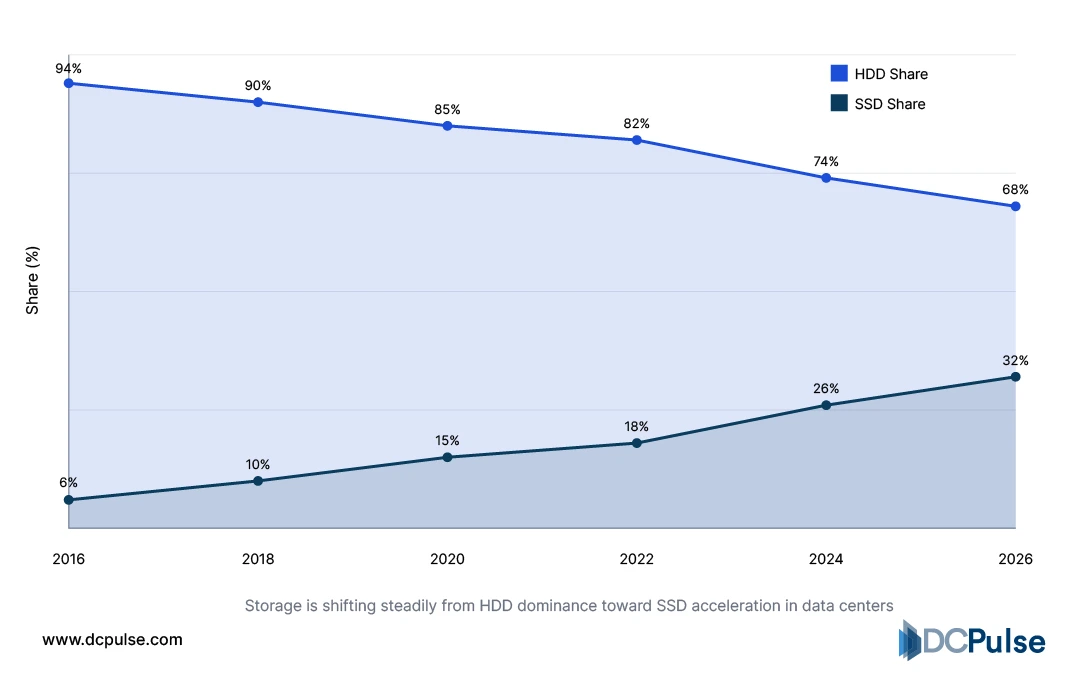
Despite the rise of flash technology, mechanical hard drives continue to play an important role in large-scale storage systems where cost efficiency and capacity remain critical. Manufacturers such as Seagate Technology and Western Digital continue to produce high-capacity enterprise HDDs used for archival storage, backup systems, and large data repositories.
Enterprise Storage Comparison: HDD vs. SSD (2026)
In practice, most modern data center architectures now rely on hybrid storage environments that combine high-performance flash storage for active workloads with large-capacity hard disk systems designed for long-term data retention.
What Technologies Could Replace Today’s Storage Media?
As the volume of digital data continues to grow, researchers and hardware companies are exploring new storage technologies capable of storing vastly larger amounts of information in much smaller physical spaces.
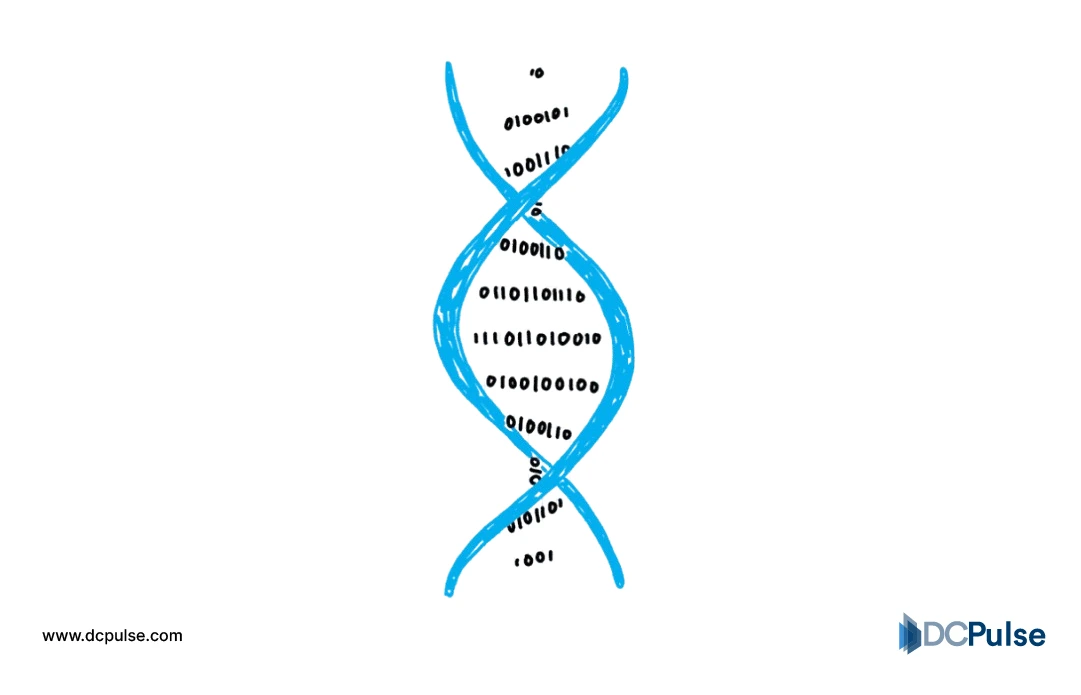
Among the most widely discussed experimental approaches is DNA-based data storage, which uses synthetic DNA molecules to encode digital information. Researchers from Microsoft and the University of Washington have collaborated on experimental systems that demonstrate how binary data can be translated into DNA sequences and later decoded back into digital form.
Another experimental approach involves glass-based archival storage, which aims to preserve digital information for extremely long periods without degradation. Researchers at Hitachi have explored techniques that encode data within quartz glass plates using microscopic dot patterns that can remain stable for centuries.
These experimental media could eventually enable storage systems capable of holding massive amounts of information within extremely compact physical materials. DNA molecules, for example, have the theoretical potential to store enormous volumes of data within a very small space, making them attractive candidates for long-term archival storage.
Industry Investment Accelerates Next-Generation Storage Research
Technology companies and storage hardware manufacturers are increasingly investing in research programs aimed at expanding the capacity and durability of future storage media. While flash-based systems remain the dominant technology in modern data centers, the industry is simultaneously exploring new hardware approaches capable of storing significantly larger volumes of information over longer periods of time.
One area of active research involves DNA-based storage systems, where digital information is encoded into synthetic DNA molecules. Researchers at Microsoft have been working on experimental platforms that translate binary data into DNA sequences, allowing information to be stored within extremely compact biological structures. The company’s research initiative is focused on exploring whether molecular storage could eventually provide extremely dense archival systems for long-term data preservation.
Milestones in DNA Data Storage Research
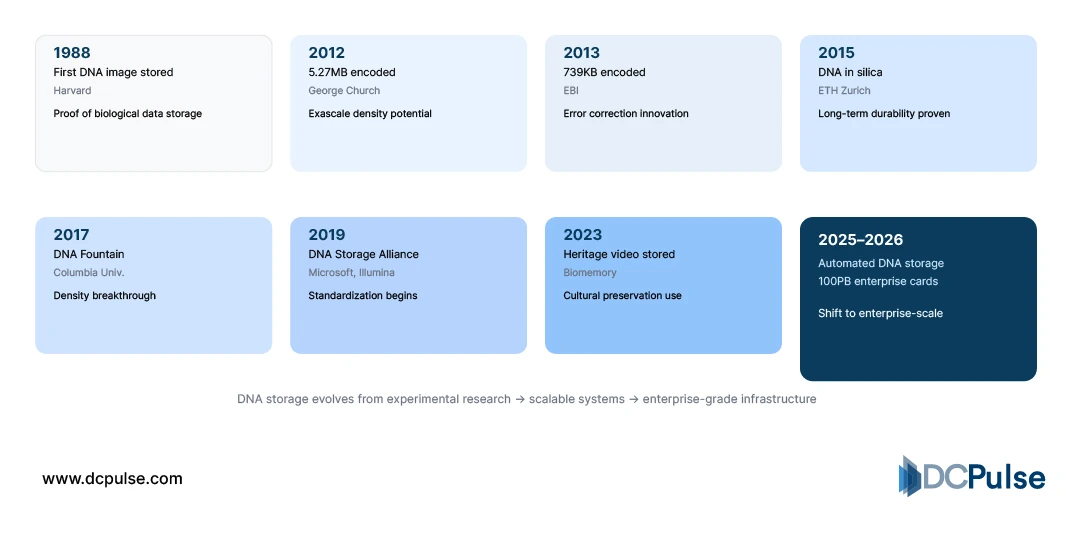
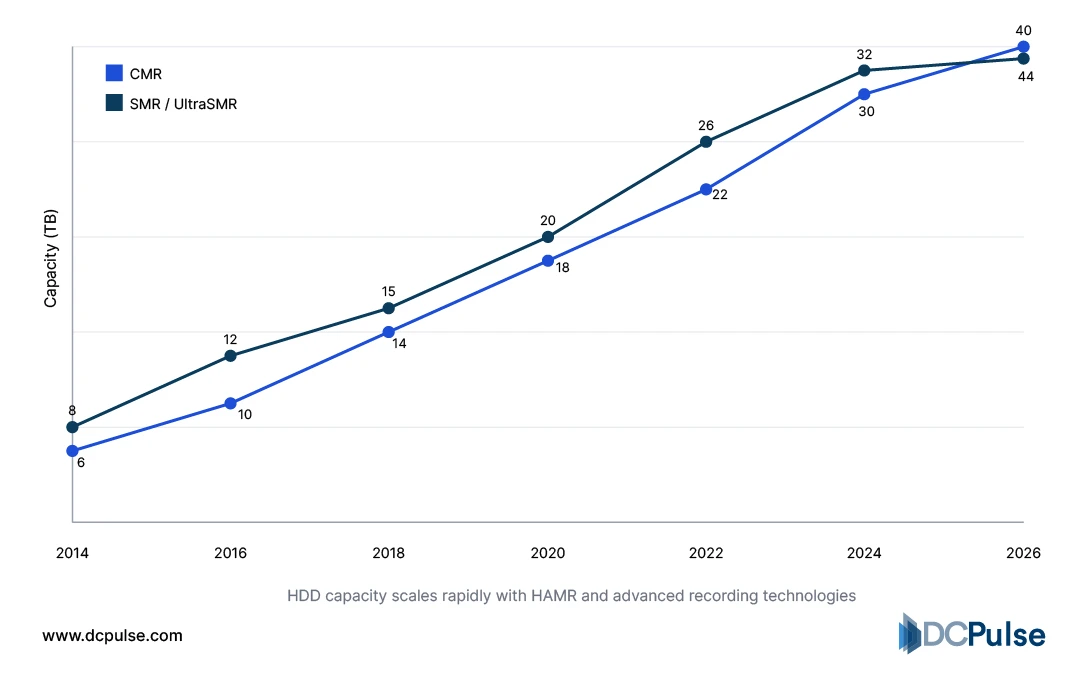
At the same time, traditional storage hardware manufacturers continue to expand the capabilities of existing storage technologies. Companies such as Seagate Technology and Western Digital are developing increasingly high-capacity enterprise hard drives designed for large-scale data repositories used in cloud and hyperscale data centers.
Growth of Enterprise HDD Capacity (2014–2026)
Parallel research efforts are also exploring alternative archival storage technologies, including quartz glass media designed for extremely long-term data preservation. Studies reported in Scientific American describe how researchers have encoded digital data into glass substrates capable of remaining stable for extremely long periods under controlled conditions.
Will DNA and Molecular Storage Replace Flash in the Data Centers of the Future?
Despite rapid progress in experimental storage technologies, flash memory is unlikely to disappear from data center infrastructure anytime soon. Solid-state storage is now deeply embedded in modern computing architectures, powering hyperscale cloud platforms, enterprise databases, and high-performance AI workloads. The speed, reliability, and maturity of NAND flash ensure it will remain the primary medium for active data processing for years to come.
What emerging technologies such as DNA storage and glass-based archival media offer is not necessarily a direct replacement for flash but a complementary layer designed for long-term data preservation. DNA molecules have the theoretical ability to store enormous volumes of digital information within extremely small physical spaces, making them attractive for archival storage where density and longevity matter more than access speed.
Research programs led by organizations such as Microsoft in collaboration with the University of Washington demonstrate how binary data can be encoded into DNA sequences and later reconstructed. Meanwhile, glass-based storage research from Hitachi suggests digital information could be preserved for centuries without degradation.
In practice, the future of data storage will likely evolve into a layered architecture where flash handles active workloads, high-capacity hard drives support large-scale repositories, and molecular or glass media preserve archival data for generations.