Pranav Hotkar
Modern supply chains generate enormous volumes of operational data. From shipping containers and warehouse inventory to manufacturing output and transportation routes, companies increasingly rely on real-time information to understand where goods are moving and how quickly they can reach their destinations. Delivering that level of visibility requires more than logistics software; it depends on the digital infrastructure capable of collecting, processing, and analyzing data at scale.
Data centers have become a critical foundation for these capabilities. Cloud platforms operated by companies such as Amazon Web Services, Microsoft, and Google now host many of the analytics platforms and enterprise applications that monitor global supply chains. These systems process data from sensors, tracking devices, and logistics networks, allowing organizations to track shipments, monitor inventory levels, and identify potential disruptions across complex international operations.
As supply chains grow more interconnected and data-driven, the role of data center infrastructure is expanding, from simply storing enterprise information to enabling real-time operational intelligence across global logistics networks.
Data Infrastructure Behind Real-Time Supply Chain Intelligence
Modern supply chains operate as data-driven systems in which information flows continuously between factories, warehouses, transportation networks, and retail channels. Sensors, GPS tracking devices, and enterprise logistics platforms generate large streams of operational data that must be processed and analyzed quickly to maintain visibility across global operations. Data centers, particularly cloud-based infrastructure, have become the backbone that enables this constant exchange of information.
Companies increasingly rely on digital supply chain platforms hosted in large-scale data centers to consolidate data from multiple operational systems. Enterprise software providers such as SAP and Oracle offer platforms designed to integrate logistics data, inventory management systems, and transportation analytics into unified visibility dashboards used by global enterprises.
Data Flow Across a Digital Supply Chain
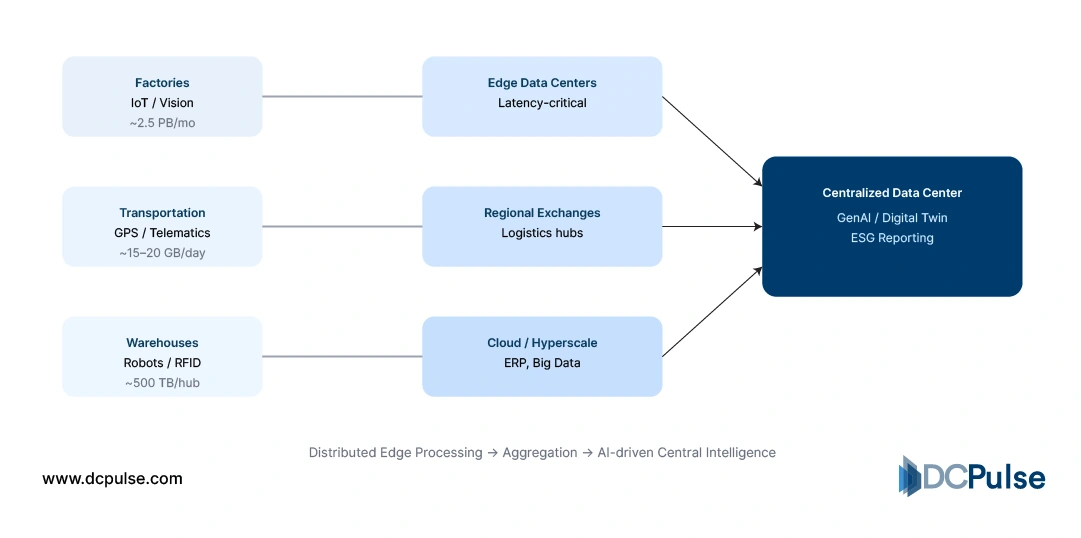
Cloud providers are also expanding infrastructure services specifically designed to support supply chain analytics. Platforms such as those offered by Amazon Web Services and Microsoft allow organizations to collect operational data from multiple sources and run forecasting, inventory analysis, and logistics optimization tools at scale.
Traditional Tracking vs. Digital Real-Time Visibility
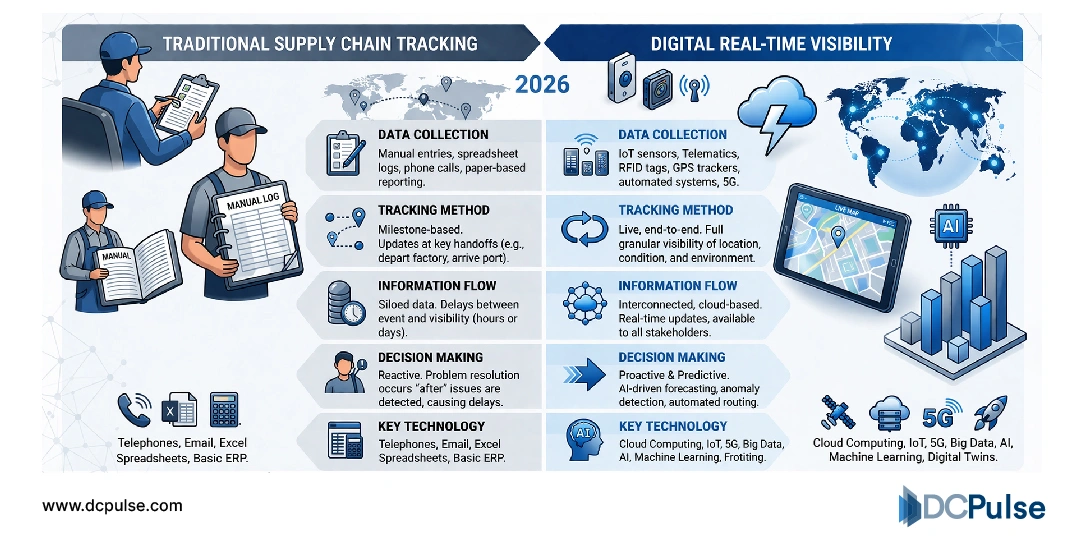
In this environment, data centers function as the central processing hubs for supply chain intelligence, enabling enterprises to monitor operations across geographically distributed networks and respond quickly to potential disruptions.
How Are Data Centers Evolving to Support Supply Chain Visibility?
As global supply chains become more complex and data-intensive, enterprises are turning to new digital infrastructure models to improve operational transparency. Traditional centralized IT systems are increasingly being complemented by distributed computing architectures that bring processing power closer to logistics operations.
This includes the deployment of edge computing nodes near warehouses, distribution centers, and transportation hubs, allowing supply chain data to be processed locally before being transmitted to centralized data centers for deeper analysis.
Artificial intelligence is also playing an expanding role in supply chain visibility platforms. Cloud-based analytics systems can analyze large volumes of operational data, from shipment tracking to inventory levels, to identify disruptions, forecast demand patterns, and recommend operational adjustments. Platforms from companies such as Amazon Web Services and Microsoft are increasingly integrating machine learning capabilities into enterprise supply chain management tools.
Another emerging concept is the use of digital twins, virtual models that replicate physical supply chains using real-time data feeds. Enterprise platforms developed by companies such as SAP and Oracle can simulate supply chain operations, helping organizations evaluate potential disruptions and optimize logistics strategies.
Technology Providers Expanding Supply Chain Visibility Platform
As global supply chains become more complex, enterprises are investing in digital platforms that provide end-to-end operational visibility across logistics networks. These platforms rely on centralized data processing environments capable of aggregating large volumes of information from warehouses, transportation systems, suppliers, and distribution hubs.
Industry research indicates that supply-chain visibility has become a major strategic priority for organizations. A logistics industry study highlighted by Maersk found that 77 percent of companies have prioritized investments in supply-chain visibility technologies, reflecting the growing need to monitor disruptions and optimize operations across global logistics networks.
Evolution of Digital Supply Chain Visibility (2010–2026)
A central element of these systems is the development of supply chain “control towers.” These platforms consolidate operational data from multiple systems into unified dashboards that allow organizations to monitor inventory levels, shipment status, and supplier performance. According to analysis published by KPMG, control towers enable organizations to align supply and demand while providing real-time operational insights across distributed supply chain nodes.
Adoption of these platforms is expanding rapidly as enterprises digitize logistics operations. Market analysis of supply chain control tower solutions indicates that thousands of deployments now track large volumes of supply chain events across global networks, highlighting the scale at which data platforms are supporting modern logistics operations.
Consulting research from McKinsey & Company also emphasizes that fragmented data systems often limit supply chain transparency, while integrated data platforms significantly improve decision-making and operational coordination across distribution networks.
Will Data Centers Become the Nerve Center of Global Supply Chains?
As global logistics networks grow increasingly digital, data centers are becoming central to how organizations monitor and coordinate supply chain operations. Real-time visibility platforms depend on infrastructure capable of collecting data from transportation systems, warehouses, manufacturing facilities, and connected devices, then transforming that information into actionable insights for operational decision-making.
Industry research suggests that supply chains are evolving toward highly integrated digital ecosystems. According to analysis from Deloitte, organizations are transitioning from traditional linear supply chains to digital supply networks where data flows continuously between partners, enabling faster responses to disruptions and shifting demand patterns.
At the same time, consulting research from McKinsey & Company highlights the importance of centralized data platforms that consolidate information across multiple supply chain systems, allowing enterprises to improve forecasting, inventory planning, and logistics coordination.
Together, these developments suggest that data centers, both centralized cloud facilities and distributed edge environments, will continue to play a crucial role in enabling real-time supply chain intelligence. As companies seek greater resilience and transparency in global operations, the infrastructure supporting supply chain data processing will likely become an even more critical component of enterprise logistics strategies.