Pranav Hotkar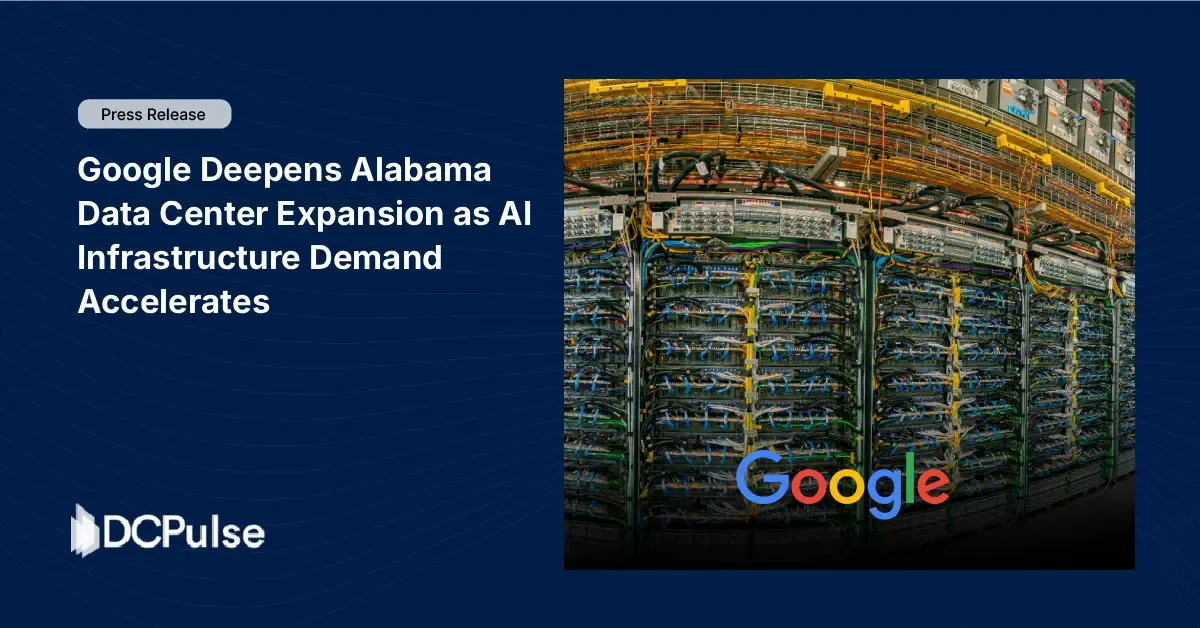
Mountain View, California - Jun 15, 2026 - Google is expanding its long-term data center investment strategy in Alabama, highlighting the state’s growing role in the company’s AI and cloud infrastructure network as hyperscalers race to scale next-generation computing capacity.
The company said its cumulative investment in Alabama has now surpassed USD 2 billion since launching operations in Jackson County, where Google has steadily expanded a large hyperscale data center campus originally developed on the site of a retired coal-fired power plant. The facility has become one of Google’s most significant digital infrastructure hubs in the southeastern United States.
Google stated that the Alabama operation supports critical cloud and AI services while contributing to regional economic activity through construction spending, infrastructure development, and permanent technical jobs. The company said the broader economic impact tied to its Alabama presence reached approximately USD 2.6 billion in 2025 across local businesses, nonprofits, and digital ecosystem initiatives.
The expansion comes as AI workloads dramatically reshape data center requirements worldwide. Training and inference clusters powered by advanced GPUs are increasing power density demands, cooling requirements, and electricity consumption across hyperscale campuses. Utilities and infrastructure providers are now under growing pressure to support multi-gigawatt AI deployments with reliable long-term energy access.
As part of its Alabama strategy, Google has also strengthened its focus on advanced energy procurement. The company previously signed an agreement with the Tennessee Valley Authority (TVA) and Kairos Power to support the future deployment of up to 50 MW of advanced nuclear energy capacity tied to its regional operations. The initiative reflects a broader industry shift toward pairing AI infrastructure growth with firm, carbon-free energy sources.
Google has increasingly emphasized grid flexibility and energy optimization across its global data center fleet. The company said earlier initiatives involving demand-response programs and machine learning-based power management are intended to help data centers operate more dynamically alongside regional electricity networks.
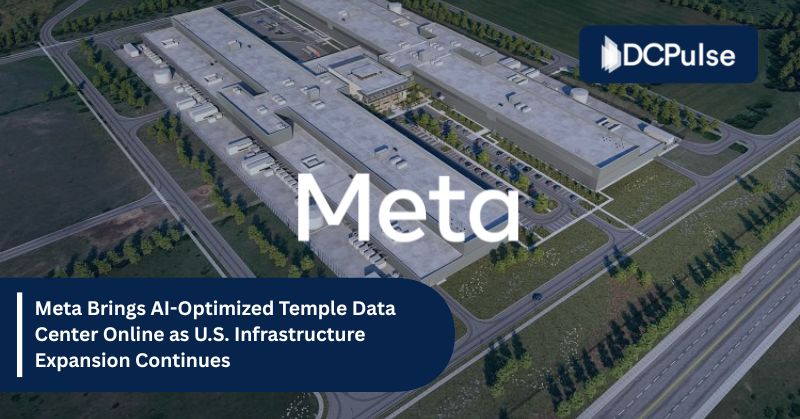
Alabama has rapidly emerged as a competitive destination for hyperscale infrastructure investment. In recent years, companies including Meta and Google have expanded large-scale digital infrastructure operations across the state, driven by available land, transmission infrastructure, and access to utility-scale energy resources. Meta alone announced an USD 800 million AI-optimized data center project in Montgomery in 2024.
Industry analysts believe hyperscalers are increasingly targeting secondary U.S. markets capable of supporting long-term AI infrastructure growth beyond traditional data center hubs such as Northern Virginia and Silicon Valley. Research published this month suggests large-scale AI campuses are already beginning to alter regional power system behavior due to highly correlated compute demand patterns across multiple facilities.
Google did not disclose details regarding additional construction phases or future capacity targets in Alabama. However, the company indicated that continued infrastructure investment will remain central to supporting the rapid global expansion of AI services, cloud computing, and digital platforms.
.jpg)