Pranav Hotkar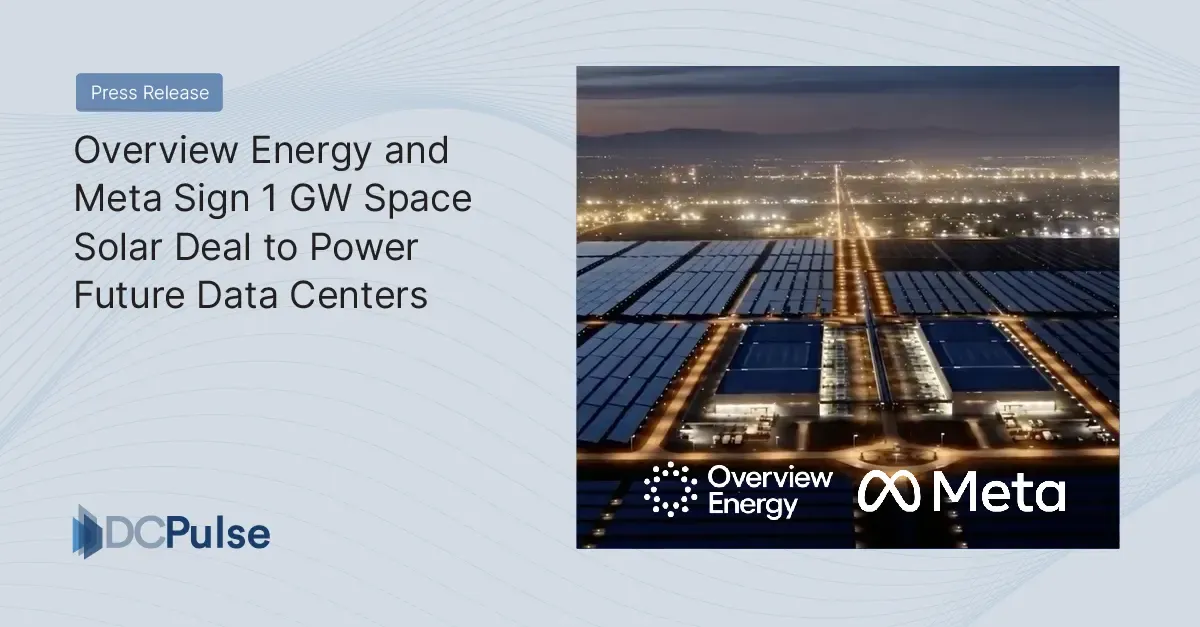
Ashburn, Virginia, United States - April 27, 2026 - Overview Energy and Meta have announced a first-of-its-kind agreement to deliver space-based solar power for data centers, marking a significant step toward next-generation energy infrastructure for artificial intelligence workloads.
Under the partnership, Meta has secured early access to up to 1 gigawatt (GW) of capacity from Overview Energy’s space solar system. The agreement is structured as a capacity reservation, positioning Meta among the first major companies to tap into energy generated in orbit and transmitted to Earth.
The technology involves satellites positioned in geosynchronous orbit that continuously collect solar energy and beam it to ground-based solar facilities. The energy is then converted into electricity, enabling existing solar infrastructure to operate around the clock rather than being limited to daylight hours.
The initiative is aimed at supporting the rapid expansion of AI and data center infrastructure in the United States, where demand for reliable, high-capacity power continues to surge. By leveraging space-based energy, the system is designed to provide uninterrupted electricity without requiring additional land or extensive grid upgrades.
An initial orbital demonstration of the technology is planned for 2028, with commercial power delivery expected by 2030. The companies indicated that the system is engineered to meet regulatory and safety standards, with energy transmitted as low-intensity, near-infrared light that is considered safe for people, animals, and aircraft.
Executives from both companies emphasized the strategic importance of the partnership in addressing long-term energy challenges. Meta highlighted the role of innovative energy solutions in supporting its AI ambitions, while Overview Energy described space solar as a new category of infrastructure capable of delivering flexible and scalable power.
The agreement reflects a broader trend among hyperscale technology companies to secure alternative energy sources as traditional grid capacity struggles to keep pace with data center demand. Unlike conventional renewable energy, which can be intermittent, space-based solar offers the potential for continuous generation, making it particularly suited for high-density