Pranav Hotkar
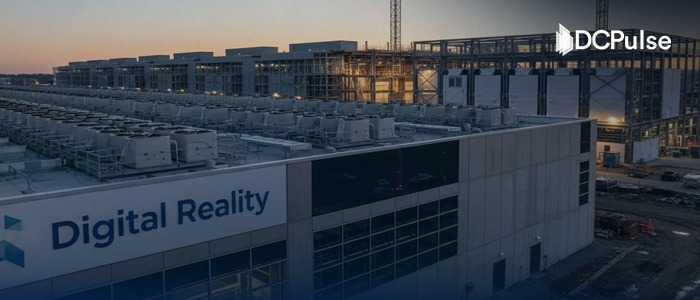
Las Vegas, United States, November 19, 2025- Schneider Electric has finalized nearly USD 2.3 billion in new U.S. data center agreements, including a major USD 1.9 billion supply and capacity deal with Nevada-based operator Switch and an additional USD 373 million contract with Digital Realty, as hyperscale builders race to expand AI-ready infrastructure.
Announced through company releases and regulatory filings in mid-November, the agreements provide Schneider with one of its largest North American booking surges since the start of the AI infrastructure wave. The Switch contract covers modular power systems, UPS units, advanced cooling equipment, and switchgear, while also guaranteeing delivery capacity into 2026 as Switch accelerates construction across its U.S. campuses.
A key component of the deal is the first U.S. deployment of Schneider’s Uniflair™ chiller line, technology originally scaled in Europe for high-density AI clusters. The chillers form part of Switch’s next-generation thermal strategy, designed to support rapidly rising rack densities and cut operational PUE across its hyperscale sites. DataCenterDynamics reported that the agreement also includes pre-engineered cooling blocks intended to reduce deployment cycles.
Schneider’s total bookings tied to AI-specific projects have surged sharply through 2025, reflecting a structural shift in data center design: operators now require accelerated build schedules, long-term component guarantees, and thermal solutions capable of supporting multi-megawatt GPU clusters.
Schneider said the deals align with its broader North American expansion strategy, following a series of capacity investments and its earlier 2025 acquisition of a stake in Motivair, a liquid-cooling specialist. Motivair technology is expected to support future deployments as operators transition beyond traditional air-cooled architectures.
For Switch, the long-term supply agreement is positioned as a strategic safeguard against global component shortages and as a mechanism to maintain construction velocity at its emerging AI campuses. The company has been among the fastest U.S. builders of high-power-density sites designed specifically for model training and inference workloads.
Despite efficiency gains promised by the new systems, analysts caution that the rapid pace of AI data center expansion continues to strain U.S. grid capacity. The deals highlight the tension between speed-to-power and long-term sustainability planning, an issue regulators and operators will increasingly confront.
With these latest agreements, Schneider Electric and Switch have reinforced their positions at the center of the U.S. AI infrastructure boom, setting the stage for accelerated buildouts through 2026.