Pranav Hotkar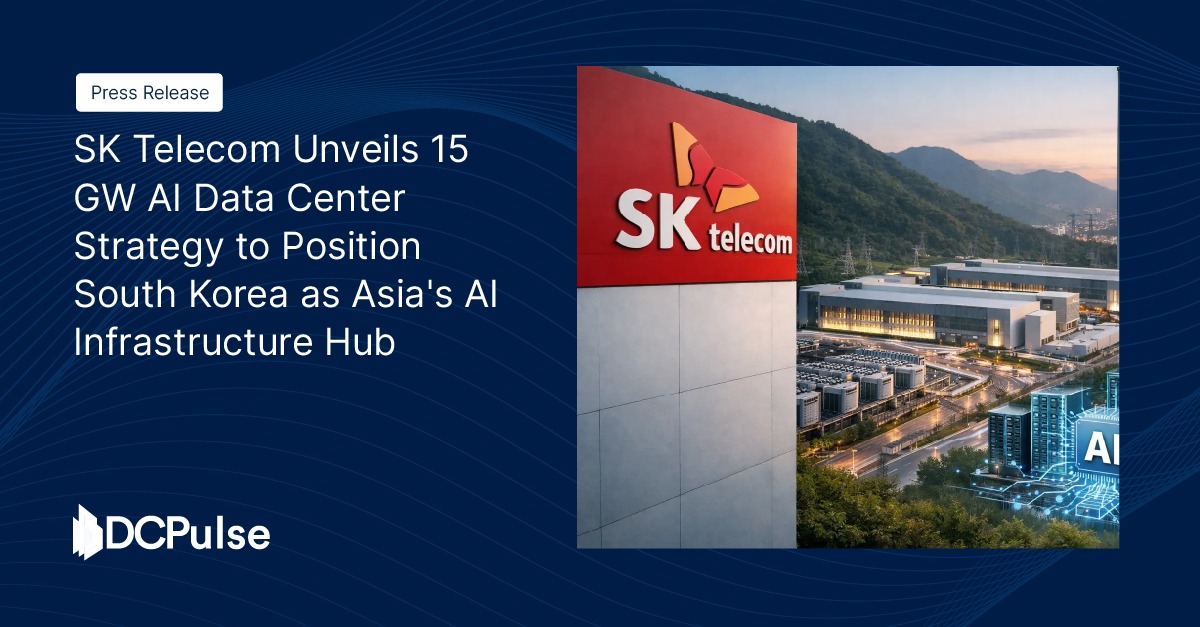
Seoul, South Korea - July 5, 2026 - SK Telecom has unveiled plans to develop up to 15 GW of AI data center capacity across South Korea, outlining one of the world's most ambitious digital infrastructure programs as the company seeks to transform the country into a regional hub for AI computing.
The initiative, led by SK Telecom with support from other SK Group companies, will be developed in multiple phases beginning with the AI data center currently under construction in Ulsan. The company plans to establish more than 2 GW of capacity in the country's southeastern region before adding another 1 GW in the southwest. Combined with future expansions, the platform is expected to reach 5 GW of operational capacity beginning in 2029, with a long-term target of 15 GW.
SK Telecom said the strategy is designed to address the growing shortage of AI computing infrastructure as demand for model training and inference accelerates worldwide. Citing industry forecasts that global data center demand is expected to outpace supply over the coming years, the company believes South Korea is well positioned to attract international AI investment through its semiconductor ecosystem, stable electricity supply, and experience operating large-scale industrial facilities.
The company estimates that constructing a conventional 1 GW AI data center could require an investment of approximately KRW 70 trillion, highlighting the unprecedented scale of capital required for next-generation AI infrastructure. Rather than relying solely on corporate funding, SK Telecom expects future projects to combine strategic investment partners, long-term customer commitments, and project financing.
Unlike traditional data center expansion plans, the initiative will leverage capabilities from across the SK Group. SK Telecom will oversee the design, construction, and operation of the facilities, while other affiliates contribute expertise in AI semiconductors, energy solutions, networking, and digital infrastructure. The company has already been expanding partnerships with global technology providers, including recent collaborations focused on AI infrastructure and accelerated computing.
The first phase builds on SK Telecom's previously announced AI Factory concept, a next-generation AI data center platform scheduled to begin operations in 2027 before scaling to gigawatt-class deployments. According to the company, the broader rollout will prioritize regions with sufficient power availability, suitable development sites, and opportunities to secure anchor tenants, particularly global hyperscale cloud and AI companies.
Beyond expanding computing capacity, SK Telecom views the project as a national infrastructure initiative. The company said AI data centers could stimulate regional economic development while strengthening South Korea's competitiveness in artificial intelligence by creating domestic computing resources capable of supporting advanced AI applications.
If completed as planned, the 15 GW program would rank among the largest AI data center platforms announced globally, reflecting the industry's rapid shift toward gigawatt-scale campuses built specifically for AI workloads. As governments and technology companies compete to secure computing capacity, SK Telecom's strategy underscores the growing importance of power, semiconductors, and large-scale data centers as the foundation of future AI ecosystems.