Pranav Hotkar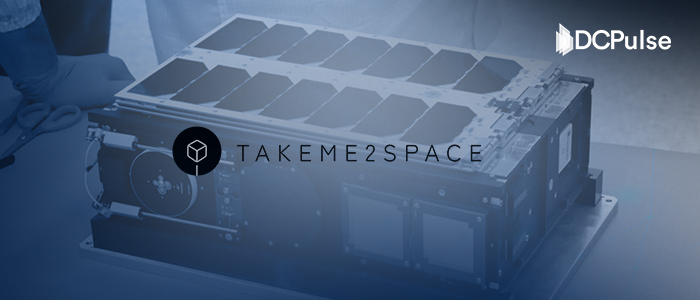
Hyderabad, India - January 9, 2026 – Hyderabad-based space technology startup TakeMe2Space is advancing plans to build what it describes as India’s first orbital data center, aiming to process and run artificial intelligence workloads directly in space rather than relying solely on terrestrial infrastructure. The initiative is anchored in Telangana and is being developed as part of the company’s broader push into in-orbit computing.
The company recently raised USD 5 million in a seed funding round led by Chiratae Ventures, with participation from Unicorn India Ventures, Artha Venture Fund, and SeaFund. The capital will be used to scale TakeMe2Space’s satellite constellation, expand its engineering team, and accelerate development of high-power compute satellites capable of handling AI inference and data processing in low Earth orbit (LEO).
According to founder and chief executive Ronak Kumar Samantray, TakeMe2Space is building an “orbital data center” model through its OrbitLab platform, which allows customers to upload AI models and execute workloads directly on satellites. The approach is designed to reduce latency, lower data transmission costs, and enable real-time processing for applications such as Earth observation, agriculture, logistics, mining, and environmental monitoring.
As part of its near-term roadmap, the startup plans to expand its constellation to six satellites and deliver several kilowatts of in-orbit compute capacity. The company is also developing proprietary radiation-shielding technologies to protect onboard hardware and extend satellite lifespans, a key challenge for running high-performance compute systems in space.
TakeMe2Space has already conducted technology demonstrations using ISRO’s PSLV Orbital Experiment Module, where it successfully uploaded large AI models, executed external code in orbit, and securely downlinked encrypted results. These tests also validated elements of the company’s radiation-mitigation coatings under real space conditions, providing early proof points for its orbital computing concept.
The company’s decision to base its operations in Telangana aligns with the state’s efforts to position itself as a hub for space technology, advanced manufacturing, and digital infrastructure. Telangana has been actively courting aerospace and space-tech startups through dedicated policies, incubation programs, and access to research and testing facilities.
Industry analysts note that orbital data centers remain an emerging and largely experimental segment globally, but interest is rising as AI workloads grow and demand increases for low-latency, globally accessible compute platforms. While significant technical and economic hurdles remain, proponents argue that in-orbit processing could complement ground-based data centers rather than replace them, especially for data generated in space.
If successful, TakeMe2Space’s initiative would place India among a small group of countries exploring space-based computing infrastructure, extending the nation’s space ambitions beyond launch and satellite services into advanced digital infrastructure.
.jpg)