DCPulse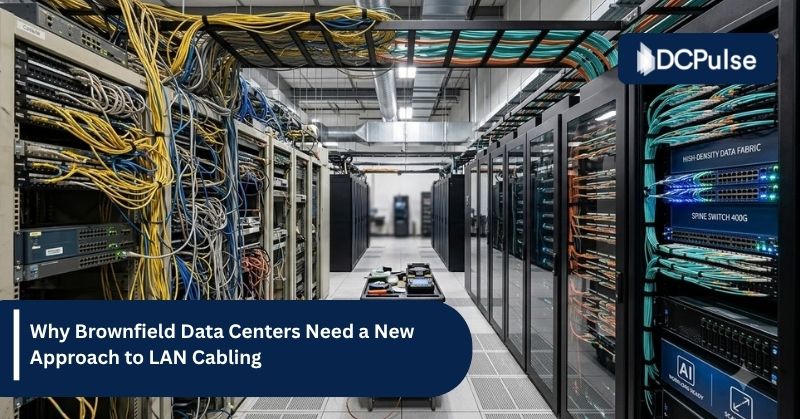
Brownfield data centers face a different connectivity challenge from new-build facilities. Existing cabling systems were often designed around the bandwidth, port densities, rack layouts, and network architectures that were practical when the facility was commissioned. As cloud infrastructure, AI workloads, higher-density compute, and faster network technologies change those requirements, operators must determine whether existing LAN infrastructure can support the next phase of deployment without creating excessive cost or operational disruption.
The question is not simply whether older cabling can carry today's traffic. For data center operators, the more important issue is whether the installed physical layer can accommodate future network speeds, higher port densities, new optical technologies, and changing rack configurations over the remaining life of the facility.
Existing Cabling Can Become a Brownfield Constraint
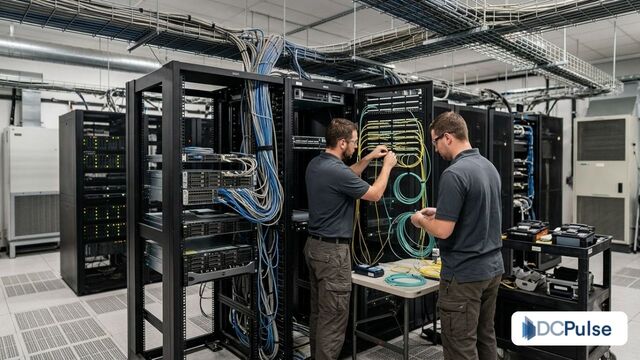
A brownfield data center already contains physical infrastructure that is difficult to replace without affecting live operations. Cabling pathways, trays, patch panels, cabinets, fiber routes, and copper connections can occupy valuable space and may have been installed according to an earlier network architecture.
That legacy infrastructure does not automatically become obsolete when a new generation of switches or servers arrives. Its suitability depends on the specific cable type, connector configuration, transmission distance, optical technology, installation quality, and network architecture being introduced.
For operators, this creates a planning problem. A cable that is adequate for an existing deployment may remain technically functional but become less practical as bandwidth requirements increase. The result can be a situation in which active network equipment is upgraded faster than the passive infrastructure surrounding it.
AI Is Changing the Physical-Layer Question
AI infrastructure is placing greater emphasis on network performance inside the data center. Distributed AI training and other high-performance workloads can require large numbers of accelerators to exchange data across a cluster, increasing the importance of network capacity, latency, port density, and physical connectivity.
The implication for brownfield facilities is significant. Network upgrades may involve more than replacing switches. Higher-speed deployments can require different optical transceivers, fiber configurations, connector densities, or shorter structured cabling paths.
AI infrastructure can also change the physical arrangement of equipment. High-density accelerator systems may require different rack configurations and greater concentrations of network connections than conventional enterprise workloads. Existing cable pathways therefore need to be assessed alongside power, cooling, rack density, and equipment placement rather than treated as an isolated networking component.
Fiber Has an Important Role in Upgrade Planning
Fiber infrastructure generally provides a pathway for higher-speed data center networking, but the ability to reuse an installed fiber plant depends on the specific deployment. Fiber type, polarity, connector design, distance, and transceiver requirements all influence whether existing links can support a particular upgrade.
Multimode and single-mode fiber also serve different applications, making the original design of the facility important when planning migration. An operator considering higher-speed connectivity needs to understand what is already installed before committing to an equipment refresh.
Connector density is another consideration. As switch and server port counts increase, patching requirements can place additional pressure on cabinets and pathways. A physically adequate fiber plant can still become operationally difficult if patching becomes too dense or access for maintenance is restricted.
Copper Still Matters in Brownfield Environments
Fiber receives considerable attention as network speeds increase, but copper remains relevant in many data center LAN environments. Management networks, equipment connections, building systems, and other applications can continue to depend on copper infrastructure.
The future suitability of copper depends heavily on the application and required distance. Operators should therefore avoid treating the entire cabling plant as a single technology decision. Different portions of a brownfield facility may have very different upgrade requirements.
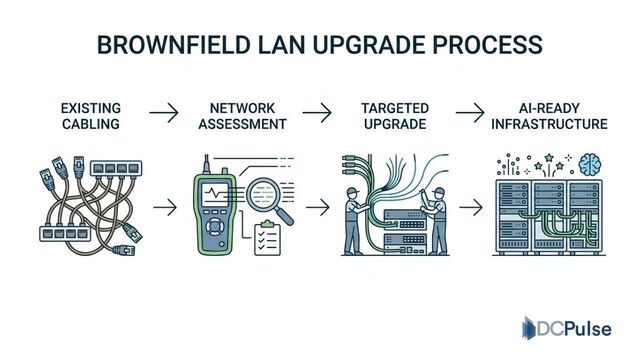
A targeted assessment can identify where existing copper remains appropriate and where replacement with a different physical medium is justified. This approach can reduce unnecessary infrastructure changes while creating a clearer migration path for areas facing higher bandwidth requirements.
Pathways May Become as Important as the Cable
The physical pathway supporting a cable plant can become a constraint even when the cable itself remains technically usable. Existing trays and conduits have finite space, and additional network links can increase congestion in areas that were designed for lower connection densities.
Brownfield upgrades therefore need to consider pathway capacity, bend-radius requirements, separation, accessibility, and future expansion space. Congested pathways can make subsequent upgrades more difficult and increase the amount of work required during maintenance.
The issue becomes particularly relevant in facilities undergoing repeated technology refreshes. Each additional generation of network equipment can introduce new cabling requirements, and a pathway designed around today's installation may leave little room for the next one.
Migration Strategy Matters More Than a Single Upgrade
A brownfield cabling strategy is unlikely to be solved through one large replacement project. Live facilities need migration plans that account for existing customers, operational continuity, maintenance windows, network dependencies, and physical access.
Operators can instead evaluate the infrastructure in stages. Critical network paths can be assessed first, followed by areas where new AI or high-density compute deployments are planned. This approach provides a clearer understanding of where existing infrastructure can be retained, where targeted upgrades are required, and where larger-scale replacement may eventually be necessary.
Documentation is also important. Accurate records of cable types, routes, connection points, patching configurations, and unused capacity can reduce uncertainty during future network upgrades. In older facilities, incomplete documentation can make even relatively straightforward changes more difficult.
Future-Proofing Does Not Mean Predicting Every Technology
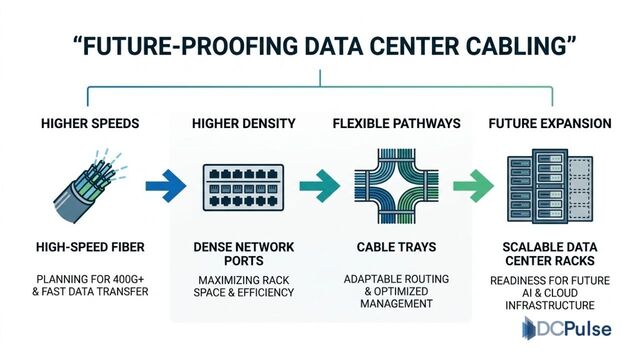
No cabling strategy can guarantee compatibility with every future networking technology. The more practical objective for brownfield operators is to preserve flexibility.
That means creating sufficient pathway capacity, avoiding unnecessary physical constraints, maintaining accurate documentation, and selecting infrastructure based on realistic technology roadmaps rather than short-term equipment requirements alone. Where new cabling is installed, operators can also consider how the infrastructure may accommodate future changes in speed, density, topology, and connector requirements.
The balance is particularly important for facilities with long operating lifetimes. Replacing a functioning cable plant too early can create unnecessary capital expenditure, while delaying upgrades until infrastructure becomes a critical constraint can make future migrations more disruptive.
The Brownfield Data Center Becomes a Physical-Layer Planning Exercise
The future readiness of an existing LAN ultimately depends on more than the age of its cables. Cable specifications, network architecture, equipment requirements, pathway capacity, rack density, connectivity distances, and operational constraints all influence whether an installed system can support the next generation of data center infrastructure.
For operators preparing facilities for AI, cloud, and higher-speed networking, the physical layer is becoming an increasingly important part of capacity planning. The question is therefore shifting from whether today's cabling works to whether the entire cabling environment provides enough flexibility for tomorrow's deployments.
In brownfield data centers, that distinction can determine whether a network upgrade remains a manageable technology refresh or becomes a much larger infrastructure project.