DCPulse
The rapid expansion of artificial intelligence infrastructure is changing the demands placed on data center networks. AI workloads require large volumes of data to move between processors, memory, storage, and interconnected servers. As these systems become more tightly coordinated, the physical connections carrying that information are becoming an increasingly important part of infrastructure design.
Copper cabling has long played a central role in data center networking. Its established deployment practices, electrical properties, and compatibility with short-distance connections have made it a familiar choice across enterprise and hyperscale facilities. However, the changing requirements of AI clusters are bringing greater attention to the limitations of copper-based connectivity.
The challenge is not simply whether copper can continue to carry data. The more important question is where copper remains technically and economically suitable and where optical technologies may provide a stronger foundation for future AI infrastructure.
Why AI Workloads Are Changing Network Requirements
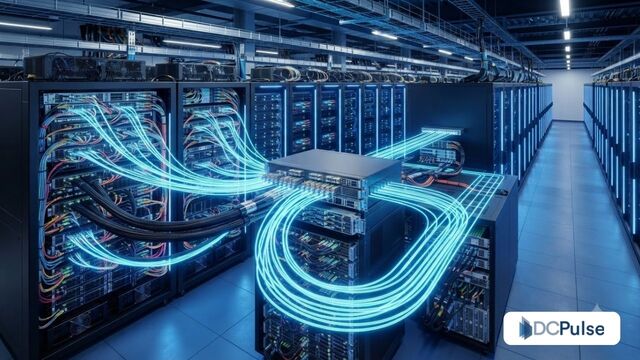
AI training and inference systems depend on communication between large numbers of computing resources. Accelerators must exchange data and coordinate processing, while storage and memory systems support the movement of information through the computing environment.
Traditional enterprise applications often have different networking patterns from distributed AI workloads. AI systems can place greater emphasis on coordinated communication between processors, making network performance an important consideration alongside compute capacity.
Latency, bandwidth, power consumption, and connection density all influence the design of these environments. The network must support the movement of data without becoming a constraint on the performance of the computing system.
The physical distance between components also matters. Connections inside a server, between servers in a rack, and across rows of a data center can involve different technical requirements. Copper and optical technologies each have roles in addressing these distances.
As AI infrastructure expands, network design is increasingly being considered alongside accelerator selection, power distribution, cooling, and rack architecture.
Where Copper Still Fits
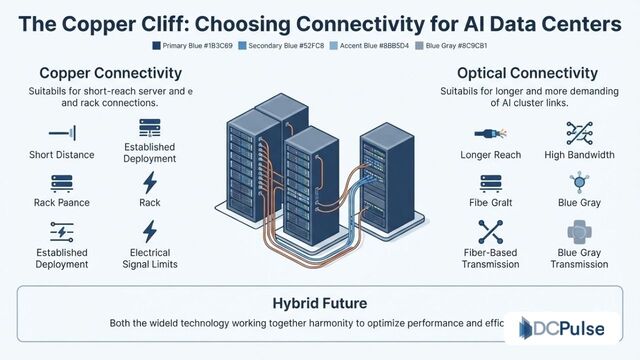
Copper is not disappearing from data centers. Its established role in short-reach networking remains relevant, particularly where connection distances and performance requirements align with its capabilities.
Directly attached copper cables, commonly known as DACs, can provide a practical way to connect networking equipment over short distances. Their use can reduce the need for additional optical components in suitable applications.
Copper also remains important within server and rack infrastructure. Its familiarity among data center technicians, existing installation practices, and availability across networking ecosystems contribute to its continued relevance.
The limitations become more significant as connection distances increase and data rates rise. Electrical signals transmitted through copper experience attenuation and other signal-integrity challenges. Equalization and signal-processing techniques can help address these issues, but they do not remove the underlying engineering trade-offs.
For AI data centers, the question is therefore one of application fit. Copper may remain effective for some short connections, while optical technologies become more attractive for longer or more demanding links.
The Distance Problem in AI Clusters
The physical architecture of an AI cluster has a direct relationship with its networking requirements. Accelerators may be distributed across multiple servers, racks, and larger computing systems. The connections between these components must support the communication patterns required by the workload.
Copper’s electrical transmission characteristics place practical constraints on reach. Higher-speed links can require more sophisticated signal conditioning and careful attention to cabling design.
Optical fiber offers a different transmission model. Instead of carrying electrical signals through a conductive medium, fiber transmits information using light. This approach can support high-bandwidth connections over longer distances without the same electrical loss characteristics associated with copper.
The distinction is important for AI infrastructure because the network may extend beyond a single rack. As clusters become larger, the physical layout of the facility can influence the balance between copper and optical connections.
Network engineers must consider not only the performance of individual links but also how cabling choices affect rack placement, switch architecture, maintenance, and future expansion.
Optical Connectivity and the Rise of High-Speed Networking
Optical networking is becoming increasingly relevant to AI data center design. Technologies such as active optical cables, optical transceivers, and fiber-based interconnects provide alternatives to copper for applications where reach and bandwidth requirements are more demanding.
The value of optical connectivity extends beyond distance. Fiber can support high-speed data transmission while avoiding some of the electrical transmission losses associated with copper cabling.
However, optical systems introduce their own considerations. Transceivers, connectors, optical modules, and associated components can add complexity to deployment and maintenance. Power consumption, thermal management, component reliability, and procurement also influence the overall design.
The choice between copper and optical connectivity is therefore not determined by bandwidth alone. Data center operators must evaluate the full system, including the cost and operational requirements of each technology.
Power and Cooling Implications
AI infrastructure places significant demands on data center power and cooling systems. Networking equipment contributes to that overall infrastructure load, making the efficiency of interconnect technologies an important design consideration.
Copper links may require electrical signal conditioning as transmission speeds and distances increase. Optical systems also consume power through transceivers and other active components. The actual energy impact depends on the specific implementation, data rate, distance, and equipment architecture.
A network design that reduces transmission-related power requirements could have implications for rack-level power density and cooling planning. However, no single cabling technology provides a universal efficiency advantage across every deployment.
The broader issue is the relationship between connectivity and facility design. AI clusters require coordinated planning across compute, networking, power delivery, and cooling. Cabling decisions can influence that balance, particularly in high-density environments.
The Role of Co-Packaged Optics and Emerging Interconnects
The development of new optical technologies reflects the industry's search for more efficient ways to move data. Co-packaged optics, for example, places optical components closer to switching silicon rather than relying entirely on conventional pluggable transceiver arrangements.
The technology is being explored as a way to address the challenges associated with increasing bandwidth and signal transmission requirements. Its potential relevance to AI infrastructure lies in the relationship between networking performance, power consumption, and system design.
Other developments include silicon photonics, linear-drive optics, and higher-speed optical interconnects. These approaches involve different architectures and trade-offs, and their suitability depends on the requirements of specific data center systems.
The transition toward new interconnect technologies is unlikely to follow a single path. Copper, conventional optical modules, and emerging optical designs may coexist across different parts of the same facility.
What the Copper Cliff Means for Data Center Operators
For data center owners and operators, the growing importance of connectivity creates several planning considerations. Network architecture must account for current workload requirements as well as the possibility of future AI expansion.
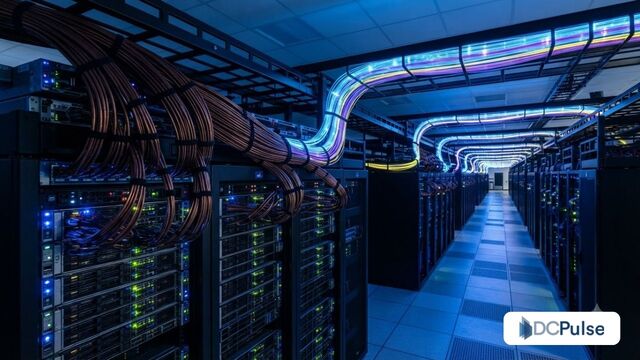
Cabling infrastructure can influence the placement of racks, switches, and accelerator systems. Short-reach copper connections may remain useful within defined parts of a deployment, while fiber-based links can support connections across greater distances.
Procurement and maintenance are also relevant. Optical components may require different skills, testing equipment, and replacement procedures from copper-based systems. The availability of qualified technicians and spare components can influence operational planning.
The financial implications extend beyond the initial purchase price. Installation, power consumption, maintenance, and upgrade requirements all contribute to the lifecycle cost of a connectivity architecture.
For new facilities, these considerations can be incorporated during network and building design. Existing data centers may need a more gradual approach, with upgrades targeted at areas where bandwidth, reach, or power constraints create a clear operational requirement.
A Hybrid Future for AI Connectivity
The future of AI data center networking is unlikely to be defined by a complete replacement of copper with fiber. Different connection types serve different purposes, and the most effective architecture may combine several technologies.
Copper can continue to serve suitable short-reach applications, while optical connectivity supports longer distances and demanding bandwidth requirements. Emerging optical technologies may introduce additional options as their maturity and availability develop.
The central challenge for operators is understanding how these technologies fit within the broader infrastructure. Network performance must be considered alongside power, cooling, physical layout, cost, and operational resilience.
AI workloads are placing greater attention on the network as a critical component of computing infrastructure. The copper cliff is therefore less about the end of copper and more about recognizing where its traditional advantages no longer align with the requirements of modern AI systems.
As data centers evolve, connectivity decisions will increasingly influence the design, efficiency, and scalability of the digital infrastructure supporting artificial intelligence.