DCPulse
The expansion of hyperscale data centers, artificial intelligence infrastructure, and enterprise cloud platforms is increasing the importance of physical security across digital infrastructure facilities. As operators expand campuses and introduce more computing capacity, protecting server halls, restricted corridors, equipment, and critical infrastructure requires security systems that can scale alongside facility operations.
Traditional physical security arrangements often combine guards, access-control systems, surveillance cameras, visitor-management processes, and centralized monitoring. Although these measures remain important, manually coordinating multiple checkpoints and screening procedures can create operational complexity, particularly across large facilities with frequent personnel movements and tightly controlled access requirements.
Automation is emerging as one approach to addressing these challenges. Instead of relying exclusively on security personnel to verify identities, monitor entrances, and respond to routine access events, operators can integrate authentication, screening, and automated detection into coordinated entry workflows.
Orion Entrance Control's DataGuard™ is designed around this approach. Introduced in January 2026, the system brings together multiple security technologies in a modular entry environment intended for hyperscale and enterprise data centers. Its design reflects a broader industry question: how can operators strengthen physical security while managing the operational costs associated with expanding digital infrastructure?
Why Traditional Security Operations Models Are Being Reconsidered
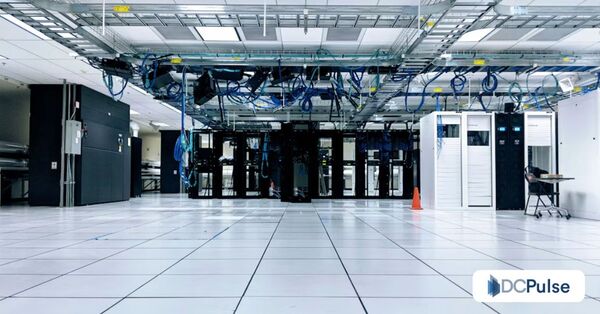
Physical security operations centers play an important role in monitoring facility entrances, reviewing surveillance information, coordinating incident responses, and maintaining records of security events. At large data center campuses, these responsibilities can extend across multiple buildings, access points, and restricted operational zones.
A conventional approach may involve security personnel checking credentials, supervising entry barriers, verifying visitors, and investigating alerts generated by access-control or surveillance systems. The precise arrangement varies by operator, facility size, risk profile, and security policy.
As campuses grow, however, maintaining consistent procedures across every entrance becomes increasingly important. A security process that depends heavily on manual intervention can introduce delays, create repetitive workloads, and increase the coordination required between personnel and monitoring teams.
Automation offers an alternative for suitable routine tasks. Identity verification, access authorization, person-by-person entry control, and event recording can be coordinated through integrated systems, allowing security personnel to concentrate on exceptions, investigations, and decisions requiring human judgment.
This does not mean that security operations centers or trained guards are universally unnecessary. Critical infrastructure requires layered protection, incident-response capabilities, and human oversight. The more practical opportunity lies in automating appropriate screening and access-control activities while retaining the personnel and procedures needed to manage complex security situations.
For data center operators, the objective is to balance security assurance, access efficiency, and operational expenditure without weakening established protection measures.
Introducing Orion DataGuard™: An Integrated Entry Security System
Orion Entrance Control developed DataGuard™ as a modular automated entry and screening environment specifically for data centers and critical infrastructure. The system combines several security functions within a coordinated workflow rather than treating each checkpoint as an independent process.
Its capabilities include identity verification, biometric authentication, weapons and digital-media detection, electronic asset lockers, and AI-enabled tailgating prevention through Orion DoorGuard™. The system also incorporates intelligent communication functions and centralized event monitoring through Orion Infinity™.
The integrated approach is intended to support controlled entry into sensitive areas, including data halls, secure corridors, and other critical infrastructure zones. Depending on an operator's requirements and configuration, the system can coordinate identity checks, screening, and entry validation before an individual proceeds into a restricted area.
The modular design also addresses different deployment scenarios. Operators can consider the technology during new facility construction or as part of upgrades to existing infrastructure, subject to site requirements and compatibility with established security systems.
For data center developers, integration is an important consideration. Security infrastructure must work within the building's access-control architecture, operational procedures, and compliance requirements. A modular solution can provide deployment flexibility, but its suitability still depends on the facility's layout, threat model, and existing technology environment.
DataGuard™ is therefore best understood as an integrated physical access-security solution rather than a replacement for every component of a data centre's wider security architecture.
AI and LiDAR Strengthen Tailgating Prevention
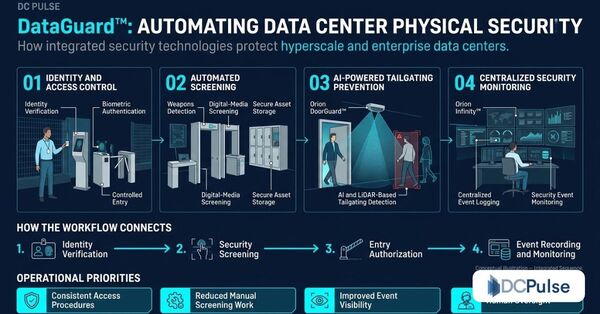
Tailgating is a significant physical access-control concern in environments where only individually authorized people should enter restricted areas. The risk arises when an additional person follows an authorized individual through a controlled entrance without completing the required authentication process.
Conventional access systems may verify a valid credential but still require additional measures to confirm that the person entering corresponds to the authorization granted. This distinction matters in data centers, where server halls and supporting infrastructure can contain equipment essential to business continuity and digital services.
Orion DoorGuard™ uses AI and LiDAR-based detection to identify tailgating-related entry events. Within the DataGuard™ environment, this technology supports the objective of confirming controlled, individual passage through secure entrances.
Integrated detection can help reduce dependence on continuous manual observation at the entry point. It can also provide security teams with event information that supports investigation and review.
However, automated detection should not be treated as an infallible security barrier. System performance depends on deployment conditions, configuration, environmental factors, and the procedures used to handle alerts. Operators must also establish appropriate responses to unauthorized entry attempts, equipment faults, and other exceptions.
The wider significance is the movement from security systems that primarily record events toward integrated systems designed to detect and manage them within the access workflow.
Identity Verification, Digital-Media Screening, and Asset Control
Physical access security involves more than confirming that a person can enter a building. Data center operators must also consider what individuals are authorized to access, what equipment they can bring into restricted areas, and how movements are documented.
DataGuard™ combines identity verification and biometric authentication with digital-media detection and secure asset-management functions. These capabilities address different parts of the entry process.
Identity verification establishes whether an individual's identity can be validated, while biometric authentication provides an additional method of confirming identity. Digital-media screening addresses the presence of restricted media or devices, according to the site's security policies and system configuration. Electronic asset lockers can support controlled management of items that must not enter designated secure areas.
For operators, integrating these functions can help establish a more consistent screening process. A coordinated workflow may also reduce the need to move between separate procedures managed by different personnel or systems.
The exact controls required will vary. A hyperscale data hall, an enterprise colocation facility, and a government infrastructure site may have different policies governing visitors, technicians, contractors, portable media, and electronic equipment.
Successful implementation therefore requires more than installing equipment. Operators must define authorization rules, configure screening procedures, establish exception handling, and ensure that the technology supports their specific security requirements.
Centralized Event Logging and Compliance Visibility
Security automation generates value only when operators can understand what happened, determine whether procedures were followed, and investigate exceptions when necessary.
DataGuard™ integrates with Orion Infinity™, which centrally records and monitors screening events. This provides a mechanism for maintaining visibility across the entry process and supporting security reviews.
For data center operators, event records can contribute to incident investigations, access reviews, and compliance documentation. A consistent record of authentication and screening activities can also help organizations assess whether their procedures are operating as intended.
Centralized monitoring becomes particularly relevant when security systems are deployed across multiple buildings or campuses. Standardized processes can make it easier to review activity across locations, although the degree of visibility depends on system integration, configuration, and the operator's deployment model.
Data handling remains an important consideration. Identity records, biometric information, and security-event logs require appropriate access controls, retention policies, and protection against unauthorized disclosure. Operators must assess applicable privacy and regulatory obligations before deploying such capabilities.
Automation does not remove these responsibilities. Instead, it changes how security information is generated, managed and reviewed.
The Business Case for Automated Physical Security

The commercial case for security automation is closely linked to the cost and complexity of operating critical infrastructure. Staffing requirements, access delays, manual screening and inconsistent processes can all influence the overall cost of securing a facility.
Orion positions DataGuard™ as a way to reduce reliance on dedicated guard staffing at automated entry points while maintaining coordinated screening and access controls. The company also presents the system as suitable for standardizing entry procedures across expanding data centre portfolios.
Potential benefits include reduced manual intervention in routine workflows, more consistent screening and improved access-event visibility. The actual financial impact will depend on the facility's existing security arrangements, deployment costs, staffing model, maintenance requirements and operational performance.
A meaningful evaluation should therefore compare the complete cost of implementation and operation with the outcomes achieved. Relevant measures could include screening throughput, access delays, false alerts, incident handling, system availability and the amount of staff time required for routine entry procedures.
Operators should also consider how automated systems affect emergency access, accessibility, visitor experience and the handling of equipment failures. These factors are especially important in mission-critical environments where security controls must coexist with operational continuity.
What Security Automation Means for Future Data Centres
The growing scale and complexity of digital infrastructure are encouraging operators to reassess how physical security is designed and managed. AI-oriented campuses, multi-building developments and facilities supporting increasingly automated operations require security arrangements that can accommodate changing access patterns without compromising protection.
DataGuard™ illustrates one direction for this evolution: integrating identity verification, biometric authentication, screening, tailgating detection and centralized event monitoring within a coordinated entry environment.
For the industry, the broader lesson is that security automation should be evaluated as part of the data centre's overall operating model. The strongest implementation is not necessarily the one that removes the most human involvement, but the one that applies automation appropriately, maintains effective oversight and produces reliable, auditable security processes.
Security operations centres will continue to have important responsibilities in incident management, threat assessment and coordination. Their workflows may change as automated systems take on more routine activities at facility entrances and other controlled access points.
As operators balance AI infrastructure expansion with reliability, staffing and cost considerations, integrated physical security is becoming an increasingly important element of data centre planning. Solutions such as Orion DataGuard™ demonstrate how entry screening and access management can be brought together to support that transition, while leaving deployment decisions grounded in each facility's specific security and operational requirements.