DCPulse
Artificial intelligence is becoming a major driver of investment in digital infrastructure, prompting data center developers, cloud providers, and technology companies to reconsider their capacity requirements. The expansion of generative AI, large-scale model training, and AI inference is increasing demand for specialized computing environments supported by substantial electrical, cooling, and networking infrastructure.
A forecast from Structure Research highlights the potential scale of this transformation. The research firm projects that AI-focused data center capacity could increase from approximately 2.3 gigawatts (GW) to 150 GW by 2030, representing a roughly 66-fold expansion. Its analysis examines the organization's financing, building, and consuming of AI infrastructure, providing a broader view of how capacity and investment may develop across the market.
The forecast underscores the scale of the infrastructure challenge facing the industry. However, projected capacity should not be interpreted as confirmed construction or operational capacity. The actual pace of expansion will depend on electricity availability, investment decisions, equipment supply, construction schedules, and the ability of AI providers to translate computing demand into sustainable commercial operations.
AI Workloads Are Reshaping Data Centre Capacity Planning
The growing use of AI is changing how data center operators assess computing capacity. Conventional cloud environments support a broad range of enterprise applications, storage services, and general-purpose computing workloads. AI infrastructure introduces additional requirements associated with accelerated computing, high-speed communication between processors and the movement of large volumes of data.
AI model training can require interconnected clusters of specialized processors that operate together on computationally intensive tasks. Inference workloads introduce a different set of requirements, supporting the execution of trained models in applications such as digital assistants, enterprise software, and other AI-enabled services.
These workloads do not necessarily require identical infrastructure configurations. Training environments may prioritize large-scale accelerator clusters and high-bandwidth interconnects, while inference deployments can require different combinations of computing capacity, latency, and geographic distribution.
For data center developers, this diversity complicates long-term planning. Capacity forecasts must be translated into decisions about rack density, electrical infrastructure, cooling architecture, network topology, and the timing of equipment installation.
The projected expansion also raises questions about how quickly new facilities can become operational. Announced projects, facilities under construction, and commissioned computing capacity represent different stages of infrastructure development. Understanding these distinctions is essential when evaluating the industry's ability to meet future AI demand.
Power Availability Emerges as a Critical Constraint
Electricity supply is one of the central considerations in the expansion of AI infrastructure. High-density computing environments can require substantial power capacity within relatively concentrated areas, increasing the importance of utility connections, electrical distribution, and reliable backup systems.
Structure Research identifies power availability as one of the primary constraints on continued AI infrastructure growth. Its findings suggest that the industry's expansion will depend not only on investment in computing equipment but also on the availability of the supporting electrical infrastructure.
The implications extend across the data centre development lifecycle. Developers must assess grid capacity, connection timelines, transformer availability, and the requirements of electrical distribution systems before committing to deployment schedules.
In some locations, the electricity connection may become a more significant development constraint than the physical construction of the facility. A completed building cannot support its intended computing workloads until the required power infrastructure is available, tested, and commissioned.
This challenge is encouraging greater coordination between data center operators, utilities, energy providers, and infrastructure investors. Long-term electricity procurement, grid upgrades, renewable energy arrangements, and onsite generation may form part of project planning, depending on local conditions and regulatory requirements.
For operators, power planning must also account for future expansion. Infrastructure designed around initial computing requirements may require costly upgrades if subsequent deployments introduce higher rack densities or additional electrical loads.
Cooling and Rack Density Influence Facility Design
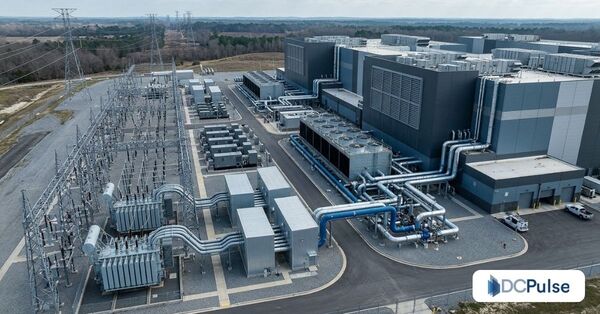
The expansion of AI computing is also changing thermal management requirements. Specialized processors and high-density server configurations can generate concentrated heat loads, placing additional demands on cooling infrastructure.
Traditional air-cooling systems remain suitable for many data center environments, but some AI deployments require alternative or supplementary approaches. Direct-to-chip liquid cooling, rear-door heat exchangers, and other liquid-based systems can help manage heat in suitable high-density configurations.
The choice of cooling technology depends on the equipment being deployed, the facility's thermal design, and operational requirements. Developers must evaluate coolant distribution, heat rejection, maintenance access, and compatibility with server manufacturers' specifications.
Cooling decisions are closely connected to power infrastructure. Higher computing loads can increase cooling requirements, while cooling equipment itself contributes to facility electricity consumption. An integrated design approach is therefore necessary to balance computing performance, thermal stability, and energy efficiency.
The potential expansion of AI capacity to 150 GW also highlights the importance of flexibility. Data centers developed over several years may need to accommodate successive generations of processors with different power and cooling characteristics.
Modular cooling systems, adaptable rack layouts, and carefully planned infrastructure interfaces can help operators manage these changes. However, flexibility must be incorporated into the initial design rather than assumed to be available without additional investment.
Hyperscalers, Neoclouds, and Sovereign AI Shape Demand
AI infrastructure is being developed through several business models, with different organizations financing facilities, operating computing equipment, and purchasing capacity.
Structure Research's analysis examines hyperscalers, AI laboratories, neocloud providers, and sovereign AI initiatives. Its methodology combines company-level infrastructure tracking with an assessment of specialized operators to examine how infrastructure ownership and computing consumption relate to one another.
Hyperscale cloud providers can develop large infrastructure portfolios to support their cloud platforms and AI services. AI-focused laboratories may require substantial computing resources without necessarily owning every facility or server used to deliver them.
Neocloud providers offer another model, specializing in access to accelerated computing infrastructure. Their role can involve deploying or operating GPU-based environments for customers that need AI computing capacity without building equivalent infrastructure independently.
Sovereign AI initiatives introduce additional considerations because governments and public-sector organizations may seek computing resources within specific jurisdictions to support national AI capabilities and data governance requirements.
These models create a complex relationship between capital investment, infrastructure ownership, and actual workload demand. A single facility may support multiple customers, while an organization purchasing computing capacity may not own the underlying data center.
For developers and investors, distinguishing these relationships is important when assessing demand, utilization, and the commercial prospects of new projects.
Networking Becomes More Important as AI Clusters Expand
Large-scale AI deployments depend on networks capable of connecting accelerators, storage platforms, and supporting systems efficiently. As computing clusters grow, network performance becomes an important consideration in determining how effectively hardware resources can work together.
Bandwidth, latency, congestion management, and interconnect architecture influence the performance of distributed AI workloads. Network requirements must therefore be incorporated into facility design alongside electrical and cooling infrastructure.
Physical connectivity also matters. Fiber-optic routes, cable pathways, switching equipment, and network redundancy must be planned to support the intended computing configuration and future expansion.
The implications extend beyond individual buildings. Large AI campuses may require coordinated network infrastructure across multiple facilities, while geographically distributed deployments depend on connectivity between computing locations and end users.
Data centre operators must consequently treat networking as a fundamental part of AI infrastructure rather than an installation task that follows construction. Early coordination can help prevent physical constraints from limiting the performance or expansion of computing systems.
Investment Must Translate into Operational Capacity
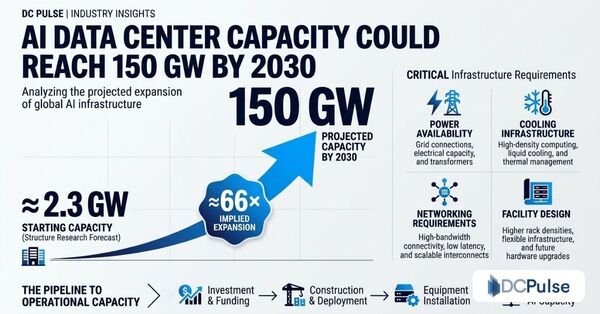
The scale of the forecast presents a significant planning challenge for infrastructure investors and developers. Funding announcements and equipment orders can indicate market confidence, but they do not independently demonstrate that usable computing capacity will become available on schedule.
Projects must progress through site selection, permitting, utility connections, construction, equipment installation and commissioning. Delays in any of these stages can affect the timing of capacity additions.
The relationship between investment and computing output also varies across infrastructure models. Facilities differ in their technical specifications, operating arrangements and ability to convert capital expenditure into available AI computing resources. Structure Research highlights substantial differences between infrastructure and commercial models in their ability to translate investment into compute capacity.
For investors, this makes project-level assessment increasingly important. Power access, construction readiness, equipment availability, customer commitments and operating economics can all influence whether a proposed development achieves its intended purpose.
For data centre operators, capacity planning must also consider utilisation. Installing more computing equipment does not automatically guarantee that the resources will be used efficiently or generate sufficient returns to support continued expansion.
Sustainability and Operational Resilience Remain Essential
The expansion of AI infrastructure raises questions about electricity consumption, emissions, water use and the resilience of digital services. These considerations will influence how developers evaluate locations, design facilities and establish operating strategies.
Energy-efficient electrical systems, appropriately selected cooling technologies and effective monitoring can help operators manage resource consumption. Renewable electricity procurement may contribute to emissions reduction, although its practical impact depends on availability, contractual arrangements and the characteristics of the local energy system.
Water management requires similar attention. Cooling technologies differ in their water requirements, and their environmental performance depends on climate, operating conditions and system design.
Reliability is another central consideration. AI services may depend on interconnected computing resources, storage systems and networks, making power interruptions or infrastructure failures potentially disruptive.
Redundant systems, effective maintenance procedures and appropriate recovery planning can help operators manage operational risks. As facilities become more complex, these measures must be coordinated across electrical, mechanical and digital systems.
The Outlook for Global AI Data Centre Infrastructure
Structure Research's 150 GW forecast illustrates the potential scale of AI infrastructure expansion and the importance of understanding who finances, builds and consumes computing capacity. Its published target is 2030, and the forecast should be treated as a projection rather than a guarantee of future deployment.
For the data centre industry, the implications extend well beyond the construction of additional buildings. The expansion will require coordinated investment in electricity supply, cooling, networking, specialised computing equipment and operational capabilities.
The central challenge will be converting anticipated demand and available capital into reliable, commercially viable computing capacity. Power constraints, construction timelines, equipment requirements and differences between infrastructure business models will influence how much projected capacity ultimately becomes operational.
As AI workloads continue to evolve, developers and operators will need to balance deployment speed with engineering flexibility, energy efficiency and long-term reliability. The industry's ability to manage these interconnected requirements will help determine how effectively global digital infrastructure can support the next phase of AI adoption.