Pranav Hotkar
Over the past decade, the speed of online shopping has improved dramatically. Product discovery, page loading, and recommendation engines now operate in fractions of a second across most modern e-commerce platforms. Yet the final step of the purchasing journey, the checkout process, remains one of the most sensitive points in the entire digital commerce pipeline. Even small delays during checkout can disrupt the customer experience and lead to abandoned purchases.
Research from Google has shown that conversion rates can decline sharply as page load times increase, particularly on mobile devices, where network variability can introduce additional delays. For large e-commerce platforms processing millions of transactions each day, even milliseconds of additional latency can translate into substantial revenue loss over time.
At scale, the checkout process involves multiple systems operating simultaneously. Payment gateways, fraud detection services, authentication layers, and bank authorization networks must all respond within a tightly constrained time window to complete a transaction successfully. If any step in that chain slows down, the customer may hesitate, refresh the page, or abandon the cart entirely.
How Today’s Payment Infrastructure Shapes Checkout Performance
The modern e-commerce checkout process relies on a complex network of payment infrastructure designed to authorize transactions in real time. What appears to customers as a simple confirmation step actually triggers a sequence of communication between the merchant’s platform, payment processors, card networks, and issuing banks. Each system must validate and route transaction data within seconds before a purchase can be approved.
When a shopper submits payment details, the merchant’s checkout system sends an authorization request to a payment processor. The processor then forwards the request through card networks such as Visa, which route the transaction to the issuing bank responsible for the customer’s card. The bank verifies account information, checks available funds or credit, and either approves or declines the transaction before the response travels back through the same chain to the merchant. Visa explains that this authorization exchange allows banks and networks to validate payments securely across global commerce infrastructure.
Checkout Authorization Pipeline Latency
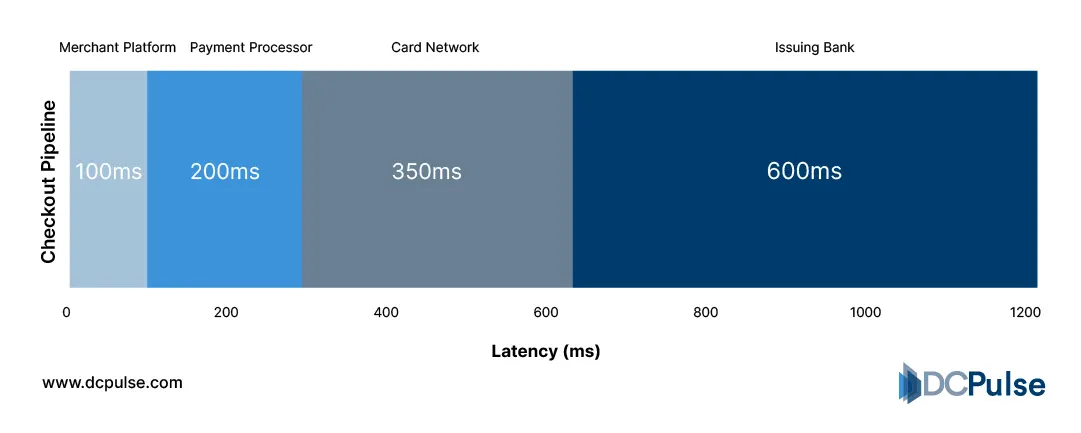
For large e-commerce platforms, the scale of this infrastructure is enormous. Global payment networks must process vast volumes of transactions every second while maintaining high reliability. Visa’s developer platform documentation describes how payment requests are routed through VisaNet, the company’s global transaction processing network that supports real-time payment authorization between merchants and financial institutions.
As transaction volumes increase, even small delays within this pipeline can affect the customer experience. Performance research from Akamai Technologies shows that delays in online retail performance significantly increase abandonment during the purchase journey, particularly at critical stages such as checkout.
Page Load Delay vs. Conversion Impact (2026)
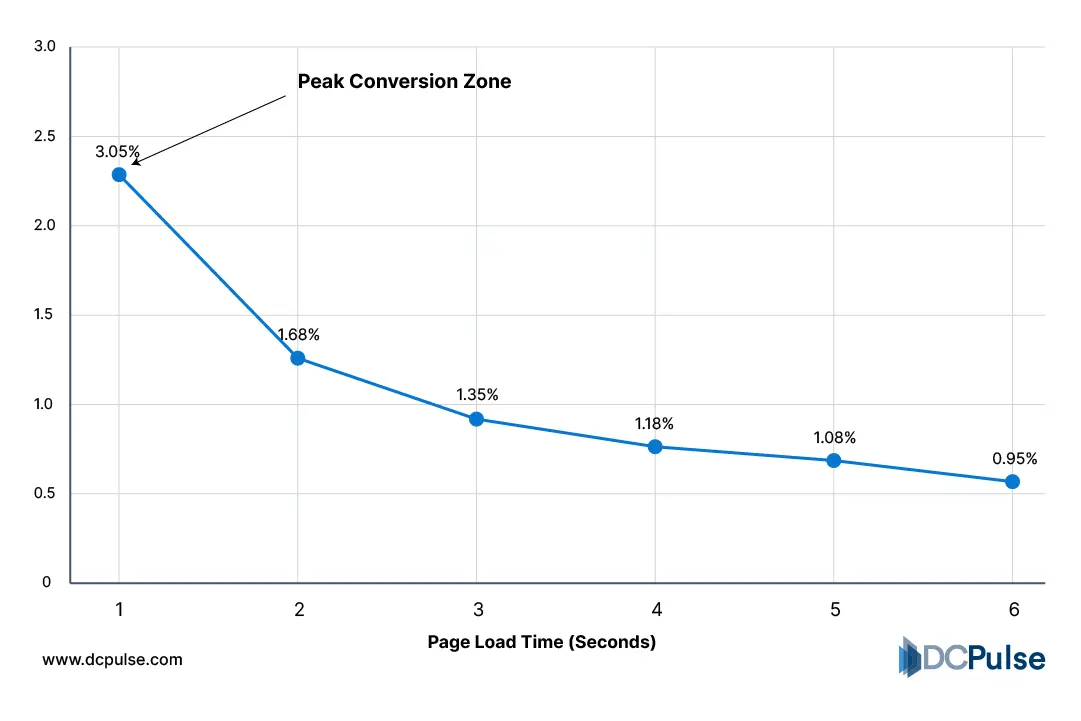
As global e-commerce traffic continues to grow, retailers and payment providers are increasingly focused on optimizing this transaction pipeline to ensure that checkout experiences remain fast, secure, and reliable.
What technologies are emerging to reduce checkout latency in modern e-commerce systems?
Reducing checkout latency has become a major focus for e-commerce platforms and payment providers as online retailers seek to minimize friction during the purchase process. Several new infrastructure approaches are emerging to streamline payment authorization, accelerate transaction routing, and improve the reliability of digital checkout systems.
One area of innovation involves direct API-driven payment platforms that simplify the communication between merchants and payment networks. Payment technology companies such as Stripe have developed programmable payment infrastructure that allows merchants to integrate payment authorization directly into their applications, reducing the complexity of traditional payment processing pipelines. These platforms allow businesses to handle payment authentication, fraud detection, and transaction routing through unified APIs.
Verified Checkout Evolution Data (2000-2025+)
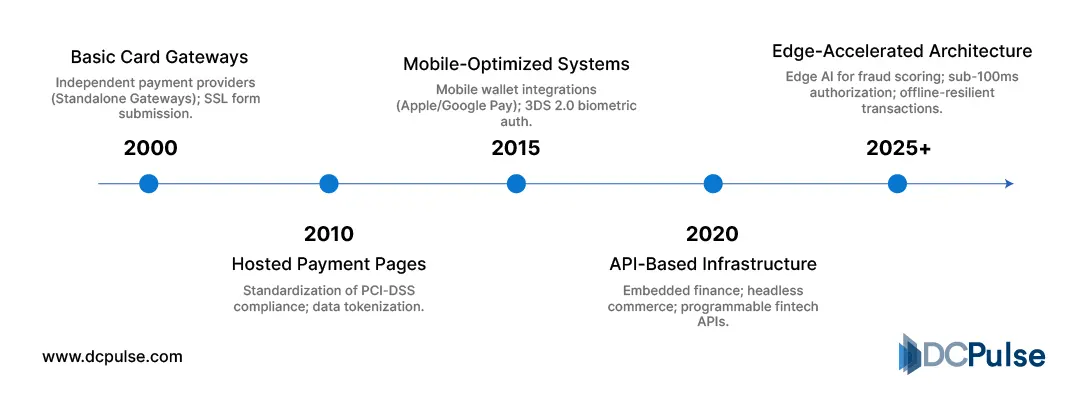
Another emerging innovation focuses on edge-based commerce infrastructure, which moves parts of the checkout process closer to users geographically. Edge computing providers such as Cloudflare are developing distributed networks that allow application logic and security validation to run near the customer’s location. By reducing the physical distance that transaction requests must travel, edge architectures can significantly reduce latency during web interactions and checkout processes.
Retail platforms are also improving checkout performance through optimized commerce platforms designed specifically for high-volume online stores. Companies such as Shopify have developed accelerated checkout tools that streamline payment authentication and enable faster purchasing through features like stored payment credentials and one-click checkout experiences.
As digital commerce continues to scale globally, these innovations suggest that the next generation of checkout systems will rely on API-driven payments, distributed infrastructure, and optimized platform design to reduce delays and improve transaction success rates.
How Payment Platforms Are Racing to Eliminate Checkout Delays
As checkout latency becomes a measurable factor affecting online revenue, major payment platforms and commerce providers are investing heavily in technologies that accelerate transaction processing and reduce friction during the purchase journey. These strategic moves reflect a broader industry effort to improve conversion rates by making digital payments faster and more reliable.
One significant development has been the rise of accelerated checkout systems designed to minimize the number of steps required to complete a purchase. E-commerce platforms such as Shopify introduced Shop Pay, a checkout feature that stores customer payment and shipping information to enable faster repeat purchases. According to Shopify, Shop Pay can significantly increase checkout conversion rates by allowing returning customers to complete transactions with fewer form entries and reduced authentication steps.
Synchronized Checkout Performance Benchmarks (March 2026)
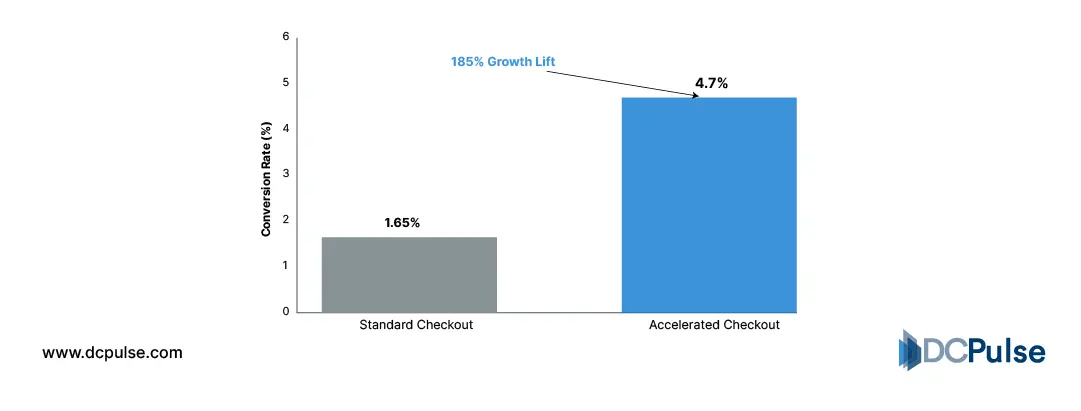
Payment infrastructure providers are also investing in platforms that unify global payment processing within a single system. Companies such as Adyen have built integrated commerce platforms that allow businesses to process payments across online, mobile, and in-store channels while maintaining consistent transaction performance. Adyen notes that unified payment platforms help merchants reduce complexity and optimize transaction routing across global payment networks.
Another major industry move involves simplified digital wallet-based checkout experiences. Payment companies including PayPal continue to expand fast checkout features that allow customers to complete purchases without manually entering card details on merchant websites. Digital wallet systems store credentials securely and enable customers to authorize transactions with minimal interaction, which can significantly reduce checkout time and abandonment rates.
Major Checkout Technology Launches (2015–2026)
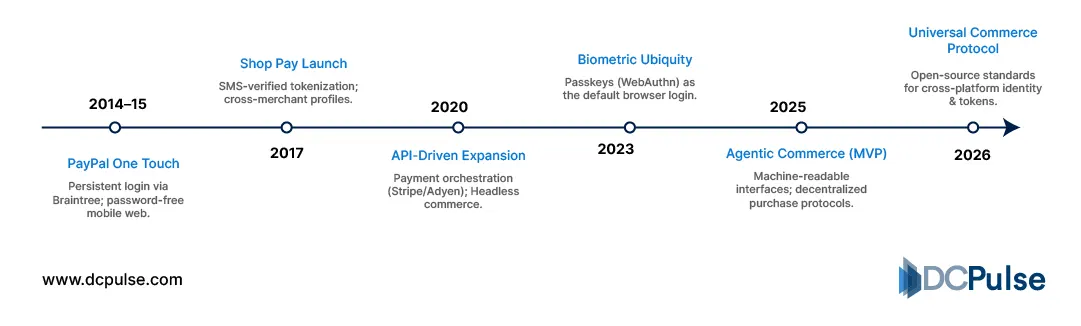
As competition in online retail intensifies, these industry initiatives highlight how payment providers and commerce platforms are prioritizing speed, simplicity, and infrastructure efficiency to ensure checkout systems can support growing volumes of global digital transactions.
Will checkout speed become a decisive competitive advantage in global e-commerce?
As digital commerce continues to scale globally, checkout performance is increasingly emerging as a critical determinant of online retail success. While pricing, product availability, and delivery speed remain important, the ability to complete transactions quickly and reliably is becoming equally important for merchants operating at scale. Even small delays in checkout workflows can interrupt the purchase process and increase the likelihood that customers abandon their carts before completing a transaction.
Research on retail website performance highlights how sensitive online shoppers are to delays during the purchase journey. Performance studies from Akamai Technologies have shown that even minor increases in page load time can negatively affect conversion rates and customer engagement during online transactions.
At the same time, global payment networks and commerce platforms are expanding infrastructure designed to reduce transaction latency and improve authorization reliability. Companies such as Visa continue to invest in global payment processing networks capable of handling high transaction volumes across international markets.
As e-commerce competition intensifies, merchants that successfully optimize checkout speed may gain measurable advantages in customer retention and revenue performance. In this environment, faster checkout systems are likely to become a defining element of next-generation digital retail infrastructure.