Pranav Hotkar
Financial institutions are generating unprecedented volumes of sensitive data as digital payments, algorithmic trading, and real-time banking services continue to expand. Every card transaction, securities trade, fraud check, and compliance report produces data that must be securely processed and stored within highly regulated financial systems.
According to research by International Data Corporation, the total amount of data created worldwide is expected to grow rapidly as digital platforms expand across industries, with financial services among the most data-intensive sectors.
As regulatory oversight tightens and financial data volumes continue to rise, banks and fintech firms are increasingly building private financial data hubs, secure environments designed to centralize financial datasets while maintaining strict control over privacy, compliance, and operational performance.
The Infrastructure Behind Financial Data Control
As financial institutions expand digital banking, payments, and trading platforms, the infrastructure required to manage financial data has become increasingly complex. Banks and payment networks must store vast volumes of sensitive information, including transaction records, identity data, and risk analytics, while maintaining strict security and regulatory oversight. These requirements strongly influence how financial organizations structure their data environments.
Many institutions today operate hybrid infrastructure models that combine on-premise systems with private and public cloud environments. Cloud platforms provide scalability for analytics and application workloads, but highly sensitive financial datasets are often retained within tightly controlled infrastructure. Supervisory authorities have emphasized the importance of maintaining strong governance over critical financial data systems as financial services become more digital. The Bank for International Settlements has highlighted operational resilience and data governance as key priorities for financial institutions managing modern digital infrastructure.
Financial Data Infrastructure Mix in Banking (2024–2026)
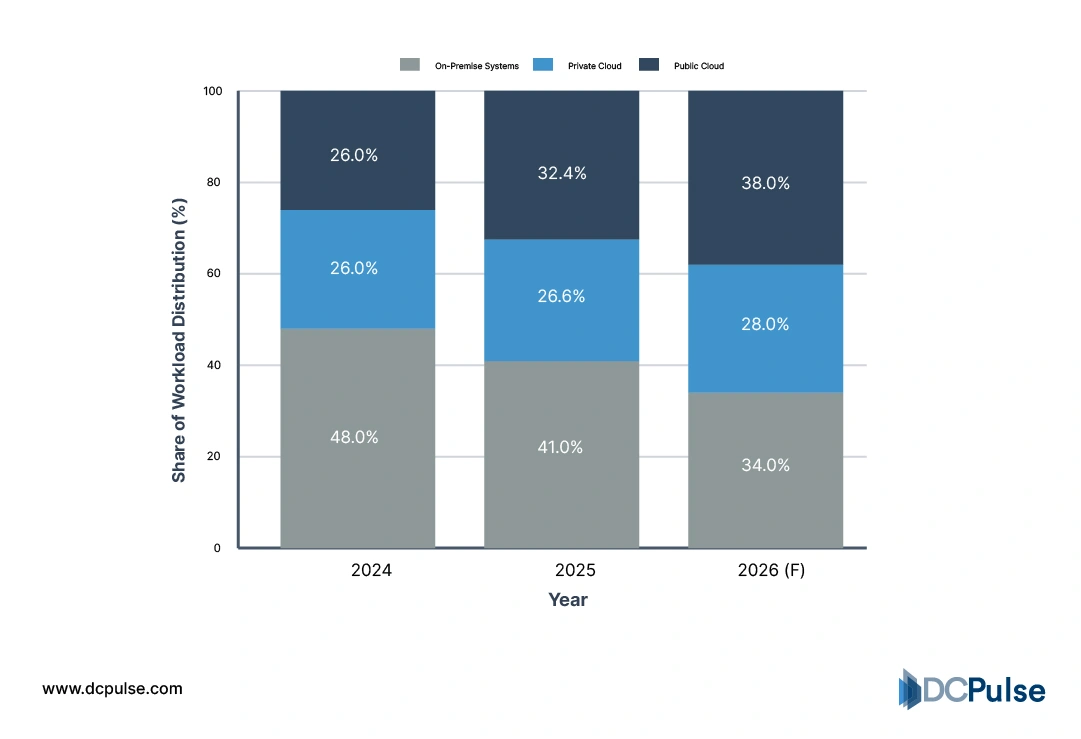
Regulatory oversight is also shaping how financial data is managed globally. Financial regulators increasingly require banks to maintain stronger control over where critical data is stored and processed, particularly when outsourcing technology services. Guidance from the European Central Bank notes that financial institutions must carefully manage risks associated with cloud outsourcing and third-party technology providers handling sensitive financial data.
(Global Map): Regions Implementing Financial Data Governance or Cloud Outsourcing Oversight (March 2026)
As a result, many banks are beginning to consolidate transaction systems, analytics platforms, and compliance workloads into private financial data hubs, controlled infrastructure environments designed to centralize financial datasets while maintaining stronger oversight of security, regulatory compliance, and operational resilience.
What are the technologies powering the next generation of financial data hubs?
As financial institutions seek greater control over sensitive information, several emerging technologies are shaping the development of private financial data hubs. These systems are designed to allow banks and financial platforms to process and analyze large datasets while maintaining strict security, privacy, and regulatory compliance.
One important innovation is confidential computing, a security approach that protects data even while it is being processed. Cloud providers such as Microsoft have developed confidential computing environments that encrypt data during processing using hardware-based secure enclaves. This allows financial institutions to run analytics and machine learning workloads on sensitive datasets without exposing the underlying information to unauthorized systems or administrators.
Evolution of Secure Financial Data Infrastructure (1995–2026+)
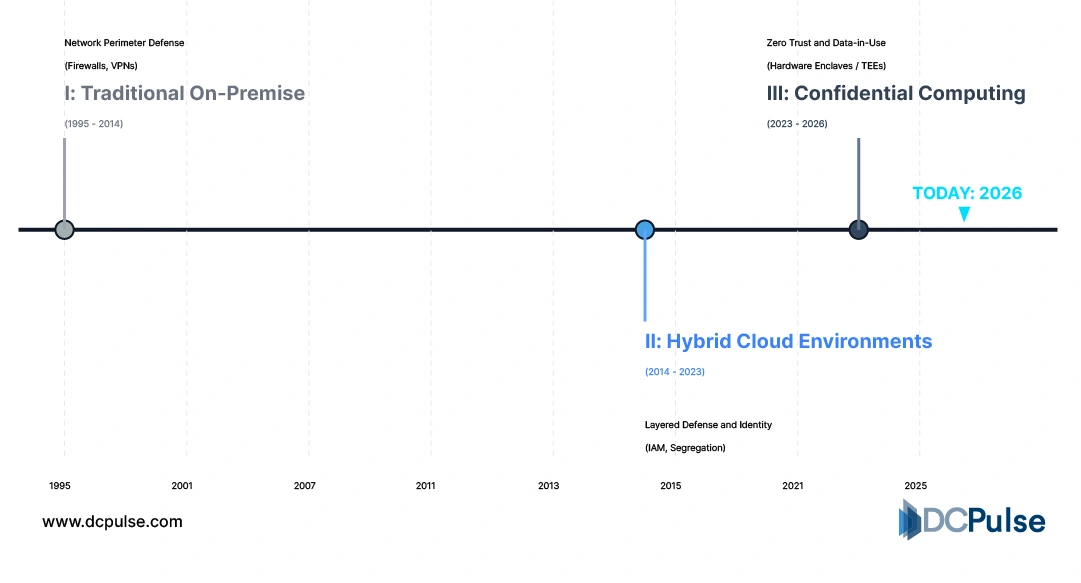
Another emerging concept is the use of data clean rooms, which allow organizations to collaborate on datasets without directly sharing raw data. Technology providers such as Google Cloud are developing secure environments where multiple parties can analyze combined datasets while maintaining strict privacy controls. In financial services, this approach can enable banks, payment networks, and fintech companies to perform joint analytics while protecting sensitive financial records.
Cloud infrastructure providers are also introducing sovereign and regulated cloud environments tailored to industries with strict compliance requirements. Platforms from companies like Amazon Web Services allow financial institutions to deploy cloud services within controlled geographic and regulatory boundaries. These environments provide the scalability of cloud computing while enabling banks to maintain greater control over data governance and compliance.
Together, these innovations are enabling financial institutions to design private data hubs that support advanced analytics, cross-institution collaboration, and large-scale digital services while maintaining strict oversight of sensitive financial information.
How Financial Institutions Are Building Private Data Platforms
As financial data volumes continue to expand, banks and payment networks are increasingly investing in private data platforms designed to centralize analytics, risk management, and transaction intelligence. These initiatives reflect a broader shift within the financial industry toward building controlled environments where sensitive datasets can be analyzed while maintaining strict security and regulatory oversight.
One major example comes from JPMorgan Chase, which has invested heavily in building large-scale internal data platforms that support analytics, fraud detection, and trading operations. The bank processes massive amounts of transaction data across its global operations, requiring advanced infrastructure capable of supporting real-time financial analytics.
Global Banking IT Spending (2018–2024)
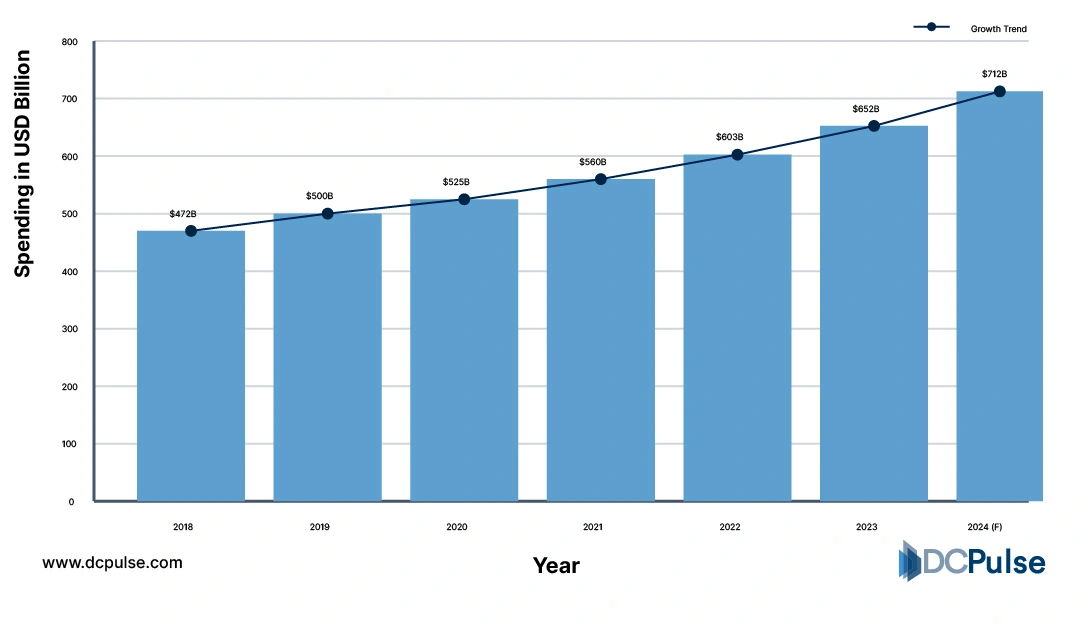
Payment networks are also expanding their financial data capabilities. Mastercard has developed a range of data analytics and intelligence platforms that help banks and merchants analyze transaction trends, detect fraud, and generate insights from payment activity across its global network.
Similarly, global payment provider Visa continues to expand its data analytics infrastructure, providing tools that allow financial institutions and merchants to analyze transaction activity across Visa’s global payment network. These platforms enable organizations to monitor payment patterns, detect anomalies, and generate insights from large-scale transaction data.
Together, these initiatives illustrate how financial institutions and payment networks are building increasingly sophisticated data environments capable of supporting large-scale financial analytics, fraud detection, and operational intelligence.
Will Private Financial Data Hubs Become a Core Layer of Future Banking Infrastructure?
As financial institutions continue to digitize services and expand data-driven operations, private financial data hubs are increasingly emerging as a strategic infrastructure layer. Banks, payment networks, and fintech platforms must manage growing volumes of transaction records, customer data, and regulatory reporting information while ensuring strict control over security and compliance. Consolidating these datasets within controlled environments allows organizations to process sensitive financial information without relying entirely on external infrastructure.
Industry trends suggest that financial institutions are likely to continue investing in dedicated data environments that combine analytics capabilities with strong governance controls. Research from Bank for International Settlements highlights how operational resilience and data governance are becoming central priorities for banks as digital financial services expand.
Private financial data hubs can help institutions support advanced analytics, fraud detection, and regulatory reporting while maintaining tighter control over how financial information is stored and processed. As data volumes grow and regulatory expectations evolve, these secure infrastructure environments may become a foundational component of modern financial systems.