Pranav Hotkar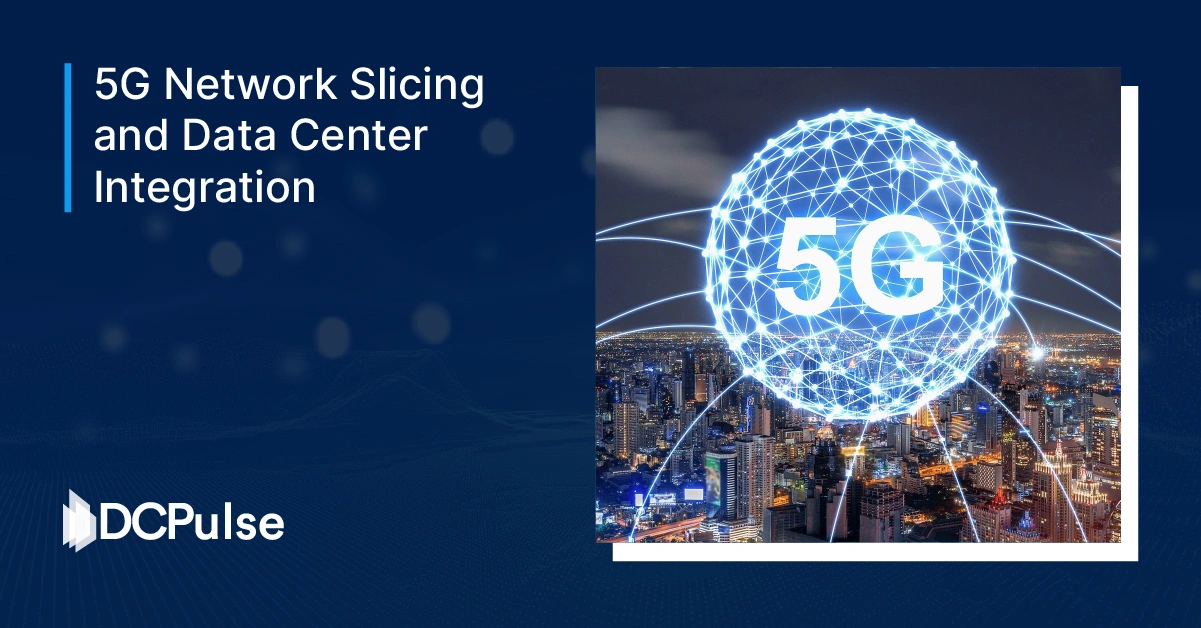
The next wave of digital infrastructure is being shaped by applications that demand guaranteed performance, ultra-low latency, and strict workload isolation. From autonomous systems and industrial automation to real-time AI inference, these use cases are pushing network architectures beyond the limits of traditional, one-size-fits-all connectivity models.
5G introduces a fundamental shift through network slicing, a capability that allows operators to create multiple virtual networks on a shared physical infrastructure, each optimized for specific performance requirements. At the same time, the rise of edge and distributed data centers is bringing compute and storage closer to end users, reducing latency and enabling faster data processing.
Together, these two developments are beginning to converge. Network slices are no longer just connectivity layers; they are increasingly being integrated with data center resources to deliver end-to-end, application-specific performance environments.
This convergence is redefining how networks and data centers interact, transforming them into tightly coupled systems designed for precision, scalability, and real-time responsiveness.
From Shared Networks to Dedicated Performance: Understanding 5G Slicing and Edge Integration
5G network slicing represents a structural shift in telecom architecture, enabling operators to create multiple logical, end-to-end networks on a shared physical infrastructure, each optimized for specific performance requirements. Defined by standards from 3GPP, slices are engineered to support distinct service categories, including enhanced mobile broadband (eMBB), ultra-reliable low-latency communications (URLLC), and massive machine-type communications (mMTC).
Unlike traditional networks, slicing extends across the entire stack, radio access network (RAN), transport, and core, allowing operators to enforce granular Quality of Service (QoS) policies. This ensures that critical applications receive dedicated resources and predictable performance.
In parallel, the rise of Multi-access Edge Computing (MEC) is redefining how data is processed within these networks. Standardized by ETSI, MEC enables compute and storage to be deployed closer to end users, reducing latency and supporting real-time applications such as autonomous systems and industrial automation.
When integrated, network slicing and edge data centers create tightly coupled environments where network behavior and compute resources are aligned to application needs. Industry frameworks from organizations like GSMA further highlight how slices can be mapped to specific enterprise and industry workloads, reinforcing the role of data centers as active components within the network fabric.
Latency Comparison - 4G vs 5G vs Edge-enabled 5G (2026 Estimates)
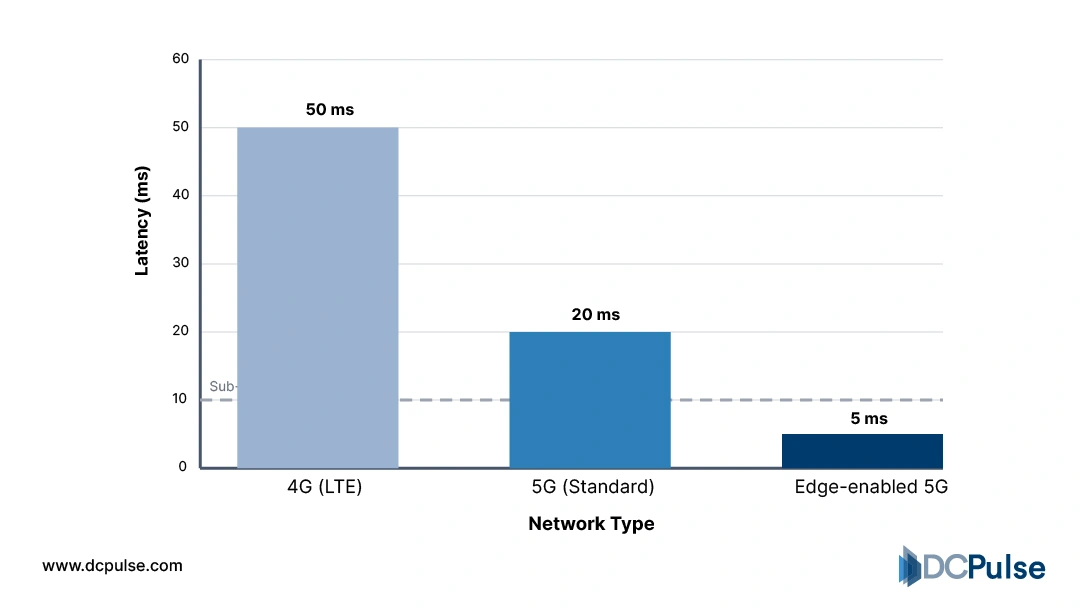
As a result, data centers are no longer peripheral, they are becoming embedded within programmable network architectures designed for deterministic performance and scalability.
How Are Emerging Technologies Enabling Intelligent, Real-Time 5G Network Slicing?
The next phase of 5G network slicing is being shaped by technologies that transform static, pre-configured slices into dynamic, intelligent, and application-aware networks. At the center of this evolution is AI-driven orchestration, which enables operators to automatically allocate and optimize network resources in real time based on traffic patterns, latency requirements, and workload priorities. Solutions developed by companies like Nokia are already incorporating AI into network management, allowing slices to adapt continuously without manual intervention.
In parallel, dynamic network slicing is replacing rigid, long-lived configurations with on-demand slice provisioning, where enterprises can request and deploy dedicated network environments as needed. This capability is particularly important for industries with variable workloads, such as manufacturing and media.
The integration of data center fabrics with 5G core networks is also advancing rapidly. By tightly coupling slices with edge and regional data centers, operators can ensure that compute resources are aligned with network performance requirements, enabling consistent low-latency execution.
High-performance computing is further enhancing these environments. Platforms from companies like NVIDIA are enabling accelerated processing for AI inference and real-time analytics within edge data centers, supporting applications that require immediate decision-making.
Timeline - Evolution of Network Slicing
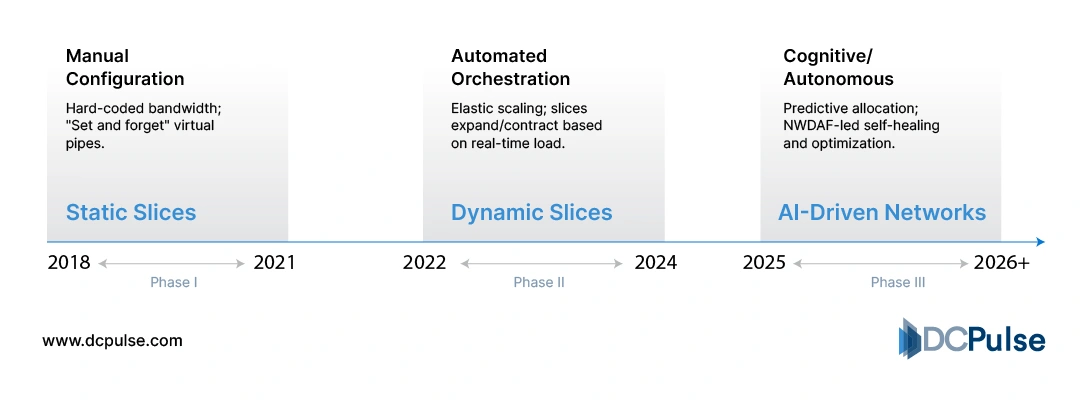
Together, these innovations are transforming network slicing into a programmable, intelligent system capable of delivering real-time, application-specific performance at scale.
From Telco Networks to Distributed Platforms: How Industry Leaders Are Operationalizing 5G Slicing
The deployment of 5G network slicing is increasingly being driven by telecom operators integrating their networks with edge and distributed data center infrastructure, enabling real-world, application-specific performance at scale.
Operators such as these are expanding enterprise-focused 5G offerings that combine high-performance connectivity with localized compute capabilities. These deployments are designed to support use cases like industrial automation, smart logistics, and real-time analytics, where network behavior must align closely with application requirements.
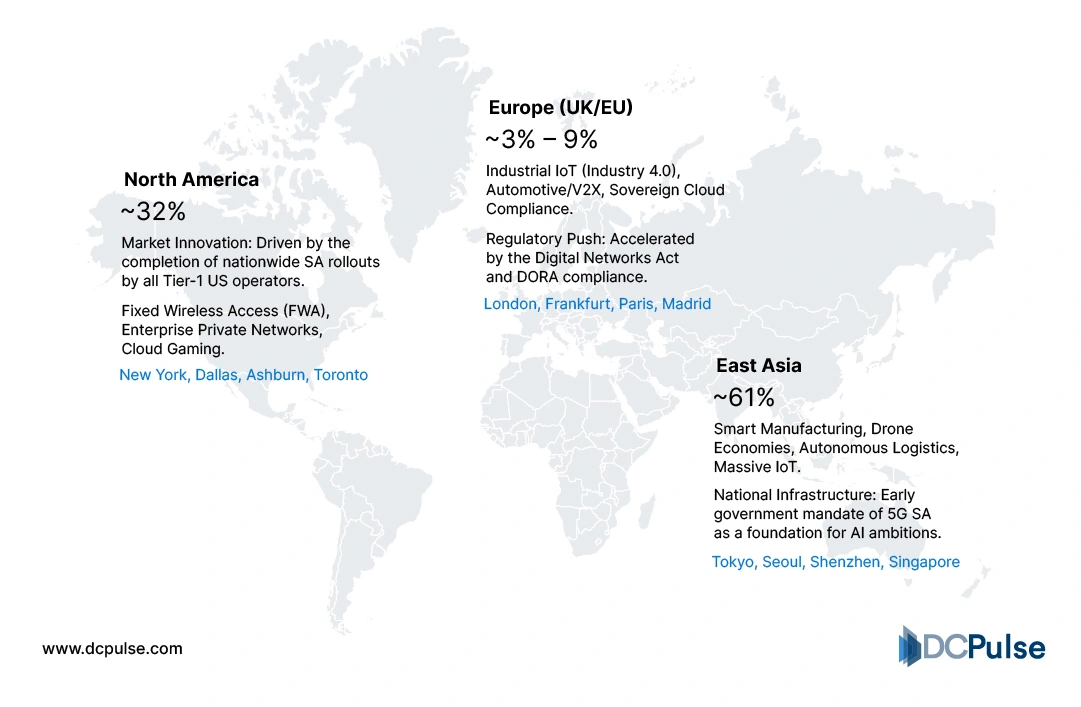
Global Map - 5G Network Slicing and Edge Deployment Regions
Similarly, AT&T is advancing its Multi-access Edge Computing (MEC) strategy, enabling enterprises to process data closer to the point of generation. By integrating edge compute with 5G networks, AT&T is supporting low-latency applications that depend on deterministic performance, reinforcing the role of distributed data centers within telecom infrastructure.
Cloud providers are also playing a critical role in this ecosystem. Amazon Web Services is enabling telecom operators to extend cloud capabilities into network environments through telecom-focused infrastructure and edge services. This allows operators to deliver compute and storage alongside network slices, creating unified environments for application deployment.
Growth in Global Private LTE/5G Network Market (2021-2026)
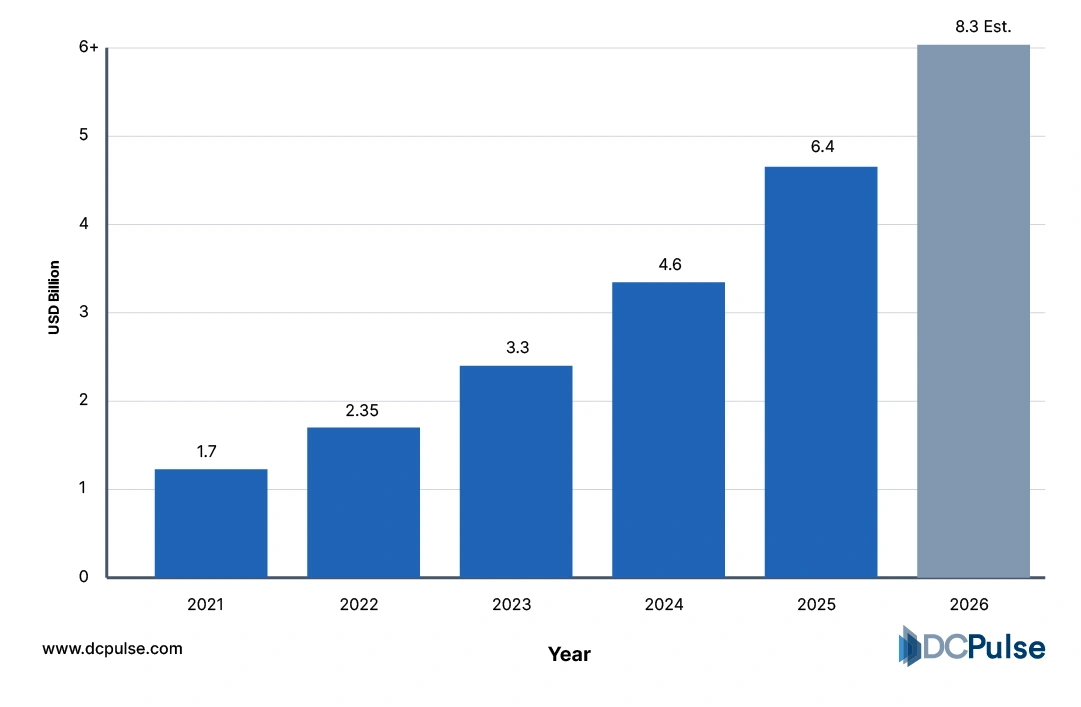
As these initiatives scale, 5G network slicing is evolving from a network feature into a platform-level capability, where connectivity and data center resources are tightly integrated to deliver consistent, low-latency performance across diverse applications.
Can 5G Network Slicing and Data Center Integration Scale to Meet Future Demand?
The convergence of 5G network slicing and data center infrastructure is poised to redefine digital service delivery, but its scalability will depend on how effectively the ecosystem manages complexity, cost, and interoperability. While slicing enables highly customized network performance, deploying and maintaining multiple dynamic slices across distributed environments introduces significant operational challenges for telecom operators.
At the same time, integrating edge and regional data centers into network architectures requires substantial investment in infrastructure, orchestration platforms, and real-time management systems. This raises critical questions around cost efficiency, particularly as enterprises demand guaranteed performance without proportionally higher pricing.
However, the long-term trajectory is clear. As automation, AI-driven orchestration, and standardized frameworks mature, these challenges are expected to ease. The industry is gradually moving toward software-defined, autonomous networks where slices and compute resources are dynamically aligned with application needs.
In this context, 5G slicing combined with data center integration is not just an enhancement; it represents a foundational shift toward programmable, performance-driven infrastructure capable of supporting the next generation of digital services.