DCPulse
A temperature difference of just half a degree Celsius may appear insignificant in a data center, but inaccurate thermal measurements can influence cooling performance, electricity consumption, and equipment reliability. As data centers expand to support artificial intelligence (AI), high-performance computing (HPC), and cloud infrastructure, maintaining precise environmental conditions is becoming increasingly important.
The challenge is not simply keeping server rooms cool. It is ensuring that cooling systems deliver the right amount of cooling at the right location without wasting energy. Poorly calibrated sensors, inaccurate temperature readings, and inefficient cooling controls can create operational inefficiencies that accumulate across facilities running continuously.
For large data center operators, these inefficiencies can translate into substantial operating expenses. Although a half-degree error does not automatically result in millions of dollars in losses, its financial implications deserve attention, particularly across hyperscale facilities and energy-intensive AI infrastructure.
The Hidden Financial Impact of Temperature Measurement Errors
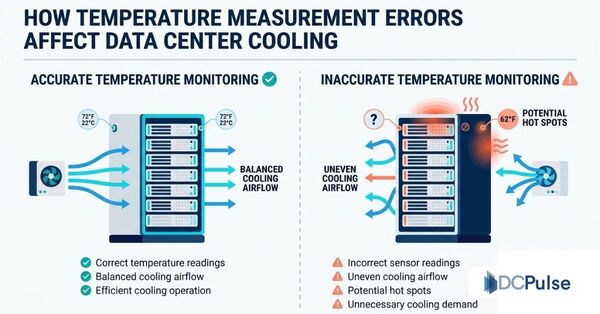
Temperature monitoring is fundamental to data center operations. Cooling systems depend on environmental sensors to understand temperature conditions and adjust equipment performance accordingly. These measurements are commonly integrated into building management systems (BMS) and data center infrastructure management (DCIM) platforms.
A sensor that consistently reports temperatures below actual conditions can create a misleading picture of the thermal environment. Depending on its location and role in the control system, this may prevent cooling equipment from responding appropriately to rising temperatures. Conversely, readings above actual conditions can trigger unnecessary cooling adjustments.
Both situations create operational challenges. Excessive cooling increases electricity consumption, while insufficient cooling can expose IT equipment to thermal stress. The financial consequences may extend beyond electricity expenses to include additional maintenance, troubleshooting, and reduced efficiency.
For facilities operating thousands of servers, the cumulative impact of poor thermal management can become significant. The real concern is therefore not an isolated half-degree difference but repeated measurement inaccuracies influencing decisions across multiple cooling systems and operating periods.
Why AI Data Centers Need More Precise Thermal Monitoring
The expansion of AI infrastructure is increasing the complexity of data center cooling. GPU-intensive workloads generate substantial heat, particularly when large computing clusters operate continuously. High-density rack configurations also create thermal conditions that can vary significantly across different areas of a facility.
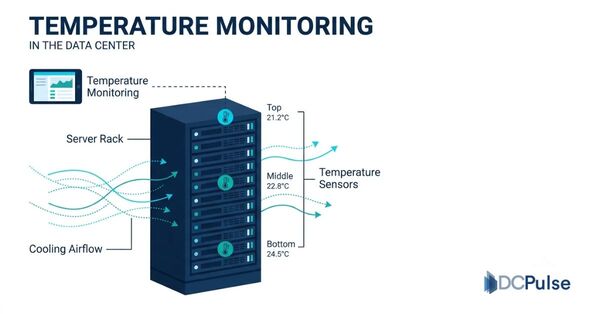
Traditional room-level temperature monitoring may not capture these variations accurately. A server rack can experience different temperatures at its bottom, middle, and top, depending on airflow distribution, equipment configuration, and cooling system performance.
The transition toward liquid cooling introduces additional monitoring requirements. Direct-to-chip systems, coolant distribution units (CDUs), pumps, and heat exchangers require temperature measurements at multiple points throughout the cooling infrastructure.
ASHRAE's thermal guidelines distinguish between recommended and allowable operating conditions for IT equipment. For common air-cooled equipment classes A1 to A4, the recommended inlet temperature range is 18°C to 27°C. These recommendations make accurate measurements at equipment air intakes particularly important.
How Small Temperature Errors Increase Cooling Costs
Temperature inaccuracies can influence cooling efficiency in several ways. The financial consequences depend on the cooling architecture, sensor location, control configuration, facility load, and electricity prices.
Unnecessary Cooling and Higher Energy Consumption
A sensor reporting a higher temperature than actual conditions can cause cooling systems to increase output unnecessarily. Chillers, computer room air conditioning (CRAC) units, computer room air handlers (CRAHs), and associated pumps may consume additional electricity without providing a corresponding operational benefit.
ENERGY STAR highlights the importance of environmental instrumentation and intelligent cooling controls in matching cooling capacity to actual IT heat loads. Its guidance explains how monitoring server inlet conditions can help operators avoid both overcooling and insufficient cooling.
Undetected Hot Spots
Temperature measurement errors can also conceal localized hot spots. A sensor positioned near a cooling supply outlet may report acceptable conditions even when server racks located farther away experience higher inlet temperatures.
Operators sometimes respond to uneven cooling by lowering the overall facility temperature. However, this can increase cooling demand without resolving the underlying airflow problem.
A more effective approach involves identifying the affected rack or cooling zone and correcting the specific issue through airflow management, equipment adjustments, or localized cooling improvements.
Inefficient Cooling Setpoints
Cooling setpoints determine the target temperatures around which facility systems operate. Inaccurate measurements can encourage operators to maintain unnecessarily conservative settings, preventing facilities from using higher temperatures that remain within approved equipment operating limits.
ENERGY STAR identifies higher operating temperatures as one potential energy-efficiency measure, provided server inlet conditions remain within equipment requirements. However, higher setpoints must be evaluated alongside airflow, humidity, server fan behavior, and thermal reliability.
Sensor Calibration, Placement, and AI-Driven Monitoring
Accurate temperature management begins with reliable instrumentation. Sensor specifications alone do not guarantee accurate monitoring because installation location, calibration, environmental conditions, and maintenance practices also influence measurement quality.
The Bureau of Energy Efficiency's Energy Efficiency Guidelines and Best Practices in Indian Datacenters emphasize periodic calibration of sensors and metering devices. It also recommends establishing a calibration program to maintain the accuracy of monitoring and control systems.
Data center operators can strengthen temperature monitoring through several practical measures:
- Regular calibration: Compare sensor readings against suitable reference instruments and investigate measurement drift.
- Rack-level monitoring: Measure temperatures at representative server intake locations instead of depending exclusively on room-level readings.
- Strategic sensor placement: Monitor different rack heights and cooling zones to identify uneven temperature distribution.
- Continuous data collection: Track temperature readings over time to identify recurring deviations and abnormal patterns.
- Control system integration: Ensure BMS and DCIM platforms receive reliable measurements before automated cooling adjustments are made.
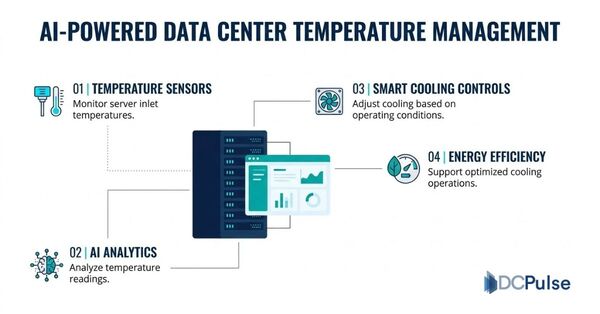
AI-powered monitoring and digital twin technology are also creating opportunities for more advanced thermal management. These platforms combine sensor readings, airflow information, equipment loads, and historical operating data to help operators identify cooling inefficiencies.
A relevant example is Telefónica Germany's deployment of EkkoSense digital twin technology. The platform combines IoT sensors, analytics, and three-dimensional facility modelling to provide visibility into temperature conditions and airflow patterns.
However, advanced analytics cannot compensate for consistently inaccurate source measurements. Reliable instrumentation remains the foundation of effective automated cooling management.
The Business Case for Accurate Thermal Management
Temperature accuracy should be treated as an operational and financial priority rather than simply a facilities maintenance responsibility. Cooling performance affects electricity consumption, equipment reliability, infrastructure utilization, and the ability to support changing IT workloads.
For hyperscale operators, even relatively small inefficiencies can become important when repeated across multiple buildings and cooling systems. AI data centers face additional pressure because high-density computing environments require more sophisticated thermal management and closer coordination between IT and facility infrastructure.
Operators should begin by auditing their existing sensor networks, reviewing calibration records, and mapping temperature conditions across server racks. Comparing actual equipment inlet temperatures with cooling system setpoints can reveal opportunities to improve airflow distribution and reduce unnecessary cooling.
The next step involves integrating reliable temperature information into broader operational management systems. Combining environmental monitoring with equipment performance data can help engineering teams identify inefficiencies earlier and make more informed cooling decisions.
Conclusion: Small Measurement Errors Deserve Serious Attention
A half-degree temperature discrepancy may appear insignificant in isolation, but inaccurate measurements can influence cooling decisions throughout a continuously operating data center. The resulting inefficiencies can affect electricity consumption, thermal reliability, and long-term infrastructure operating costs.
As AI workloads increase the complexity of data center thermal management, accurate sensors, appropriate placement, regular calibration, and intelligent cooling controls will become increasingly important. The objective is not to operate at the lowest possible temperature but to maintain appropriate conditions while avoiding unnecessary energy consumption.
For data center operators, improving temperature accuracy is a practical opportunity to strengthen operational efficiency, protect critical computing equipment, and manage the growing cost of digital infrastructure.