DCPulse
The partnership between DāSTOR and Myota adds cyberstorage technology to DāSTOR’s Backup as a Service (BaaS) offering, reflecting a broader shift in enterprise data protection toward combining recovery capabilities with security at the storage layer. The enhanced service integrates DāSTOR’s managed backup expertise with Myota’s Shard and Spread technology, designed to encrypt, fragment, and distribute data across multiple storage locations.
The announcement highlights growing interest in backup architectures that can address ransomware exposure while supporting data recovery, storage efficiency, and business continuity. For data center and infrastructure providers, the partnership underscores the increasing importance of protecting backup environments themselves, rather than treating backup as a separate layer outside cybersecurity strategy.
Backup Protection Moves Beyond Traditional Recovery
Enterprise backup strategies are increasingly being evaluated against the risk of ransomware, unauthorized access, infrastructure disruption, and the growing complexity of managing large data environments. Conventional backup architectures rely on copies, redundancy, and recovery processes, but organizations are also looking for ways to reduce the risk of backup data itself becoming compromised.
DāSTOR, an enterprise-focused hybrid colocation and infrastructure provider, has partnered with cybersecurity company Myota to enhance its Backup as a Service offering with additional cyber resiliency and storage optimization capabilities. The enhanced service combines DāSTOR’s managed backup expertise with Myota’s Shard and Spread technology.
The partnership reflects a growing focus on integrating data protection and cyber resilience into storage architecture. As enterprises manage increasingly distributed IT environments across on-premises infrastructure, colocation facilities, and cloud platforms, protecting backup repositories has become an important part of broader infrastructure security planning.
Myota's Shard and Spread Technology
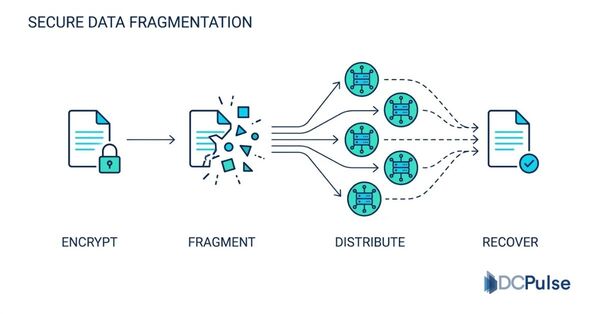
The enhanced BaaS offering incorporates Myota's Shard and Spread technology, which encrypts files, divides data into fragments, and distributes those fragments across multiple storage locations. The architecture is designed to prevent unauthorized parties from reconstructing usable data if they gain access to individual fragments.
According to the companies, the approach makes captured fragments computationally impossible for attackers to reassemble while retaining the ability for authorized users to reconstruct and recover their data. The technology is intended to provide data protection at the storage layer, reducing reliance on conventional redundancy-focused protection strategies alone.
This approach introduces a different emphasis within backup architecture. Instead of relying exclusively on protecting complete copies of data stored in separate repositories, the technology focuses on securing the data through encryption, fragmentation, and distributed storage.
For enterprise IT teams, the objective is to reduce the risk associated with compromised backup infrastructure while preserving the ability to restore information when required.
Addressing Ransomware and Recovery Risks
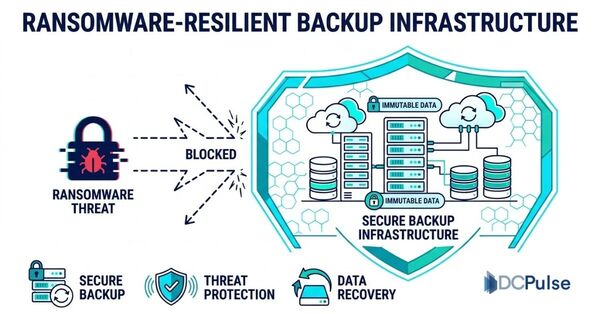
Ransomware remains a major consideration for enterprise data protection strategies because an attack can affect production systems, backup repositories, and the infrastructure needed to restore operations. Backup availability alone may not be sufficient if recovery data becomes inaccessible, compromised, or exposed during an incident.
The DāSTOR and Myota partnership is designed to address this challenge through an architecture that separates data protection from the traditional model of maintaining accessible backup copies. The companies position the technology as providing ransomware resilience, instant rewind capabilities, and improved recovery access for authorized users.
The approach may be particularly relevant for organizations that operate sensitive or business-critical information and require dependable recovery processes. Healthcare, financial services, legal services, manufacturing, and government are among the sectors targeted by the enhanced service.
The operational value of any backup architecture ultimately depends on its ability to support recovery objectives, including restoration speed, recovery point requirements, system availability, and the reliability of its underlying storage infrastructure.
Storage Efficiency Becomes a Parallel Priority
Data growth is creating additional pressure on backup infrastructure. Enterprise environments must retain larger volumes of information while managing storage capacity, operational complexity, infrastructure costs, and long-term retention requirements.
Traditional backup strategies can require multiple copies of data across different systems and locations. While redundancy remains important for availability and recovery, storage requirements can increase alongside the number of copies maintained.
Myota's technology is intended to reduce storage infrastructure requirements through its data fragmentation and distribution approach. The company claims its technology can cut storage infrastructure costs by 50%, although that figure represents a vendor claim rather than a universally established outcome across all deployment environments.
For data center operators and managed infrastructure providers, storage efficiency is becoming increasingly important as customers seek to balance protection requirements with infrastructure spending. Technologies that can potentially reduce storage overhead while maintaining recoverability may influence how providers design backup services and allocate storage resources.
Implications for Hybrid Cloud and Colocation
The partnership aligns with DāSTOR's broader focus on hybrid colocation, private cloud, network services, storage, backup, and disaster recovery. Its services are designed for organizations that operate across different infrastructure environments and require managed solutions for data protection and continuity.
Hybrid infrastructure introduces different operational considerations for backup. Data may reside across enterprise-owned systems, colocated infrastructure, private cloud platforms, and public cloud environments. Consistent protection policies and recovery capabilities across these locations can become difficult to manage as infrastructure expands.
The integration of cyberstorage capabilities into a managed BaaS service could provide customers with another option for protecting distributed environments without managing the underlying technology independently. The partnership also illustrates how colocation providers are expanding beyond space, power, connectivity, and hardware infrastructure toward specialized managed services.
For infrastructure providers, these offerings may create opportunities to deepen customer relationships by supporting workloads and data protection requirements across a wider range of IT environments.
Cyber Resilience as a Layer of Digital Infrastructure
The partnership reflects a broader shift in how enterprises approach cybersecurity and data infrastructure. Protection strategies increasingly involve multiple layers, including network security, identity controls, workload protection, data encryption, backup isolation, and disaster recovery.
Storage-level protection can complement these existing security measures by reducing the exposure of usable data within storage environments. However, cyberstorage does not replace other security controls or eliminate the need for incident response planning, access management, monitoring, and recovery testing.
The distinction is important for data center operators and enterprise infrastructure teams. Resilience depends on the interaction of different protective mechanisms, the availability of recovery infrastructure, and the ability to restore operations under real-world conditions.
Enterprise Availability and Service Expansion
DāSTOR's enhanced Backup as a Service offering was announced as immediately available to enterprise customers. The target markets include healthcare, legal, financial services, manufacturing, government, and other data-intensive industries where data protection and operational continuity are significant requirements.
The expansion also demonstrates how infrastructure providers are incorporating cybersecurity-oriented services into their offerings as customers seek managed solutions for increasingly complex environments.
For organizations evaluating managed backup services, the partnership introduces another approach to protecting stored data, particularly where ransomware protection, storage efficiency, and recovery capabilities are important considerations. Deployment decisions will still depend on workload requirements, existing infrastructure, recovery objectives, compliance obligations, and the operational characteristics of the chosen platform.
The Growing Role of Cyber-Resilient Storage
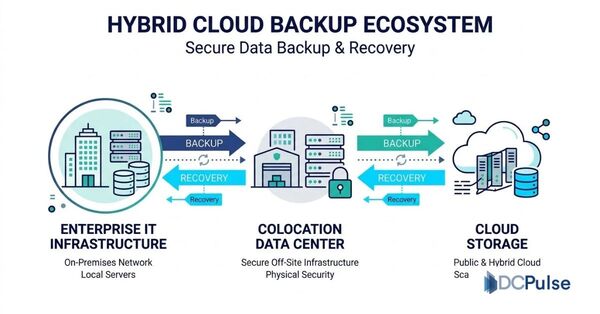
The DāSTOR and Myota partnership highlights the evolving relationship between storage architecture, cybersecurity, and managed infrastructure services. Backup platforms are no longer being evaluated solely on how many copies they maintain or how quickly data can be restored. Their ability to withstand compromise, reduce storage overhead, and support reliable recovery is becoming equally important.
As enterprises expand hybrid cloud and colocation deployments, cyber-resilient storage technologies could become a more prominent part of infrastructure planning. The partnership reflects this direction, bringing data protection capabilities closer to the underlying storage architecture while extending DāSTOR's managed services portfolio.
For the wider data center industry, the development reinforces a growing priority: infrastructure resilience increasingly depends not only on keeping systems operational but also on ensuring that critical data remains protected, recoverable, and usable when disruptions occur.