DCPulse
The growing demand for artificial intelligence (AI), cloud computing, and high-performance digital services is placing additional pressure on data center power infrastructure. As operators expand capacity to support increasingly demanding workloads, the reliability, safety, and environmental impact of backup power systems are becoming important considerations in facility design.
Against this backdrop, ZincFive has been named to TIME's World's Top GreenTech Companies 2026 list for the second consecutive year. The recognition highlights the company's work in developing nickel-zinc (NiZn) battery-based immediate power solutions for mission-critical environments, including data centers and AI infrastructure.
The recognition comes as data center developers face challenges involving power availability, equipment reliability, energy efficiency, and infrastructure safety. For facilities supporting continuous digital operations, backup power systems must respond rapidly to electrical disruptions while maintaining dependable performance. ZincFive's nickel-zinc technology represents one approach to addressing these requirements.
TIME Recognition Reflects Growing Importance of GreenTech Innovation
TIME and Statista developed the World's Top GreenTech Companies 2026 ranking to identify businesses contributing to environmental progress through technology and innovation. The assessment considered environmental impact, financial strength, and innovation.
ZincFive's inclusion for the second consecutive year places its battery technology among the solutions receiving international recognition for their contribution to the GreenTech sector.
The recognition is particularly relevant to the digital infrastructure industry, where sustainability considerations increasingly extend beyond electricity procurement to include power distribution, backup systems, cooling equipment, and the materials used throughout facility operations.
Nickel-Zinc Technology Targets Data Center Backup Power Requirements
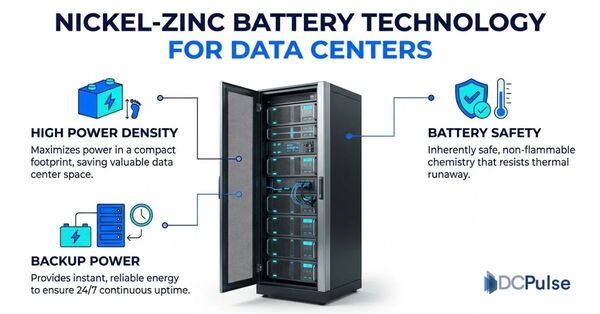
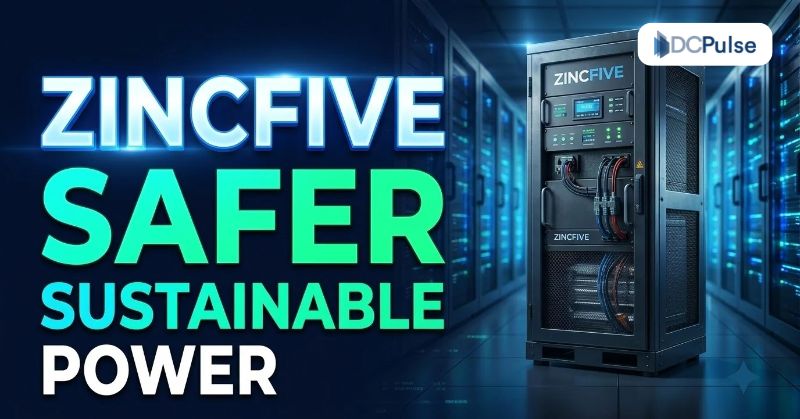
ZincFive's technology is based on nickel-zinc electrochemistry, which combines nickel and zinc to deliver high-power battery performance. The company's BC Series UPS Battery Cabinets are designed to provide immediate power for mission-critical applications, including data center uninterruptible power supply (UPS) systems.
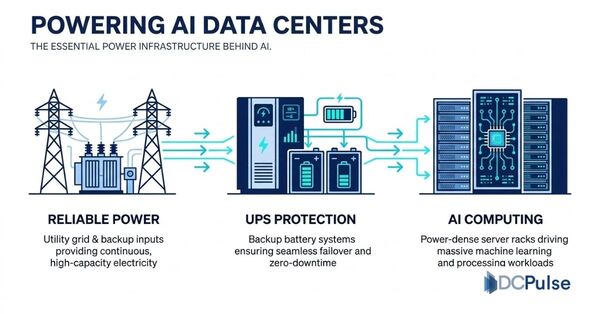
UPS infrastructure plays an essential role in maintaining data center availability. During a utility power interruption or electrical disturbance, batteries provide temporary power while standby generators or alternative power sources become available. The performance of these systems directly affects the ability of operators to protect IT equipment and maintain service continuity.
Traditional data center battery installations commonly use valve-regulated lead-acid (VRLA) and lithium-ion technologies. Nickel-zinc provides another option for operators evaluating battery chemistry, particularly where power density, installation footprint, safety, and lifecycle considerations influence infrastructure decisions.
One of the characteristics highlighted by ZincFive is the safety profile of its nickel-zinc chemistry. The company states that its batteries do not exhibit thermal runaway in UL 9540A testing. This characteristic is relevant to data center environments, where battery installations require careful consideration of fire protection, facility layouts, ventilation, and emergency response procedures.
The compact design of the company's battery cabinets also addresses space constraints within electrical and UPS rooms. As data center developers seek to maximize the amount of space available for IT equipment, power infrastructure with higher power density can help reduce the physical footprint required for backup systems.
AI Infrastructure Creates New Demands on Battery Systems
The expansion of AI computing is changing the way data center power infrastructure operates. Conventional enterprise and cloud workloads generally produce more predictable electricity demand patterns, whereas large GPU clusters can generate rapid changes in power consumption during intensive computing activities.
These fluctuations introduce additional requirements for electrical infrastructure. UPS systems and associated energy storage technologies must support reliable backup functions while responding to increasingly dynamic power conditions.
ZincFive has been developing products specifically for this changing environment. In November 2025, the company announced its BC 2 AI battery cabinet, designed to support AI-driven data center workloads alongside conventional outage protection.
The system builds on the company's BC Series platform and uses nickel-zinc battery technology with an advanced battery management system. Its dual-mode design is intended to address dynamic power requirements and provide backup capabilities for traditional IT loads within a single installation.
The development reflects a broader shift in data center power architecture. Battery systems are increasingly being evaluated not only for their ability to provide emergency backup but also for their potential role in managing short-duration power fluctuations associated with high-performance computing.
For hyperscale operators and AI infrastructure developers, this distinction is important. Higher-density computing environments require coordination between UPS systems, power distribution equipment, generators, and facility-level electrical infrastructure.
Sustainability and Battery Safety Become Infrastructure Priorities
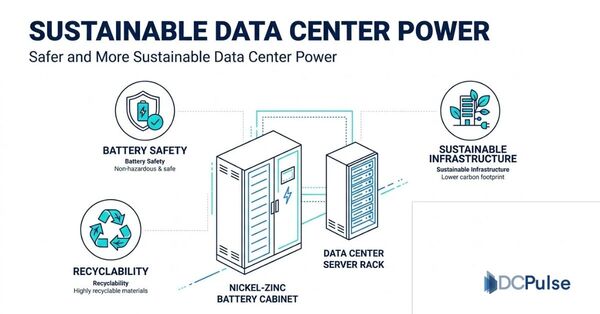
Environmental considerations are becoming increasingly important in data center infrastructure planning. Operators face pressure to improve energy efficiency, reduce emissions, and evaluate the environmental impact of equipment throughout its operating lifecycle.
Battery chemistry is one part of this broader sustainability discussion. Material sourcing, manufacturing processes, operational lifespan, maintenance requirements, and end-of-life management all influence the environmental footprint of energy storage installations.
ZincFive positions nickel-zinc technology as a sustainable alternative to conventional battery chemistries. The company highlights its high power density, recyclability, and lower lifecycle emissions as important characteristics of its solutions.
The safety dimension is equally relevant. Large data center campuses can contain extensive battery installations supporting multiple UPS systems. Battery-related fire risks, equipment protection requirements, and maintenance procedures can influence facility design and operating costs.
A battery technology that reduces particular thermal risks could provide operators with additional flexibility when planning electrical infrastructure. However, actual deployment decisions still depend on facility-specific engineering assessments, applicable safety standards, installation requirements, and the performance characteristics of the complete UPS configuration.
For data center owners, the sustainability benefits of alternative battery technologies must also be considered alongside operational requirements. Battery replacement schedules, recycling arrangements, and total lifecycle costs remain important factors in determining whether a particular chemistry is suitable for a facility.
Commercial Adoption and Expansion of ZincFive's Technology
The TIME recognition follows a period of commercial and product development activity for ZincFive. In April 2026, the company reported that its nickel-zinc battery systems had surpassed 2 GW in power delivered or contracted globally. The milestone indicates growing commercial activity in the data center power market, although the figure includes both deployed and contracted capacity.
The company's product portfolio also includes solutions intended to support different backup power requirements. Its BC Series cabinets target UPS applications, while the BC 2 AI model addresses the changing requirements of AI-oriented facilities.
In April 2026, ZincFive also announced a nickel-zinc retrofit kit designed to replace existing VRLA battery installations without requiring operators to replace the surrounding cabinet enclosure or redesign the entire UPS installation.
The retrofit approach could be relevant to established data centers with aging backup power infrastructure. Many operators must modernize electrical systems while maintaining continuous operations, making equipment compatibility and installation disruption important considerations.
The ability to upgrade battery technology within existing infrastructure could provide an additional route for introducing alternative energy storage solutions into operational facilities. However, compatibility and deployment requirements will depend on the specific UPS equipment and installation.
Implications for the Global Data Center Industry
The recognition from TIME highlights the increasing connection between power infrastructure innovation and the sustainability objectives of the digital economy. Data center operators are under pressure to expand computing capacity while maintaining reliability, managing operational risks, and improving the environmental performance of their facilities.
For the industry, the development of nickel-zinc battery solutions introduces another technology option within the UPS and immediate power market. Its potential relevance extends across hyperscale data centers, colocation facilities, enterprise infrastructure, and AI-focused computing environments.
The technology may be particularly relevant where operators prioritize high power density, rapid response, and battery safety. Retrofit solutions could also create opportunities in existing facilities where electrical infrastructure upgrades must be completed without extensive modifications.
Nevertheless, the broader adoption of nickel-zinc technology will depend on factors beyond industry recognition. Equipment compatibility, procurement costs, operating performance, lifecycle economics, supply chain capacity, and long-term reliability will remain central to purchasing decisions.
ZincFive's inclusion in TIME's World's Top GreenTech Companies 2026 list therefore represents recognition of its contribution to battery technology innovation rather than a measure of market-wide adoption.
As AI and cloud computing continue to reshape electricity requirements, the role of backup power systems is likely to become increasingly important in data center design. Technologies that combine reliable power delivery with improved safety and environmental characteristics could contribute to the industry's efforts to build more resilient and sustainable digital infrastructure.