Pranav Hotkar
For decades, batteries in data centers had a single purpose: backup power during outages.
They were a safety net, rarely used, but critical when needed.
But that role is rapidly evolving.
As energy systems become more complex and data center power demand surges, batteries are no longer sitting idle. Instead, they are being repositioned as active energy assets, capable of supporting grid stability, optimizing energy costs, and enabling greater use of renewable power.
This shift is being driven by two forces: increasing reliance on intermittent energy sources like solar and wind and the need for more flexible, resilient power infrastructure.
What was once a passive component is becoming a dynamic part of energy strategy.
The implication is significant.
Battery storage is moving beyond backup; it is emerging as a core element of how modern data centers manage power, cost, and sustainability, fundamentally changing its role within infrastructure.
What Does the Current Landscape of Battery Storage in Data Centers Look Like?
The current landscape of battery storage in data centers is still dominated by its traditional role in uninterruptible power supply (UPS) systems, but it is beginning to evolve.
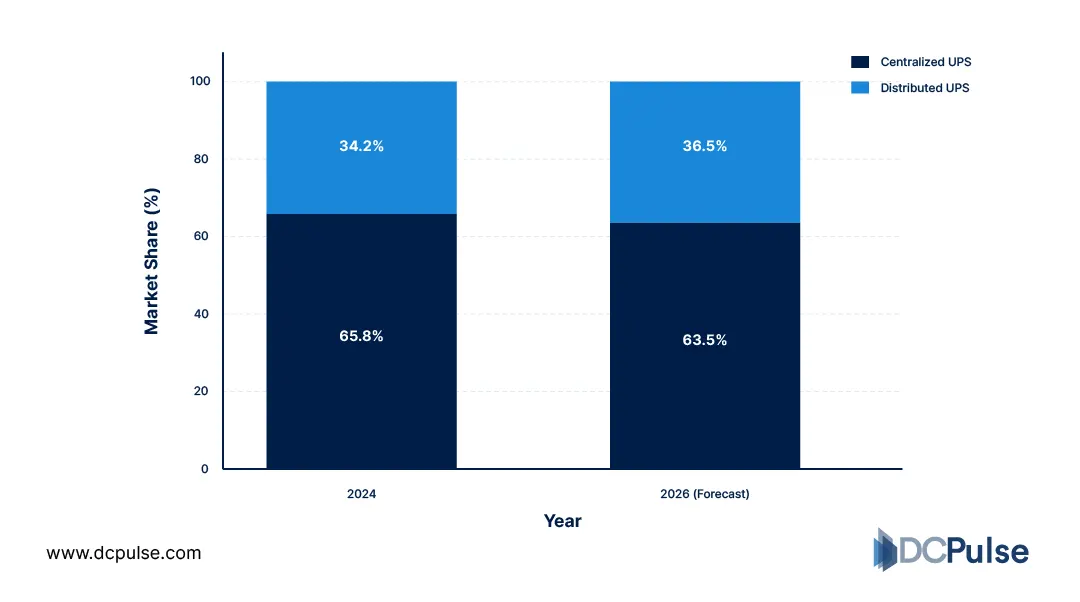
UPS systems remain foundational. According to Uptime Institute research, centralized UPS architectures with battery backup continue to dominate data centers, particularly in facilities above 1 MW capacity, where reliability and uptime are critical.
Data Center UPS Architecture Adoption (2024-2026)
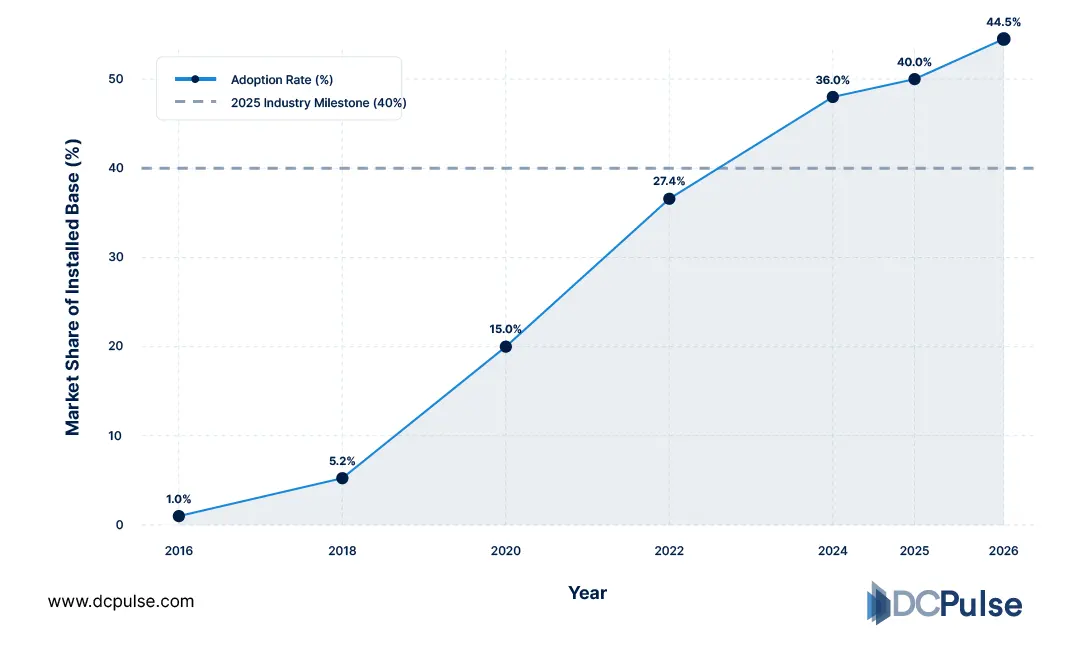
However, the underlying battery technology is shifting. Uptime Institute surveys show that nearly half of operators have adopted lithium-ion batteries in at least part of their UPS systems, up significantly from earlier adoption levels.
Adoption of Lithium-Ion Batteries in Data Centers (%)
This transition is driven by clear advantages. Compared to traditional lead-acid batteries, lithium-ion systems offer higher energy density, longer lifespan, and faster recharge times, while also reducing space and maintenance requirements.
Despite these improvements, utilization remains limited. Traditional UPS batteries are typically rarely discharged and operate mainly as standby systems, often providing only minutes of runtime until generators take over.
The pattern is clear;
The current landscape is still centered on resilience and backup, but with improving battery technologies laying the groundwork for a shift toward more active and flexible energy use in data centers.
What Innovations Are Expanding the Role of Battery Storage in Data Centers?
Battery storage in data centers is evolving through innovations in battery technology, system architecture, and grid integration, enabling a shift from passive backup to active energy management.
A foundational enabler is the improvement of lithium-ion battery systems. Compared to traditional lead-acid batteries, lithium-ion offers higher energy density, longer lifespan, and faster recharge capabilities, making them suitable for more dynamic operational use rather than just standby backup.
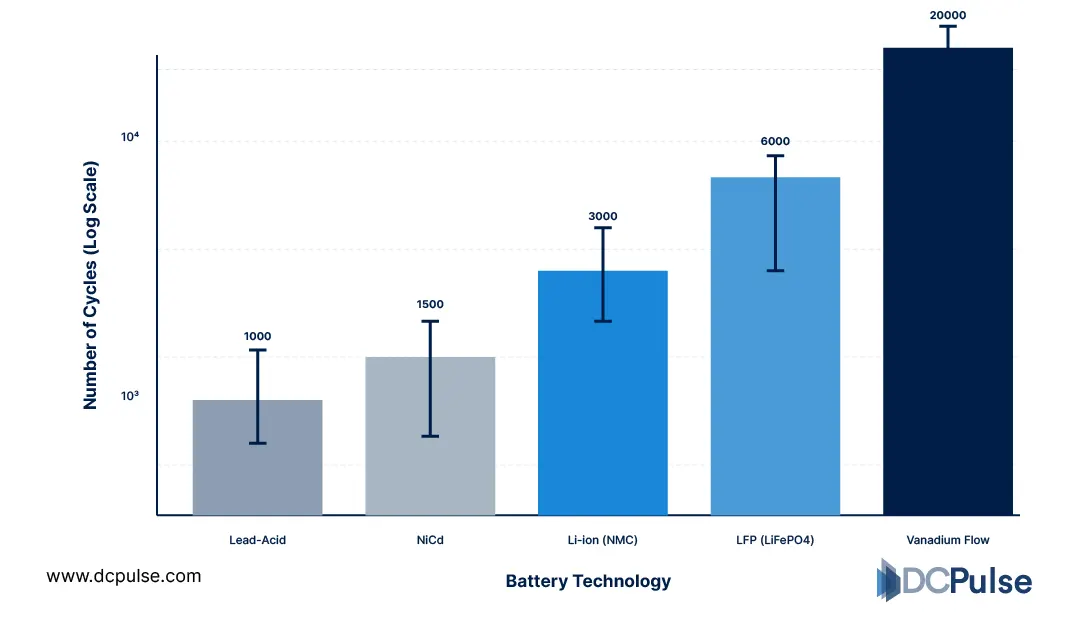
Equally important is the ability of these systems to handle more frequent cycling. Traditional UPS batteries are rarely discharged, but newer systems are increasingly designed for repeated charge-discharge operations, enabling broader applications beyond emergency use.
Battery Cycling Capability Comparison - Traditional vs Modern Systems
A major innovation is the emergence of grid-interactive UPS and battery energy storage systems (BESS). These systems allow data centers to actively interact with the grid, supporting functions such as frequency regulation, load balancing, and peak demand smoothing.
In parallel, batteries are being integrated with renewable energy systems. Energy storage enables data centers to store excess renewable generation and stabilize intermittent supply, improving overall energy utilization and reliability.
The shift is clear; battery storage is no longer confined to backup; it is evolving into an active, grid-connected energy asset, enabling data centers to enhance flexibility, support renewable integration, and participate directly in energy markets.
Who Is Driving the Expansion of Battery Storage in Data Centers?
The expansion of battery storage in data centers is being driven by a combination of grid pressures, hyperscale demand, and evolving infrastructure strategies, rather than a single stakeholder.
At the system level, grid operators and utilities are a major force. According to Uptime Institute research, power providers are increasingly expecting data centers to move from passive consumers to active participants in grid stability, as electricity demand rises and renewable energy introduces variability.
Global Grid Demand vs. Data Center Power Growth
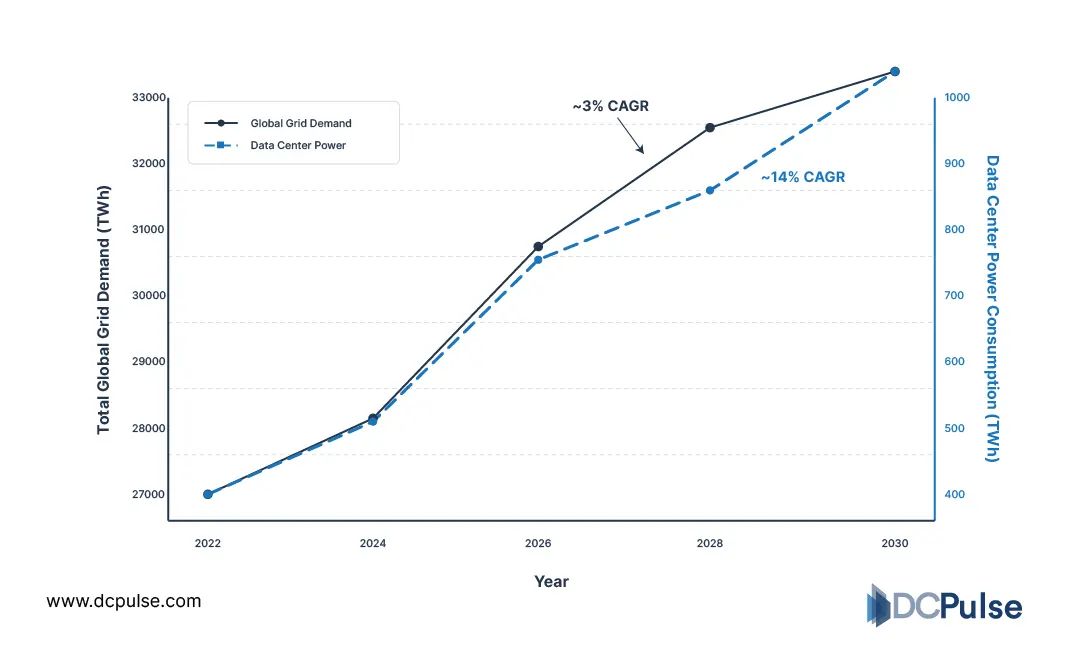
This shift is reinforced by infrastructure realities. Data centers are being asked to provide flexibility and responsiveness, which batteries can enable through rapid discharge and load-balancing capabilities.
At the facility level, the scale of existing battery systems is itself a driver. Analysis from Data Center Dynamics shows that most modern data centers already operate large battery fleets within UPS systems, with capacity sized to IT load, meaning the infrastructure for grid participation is already in place.
At the cutting edge, research shows that integrating battery energy storage systems (BESS) enables data centers to deliver grid services such as frequency regulation, voltage support, and load smoothing, particularly in AI-driven environments with volatile power demand.
Grid Services Enabled by Data Center Batteries (2026 Status)
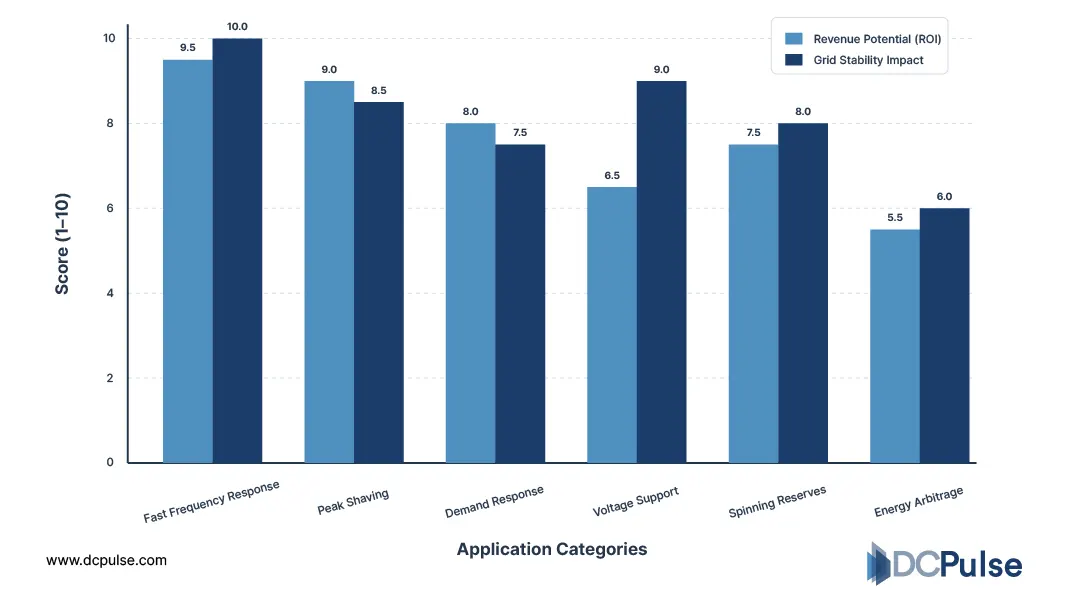
The implication is clear.
Battery storage expansion is not being driven by a single group but by a convergence of grid needs, existing infrastructure scale, and advanced energy capabilities, positioning data centers as active nodes in the broader energy system.
Will Battery Storage Become a Core Energy Asset in Data Centers?
Battery storage is on track to become a core component of data center energy strategy, but its role will expand selectively based on economics and grid conditions.
As power demand rises, particularly with AI workloads, data centers will need more flexible and responsive energy systems. Batteries provide this flexibility, enabling operators to manage peak loads, integrate renewable energy, and respond to grid signals in real time.
However, widespread adoption of active battery use will depend on clear economic incentives. Participation in grid services, energy arbitrage, and demand response programs must provide sufficient returns to justify increased battery utilization and cycling.
At the same time, reliability remains non-negotiable. Backup functionality will continue to take priority, meaning active use must be carefully managed to avoid compromising uptime.
This creates a dual-role future. Batteries will serve both as critical backup systems and active energy assets, balancing resilience with operational efficiency.
The direction is clear;
Battery storage will move beyond backup, but its ultimate impact will be defined by how effectively data centers integrate it into broader energy and grid strategies, rather than treating it as a standalone component.