DCPulse
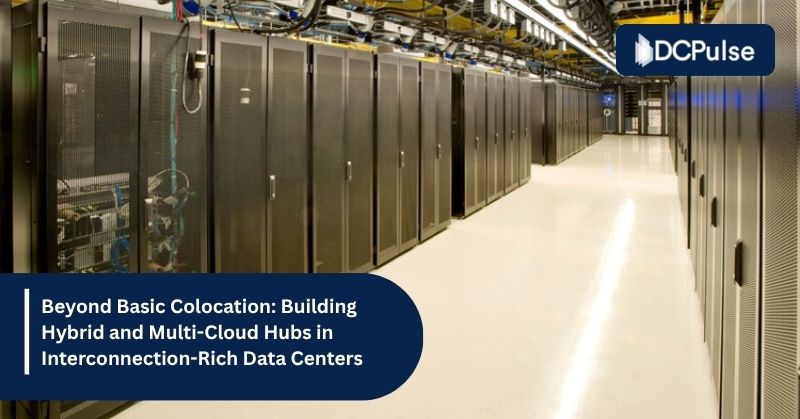
The role of data centers is expanding beyond traditional colocation as enterprises seek more flexible ways to connect private infrastructure, public cloud platforms, and distributed digital services. Organizations increasingly need environments that support workloads across multiple locations while maintaining control over connectivity, security, performance, and operating costs. This shift is creating greater demand for interconnection-rich data centers that can serve as central hubs for hybrid and multi-cloud architectures.
Traditional colocation remains an important part of digital infrastructure, providing space, power, cooling, physical security, and network access for enterprise and service-provider equipment. However, modern infrastructure strategies require more than the physical hosting of servers. Enterprises need reliable connections between their own infrastructure, cloud service providers, network operators, content platforms, and business partners.
Interconnection-rich facilities address these requirements by bringing multiple digital infrastructure providers into a shared environment. Through direct connectivity, cross-connects, internet exchanges, and cloud on-ramps, these facilities can help organizations build interconnected infrastructure ecosystems. For data center operators, the opportunity lies in evolving from space-and-power providers into strategic platforms for enterprise connectivity and cloud integration.
Hybrid and Multi-Cloud Strategies Are Reshaping Infrastructure Requirements
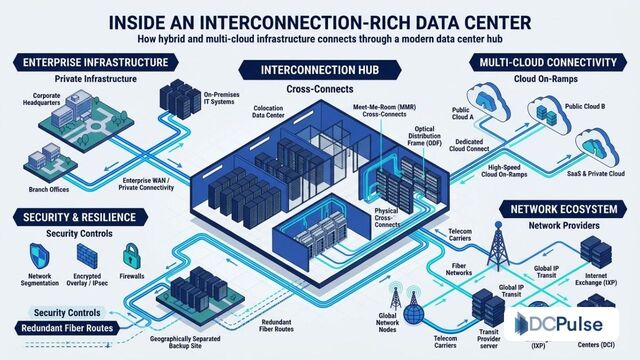
A hybrid cloud combines private infrastructure with public cloud services, allowing organizations to distribute workloads according to their operational, security, performance, and business requirements. Multi-cloud strategies involve using services from multiple cloud providers, whether for application flexibility, geographic reach, specialized capabilities, or risk management.
These approaches introduce additional complexity into infrastructure design. Applications may depend on data stored in private environments, computing resources hosted by different cloud providers, and services delivered through external networks. Effective communication between these components becomes essential to application performance and operational continuity.
A conventional infrastructure model built around isolated data center deployments may require traffic to travel through multiple networks or centralized gateways. Such arrangements can increase architectural complexity and make performance more dependent on external connectivity. Interconnection-rich data centers offer an alternative by allowing enterprises to establish direct network relationships with cloud platforms and other infrastructure providers where those services are available.
For data center operators, this development creates an opportunity to support enterprise cloud strategies without requiring customers to consolidate all their computing resources in one location. The facility becomes a connectivity point through which organizations can coordinate distributed infrastructure.
Interconnection Becomes a Core Data Center Capability

Interconnection refers to the direct exchange of data between networks, infrastructure environments, and service providers. In modern data centers, this capability can include physical cross-connects, private network connections, internet exchange access, and software-enabled connectivity services.
The value of an interconnection-rich facility depends on the range of providers available, the quality of its network infrastructure, and the ability to establish connections that meet customer requirements. A data center with access to multiple telecommunications carriers and cloud connectivity options can give enterprises greater flexibility when designing their infrastructure.
Direct connectivity can also help organizations reduce reliance on the public internet for selected workloads. Private connections may provide more predictable network performance and support specific security, routing, and compliance requirements, although outcomes depend on the service configuration and the wider network architecture.
Network diversity is another important consideration. Enterprises operating critical applications may require connections through different carriers or geographically separate facilities to reduce exposure to individual network failures. Data center operators can support these requirements through diverse network entry points, multiple connectivity partners, and carefully designed infrastructure.
However, the presence of multiple providers alone does not guarantee resilience. Customers must evaluate physical route diversity, upstream dependencies, service-level commitments, and the availability of alternative paths during disruptions.
Cloud On-Ramps Simplify Enterprise Connectivity
Cloud on-ramps provide private or dedicated connectivity between enterprise infrastructure and participating cloud platforms. These connections can help organizations integrate applications running in colocation facilities with computing, storage, databases, and other services hosted in public cloud environments.
For enterprises operating hybrid architectures, cloud on-ramps can support data transfers, application integration, backup operations, and access to cloud-based services. The approach can be particularly relevant when workloads require consistent connectivity between privately hosted systems and cloud resources.
Interconnection-rich data centers can make these arrangements easier to implement by hosting cloud connectivity infrastructure alongside enterprise equipment and network service providers. Instead of building separate physical connections to multiple locations, customers may be able to access several services through an established interconnection ecosystem.
Multi-cloud deployments introduce additional requirements. Organizations may need to connect to different cloud providers while managing network policies, identity controls, routing, and traffic flows across environments. Data center operators can respond by offering flexible connectivity options and supporting integration with network service providers and cloud connectivity platforms.
Nevertheless, private connectivity does not automatically eliminate latency, guarantee application availability, or reduce costs. Enterprises must assess connection charges, bandwidth requirements, data-transfer fees, redundancy options, and the locations of their actual workloads before selecting an architecture.
Infrastructure Design Must Support Higher Connectivity Density
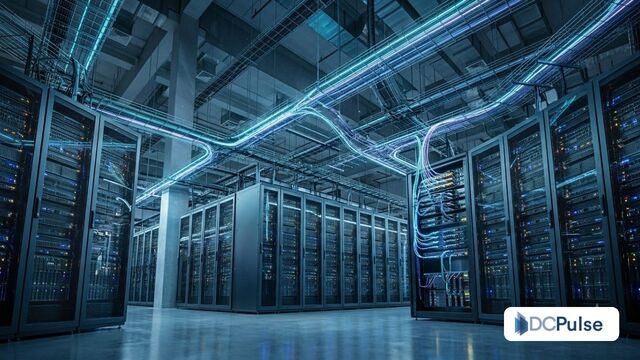
The transition toward hybrid and multi-cloud hubs has implications for the physical design of data centers. Connectivity-intensive environments require well-planned meet-me rooms, structured cabling, carrier access, cross-connect management, and sufficient space for network equipment.
A strong interconnection strategy begins with the facility's network architecture. Multiple carrier options, diverse fiber routes, and appropriately separated network entry points can improve flexibility and help customers design resilient deployments. The availability of regional fiber networks and access to other data centers can further influence a facility's suitability as an interconnection hub.
Power and cooling remain equally important. Network equipment, routers, switches, security appliances, and associated infrastructure contribute to a facility's overall power demand. Although connectivity equipment may have different density requirements from AI computing systems, operators must account for its energy consumption, heat output, and physical footprint.
Operational processes also become more demanding as the number of customer connections increases. Accurate cross-connect records, clear installation procedures, capacity planning, and effective fault management are necessary to maintain service quality. Automated provisioning and monitoring can help operators manage complex connectivity environments, particularly when customers require frequent changes to network configurations.
For developers planning new facilities, interconnection should therefore be considered during site selection and design rather than treated as an additional service introduced after construction.
Security and Governance Become More Complex Across Clouds
Hybrid and multi-cloud architectures distribute data and applications across multiple environments, creating security and governance challenges that extend beyond the physical data center.
Enterprises must manage access controls, encryption, network segmentation, identity policies, and monitoring across infrastructure operated by different providers. Interconnection-rich facilities can support secure connectivity designs, but the responsibility for configuring and governing those connections remains shared among customers, network providers, cloud platforms, and facility operators.
Regulatory requirements can also influence where data is stored and how it moves between environments. Organizations handling sensitive information may need to evaluate data residency, industry-specific obligations, contractual controls, and the geographic locations of their infrastructure.
A well-designed connectivity hub can simplify parts of this environment by providing established network access and centralized points for selected traffic flows. However, centralized connectivity can also create concentration risks if critical applications depend on a single facility or network path.
Resilience planning should include redundant connections, geographically separate recovery environments where appropriate, documented failover procedures, and regular testing. These measures help ensure that a connectivity hub strengthens the wider architecture rather than becoming a single point of failure.
Data Center Operators Face a Shift in Commercial Strategy
The growth of hybrid and multi-cloud infrastructure creates opportunities for colocation providers to expand beyond traditional space, power, and cooling services. Interconnection can strengthen a facility's role in customers' infrastructure strategies and create additional demand for cross-connects, network services, cloud connectivity, and managed infrastructure.
The commercial opportunity depends partly on ecosystem development. A facility becomes more useful when customers can access relevant cloud platforms, carriers, internet exchanges, managed service providers, and enterprise partners within its connectivity environment. A broad provider ecosystem can improve customer choice and support new network relationships.
Operators must also consider the economics of building and maintaining this infrastructure. Fiber availability, network equipment, technical staffing, operational systems, and physical space all contribute to the cost of providing interconnection services. Demand may vary according to regional cloud adoption, enterprise concentration, telecommunications infrastructure, and the presence of established connectivity hubs.
Competition is therefore unlikely to depend on connectivity availability alone. Reliability, service delivery, geographic reach, operational transparency, and the ability to support changing customer requirements will also influence a facility's position in the market.
For enterprise customers, evaluating a colocation provider increasingly involves assessing the surrounding digital ecosystem rather than comparing facilities solely on price, power capacity, and available floor space.
The Future of Colocation Lies in Connected Infrastructure
Hybrid and multi-cloud strategies are changing how enterprises evaluate data center infrastructure. Physical hosting remains essential, but organizations also need efficient connections between private systems, public cloud platforms, telecommunications networks, and distributed applications.
Interconnection-rich facilities can provide the physical and network foundations for these architectures. Their value comes from combining reliable facility operations with flexible connectivity, provider diversity, and access to a broader digital infrastructure ecosystem.
For data center operators, this evolution requires coordinated investment in network infrastructure, facility design, security, automation, and partner relationships. For enterprises, it requires careful planning around application placement, network performance, resilience, governance, and total cost of ownership.
As digital services become more distributed, the distinction between a facility that simply houses IT equipment and one that connects multiple infrastructure environments is becoming increasingly important. Data centers capable of supporting these relationships are positioned to play a central role in the next phase of enterprise cloud infrastructure.