DCPulse
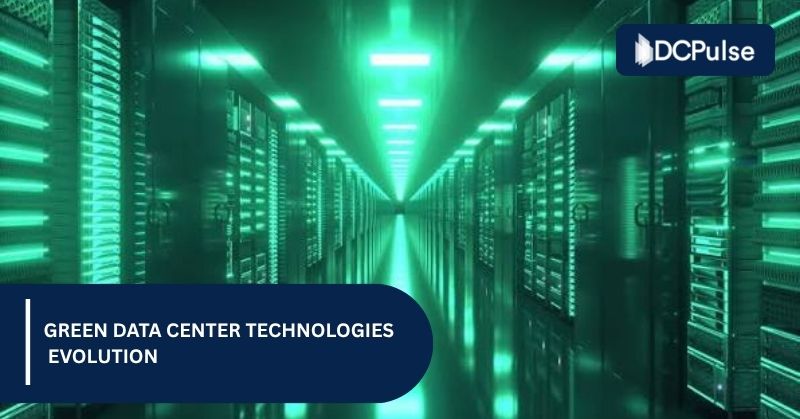
Green data centers are becoming an important part of the digital infrastructure industry as operators respond to rising computing demand, energy consumption, water requirements, and environmental concerns. The expansion of cloud computing, artificial intelligence (AI), high-performance computing (HPC), and hyperscale infrastructure is increasing the need for facilities that can deliver greater computing capacity while using resources more efficiently. In this environment, sustainability is increasingly influencing how data centers are designed, powered, cooled, and operated.
The evolution of green data centers depends on a combination of technologies rather than a single solution. Renewable energy systems, advanced cooling architectures, artificial intelligence-driven facility management, energy-efficient IT equipment, and improved power distribution are helping operators address different aspects of environmental performance. These technologies also influence site selection, infrastructure investment, operational resilience, and the long-term scalability of digital facilities.
Renewable Energy and Low-Carbon Power Systems
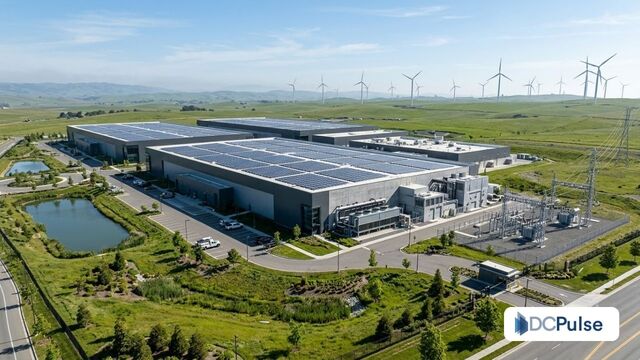 Electricity remains one of the most important considerations in data center sustainability. Servers, storage systems, networking equipment, cooling infrastructure, and power conversion systems require continuous energy to maintain reliable operations. As computing workloads grow, access to dependable electricity with lower associated emissions is becoming an important factor in data center development.
Renewable energy technologies, particularly solar and wind power, are helping operators reduce the carbon intensity of their electricity consumption. Data center companies may procure renewable electricity through power purchase agreements, source power from dedicated renewable energy projects, or install on-site generation where suitable conditions exist.
However, renewable energy integration involves challenges related to intermittency, grid availability, and the timing of electricity demand. A facility operating around the clock cannot rely on variable renewable generation alone unless sufficient complementary resources are available. Grid connections, energy storage, flexible power procurement, and other dependable generation sources can therefore play important roles in a broader energy strategy.
Battery energy storage systems are also gaining relevance as a way to manage electricity supply, support certain grid services, and improve the integration of renewable generation. Their role differs from that of traditional uninterruptible power supply systems, although the technologies can sometimes support overlapping operational requirements.
For developers, the availability of low-carbon electricity and sufficient grid capacity is increasingly relevant to site selection. Locations with access to renewable generation, suitable transmission infrastructure, and predictable power connections may offer advantages when planning new campuses.
Advanced Cooling Technologies for High-Density Computing
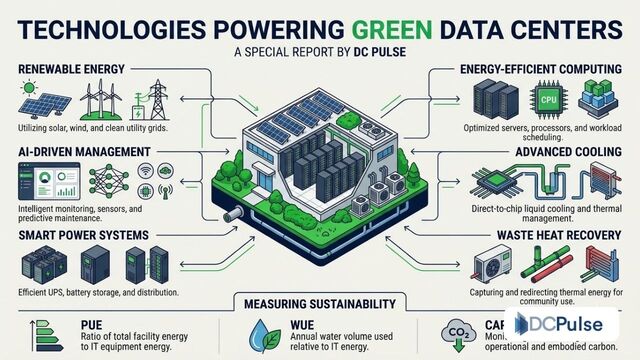
Cooling is another major area of innovation as data centers accommodate increasingly demanding workloads. Traditional air-cooling systems remain widely used, but their effectiveness can become more challenging as rack power densities increase, particularly in facilities designed for AI training and other compute-intensive applications.
Liquid cooling technologies are providing additional options for managing heat generated by high-performance processors. Direct-to-chip liquid cooling circulates coolant through cold plates attached to heat-producing components, transferring heat more efficiently than relying exclusively on air movement. Depending on the system design, this approach can support higher-density racks and reduce the cooling burden placed on conventional air-handling equipment.
Immersion cooling represents another approach in which IT equipment is placed in a dielectric fluid designed to transfer heat away from electronic components. Single-phase and two-phase immersion systems use different heat-transfer mechanisms, and their suitability depends on equipment compatibility, maintenance requirements, operating conditions, and facility design.
Air-side and water-side economization can also reduce mechanical cooling requirements when outdoor or available water temperatures allow favorable heat-exchange conditions. These techniques are particularly dependent on local climate, humidity, air quality, and system configuration.
Water efficiency is becoming an equally important consideration. Some cooling systems rely heavily on evaporative processes, while others use different heat-rejection methods that can reduce direct water consumption under particular operating conditions. Operators must balance electricity use, water requirements, equipment performance, and local environmental conditions rather than assuming that one cooling technology is optimal for every location.
AI-Driven Energy Management and Intelligent Operations
Artificial intelligence and machine learning are increasingly relevant to the management of complex data center environments. Modern facilities generate operational data from cooling equipment, power distribution systems, environmental sensors, servers, and building management platforms. Analyzing these data streams can help operators identify inefficiencies and make more informed decisions about facility performance.
AI-assisted control systems can evaluate temperature patterns, cooling demand, equipment utilization, and changing operating conditions. These insights can support adjustments to cooling set points, airflow distribution, pump speeds, and other controllable parameters. The objective is to maintain required environmental conditions while avoiding unnecessary energy consumption.
Predictive maintenance is another important application. Monitoring equipment performance and identifying unusual patterns may help operators detect developing problems before they result in equipment failures or unplanned maintenance. Better maintenance planning can support availability while helping extend the useful life of infrastructure components.
Digital twins can complement these capabilities by creating digital representations of physical facilities, electrical systems, or cooling networks. When connected to suitable operational data, these models can help teams evaluate design alternatives, examine equipment behavior, and assess potential changes before implementing them in live environments.
Nevertheless, intelligent automation requires reliable sensors, accurate data, appropriate control boundaries, and human oversight. AI workloads themselves also consume electricity, so the environmental value of these systems depends on whether their operational benefits outweigh their computational and infrastructure costs.
Energy-Efficient Servers and Computing Architectures
Sustainable data center operations depend not only on the facility but also on the computing equipment inside it. Servers, processors, memory, storage, and networking systems all contribute to electricity demand. Improvements in their efficiency can reduce the energy required to deliver a given amount of computing work.
Modern processors and accelerators are designed for different workload requirements, with energy efficiency depending on architecture, performance targets, utilization, and operating conditions. Specialized AI accelerators can deliver substantial computing performance for selected workloads, although their actual efficiency varies by application and system configuration.
Server consolidation and virtualization can also improve resource utilization. By running multiple workloads on shared physical infrastructure, operators can reduce the need for underutilized servers. Containerization and workload orchestration provide additional mechanisms for allocating computing resources in response to changing demand.
Software optimization is another part of the sustainability equation. Efficient algorithms, better workload scheduling, and appropriate model selection can reduce the computational resources needed for certain tasks. For cloud providers and enterprise data centers, these approaches can improve the relationship between electricity consumption and useful computing output.
Hardware lifecycle management is equally important. Extending equipment life where technically and operationally appropriate, improving repairability, and responsibly recycling retired components can help reduce electronic waste and the environmental impacts associated with manufacturing replacement equipment.
Advanced Power Distribution and Electrical Infrastructure
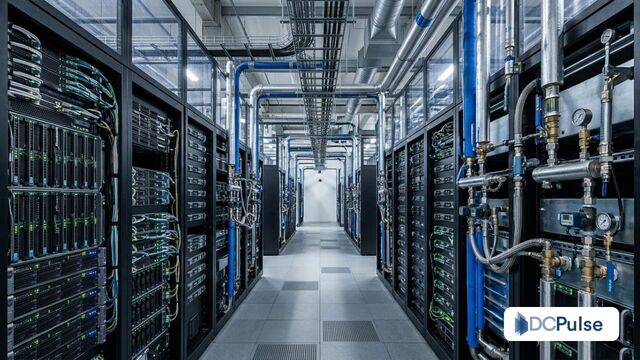
Electrical infrastructure plays a central role in determining how efficiently a data center delivers power to its IT equipment. Electricity passes through multiple stages, including transformers, switchgear, uninterruptible power supply systems, and distribution equipment. Losses across these components contribute to facility energy consumption.
High-efficiency UPS systems, modern power conversion equipment, and appropriately designed electrical distribution architectures can reduce losses while maintaining the reliability required by critical computing workloads. The benefits depend on equipment selection, loading conditions, redundancy requirements, and operating practices.
Power architecture is also evolving in response to high-density AI infrastructure. Higher rack power requirements can introduce new challenges involving electrical distribution, cable management, thermal performance, and available capacity. Developers must coordinate electrical and cooling designs early to accommodate these requirements without compromising maintainability or resilience.
Battery systems and advanced energy management platforms can help coordinate backup power, energy storage, and selected grid-interactive applications. However, backup systems must continue to meet availability and safety requirements, and the ability to use them for additional purposes depends on their configuration, applicable regulations, and operational constraints.
Waste Heat Recovery and Circular Energy Systems
Heat generated by computing equipment is often treated as a by-product that must be removed from the facility. In suitable locations, however, this heat can become a potential resource for other applications.
Waste heat recovery systems capture thermal energy from data center cooling infrastructure and transfer it to external users. Potential applications include district heating networks, commercial buildings, industrial processes, and other facilities that can use the available heat.
The practicality of heat reuse depends on several factors, including the temperature of the recovered heat, the distance to potential users, seasonal demand, connection infrastructure, and the economics of heat transfer. Heat pumps can raise the temperature of recovered thermal energy when required, although their electricity consumption must be considered when evaluating overall environmental benefits.
This approach can encourage closer coordination between data center developers, energy companies, municipalities, and industrial operators. Locations with established district heating infrastructure or nearby heat consumers may offer more favorable conditions for projects that integrate computing facilities with local energy systems.
Circular economy practices extend beyond heat recovery. Responsible management of electronic waste, water reuse where appropriate, equipment refurbishment, and improved material efficiency can address environmental impacts across the data center lifecycle.
Renewable Energy Storage and Grid Integration
The growing electricity requirements of data centers are increasing the importance of coordination with power utilities and energy infrastructure developers. In some markets, new facilities face constraints related to grid connection availability, transmission capacity, and the timing of additional generation projects.
Battery energy storage can help balance electricity supply and demand over selected periods, support renewable energy integration, and provide certain forms of grid support. Other technologies, including long-duration storage and thermal energy storage, may also contribute depending on the duration and nature of the requirement.
Demand response offers another potential tool. Where workload flexibility and service-level requirements permit, operators may adjust selected non-urgent computing tasks or other controllable loads in response to grid conditions. This approach is not suitable for every workload, particularly those requiring uninterrupted execution or tightly controlled latency.
For digital infrastructure developers, the key challenge is integrating these technologies without undermining availability. Sustainable power strategies must account for reliability, redundancy, energy costs, emissions, and the operational requirements of the applications hosted by each facility.
Measuring Sustainability Beyond Power Consumption
Energy efficiency remains an important performance indicator, but it does not fully describe the environmental impact of a data center. Power usage effectiveness (PUE) measures the relationship between total facility energy consumption and IT equipment energy consumption. A lower PUE generally indicates that less overhead energy is used relative to IT energy, but it does not independently measure renewable energy use, water consumption, or total emissions.
Water usage effectiveness (WUE) provides another perspective by relating water consumption to IT energy use under a defined measurement approach. Carbon accounting can help operators evaluate emissions associated with electricity consumption, fuel use, construction materials, and other relevant activities.
These indicators provide a more comprehensive basis for assessing sustainability when their boundaries, reporting periods, and calculation methods are clearly defined. Operators must also consider local water stress, electricity generation sources, equipment manufacturing, construction impacts, and end-of-life management.
Transparent reporting can help customers, investors, regulators, and infrastructure partners compare performance and identify opportunities for improvement. Consistent measurement is particularly important as AI infrastructure introduces new demands for power, cooling, and specialized equipment.
The Future of Green Data Center Infrastructure
The evolution of green data centers will depend on how effectively operators combine energy, cooling, computing, and facility management technologies. Renewable electricity procurement, liquid cooling, intelligent automation, efficient processors, advanced power systems, and waste heat recovery each address different parts of the sustainability challenge.
No single technology can eliminate the environmental impact of digital infrastructure. Outcomes depend on the facility's location, workload characteristics, local energy systems, water availability, equipment design, and operational priorities. Solutions that perform well in one market may require substantial adaptation in another.
As cloud computing and AI continue to influence infrastructure development, sustainability will increasingly need to be considered alongside capacity, reliability, cost, and performance. Data center operators that integrate environmental objectives into planning and operational decisions can make more informed infrastructure investments while supporting the continued expansion of digital services.