DCPulse
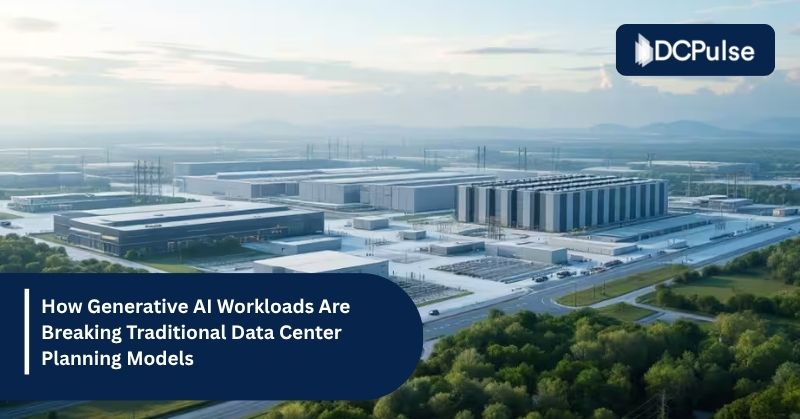
Generative artificial intelligence is changing the infrastructure requirements of modern data centers, challenging planning models built around conventional enterprise computing, cloud applications, and relatively predictable server workloads. The rapid adoption of large language models, multimodal AI systems, and other compute-intensive applications is creating new demands for power capacity, cooling infrastructure, network design, and hardware deployment. As organizations expand AI capabilities, data center developers and operators are being forced to reconsider how facilities are designed, sized, and brought online.
Traditional data center planning has generally emphasized IT capacity, rack layouts, electrical redundancy, cooling requirements, and expected demand growth over a facility's operating life. Although these fundamentals remain essential, generative AI introduces a different combination of workload intensity, hardware specialization, and infrastructure interdependence. The result is a planning environment in which power availability, thermal performance, computing density, and deployment flexibility must be evaluated together rather than as separate design considerations.
Higher Rack Densities Are Reshaping Facility Design
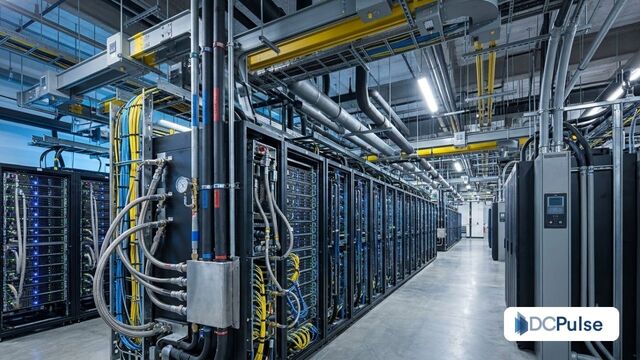
Conventional enterprise data centers often accommodate a mixture of general-purpose servers, storage systems, and networking equipment with relatively moderate power requirements per rack. Generative AI infrastructure can concentrate substantial computing resources into specialized racks containing accelerators, high-performance processors, and associated networking hardware.
These configurations can create power and cooling requirements that exceed the assumptions used in older facility designs. Existing buildings may have sufficient floor space for additional racks but lack the electrical distribution capacity, cooling systems, or physical infrastructure needed to support them. Consequently, usable data center capacity is increasingly determined by the ability to deliver power and remove heat at the rack level.
For operators, this shift complicates capacity planning. A facility's total megawatt capacity does not automatically indicate how many AI racks it can support. Electrical distribution layouts, rack power limits, cooling architecture, equipment dimensions, and redundancy requirements all influence the amount of deployable computing capacity.
New developments must therefore consider high-density computing from the earliest design stages. Developers that initially plan for conventional workloads may face expensive retrofits if AI requirements emerge after electrical and mechanical systems have already been specified.
Power Availability Is Becoming a Primary Planning Constraint
Electricity availability is emerging as one of the most consequential factors in AI data center development. Generative AI training and inference require computing resources that can operate at substantial power levels, while supporting infrastructure adds further electricity demand. The growth of these workloads is increasing the importance of grid access, substation capacity, transmission infrastructure, and the timing of utility connections.
Traditional planning models frequently treat power as a design input that can be secured according to the project's anticipated capacity requirements. In constrained markets, however, securing a site does not guarantee that sufficient electricity will be available when the facility is ready for deployment. Grid upgrades, permitting, equipment procurement, and utility construction can influence project schedules.
This creates a closer relationship between data center development and energy infrastructure planning. Developers may need to evaluate utility capacity, on-site substations, power procurement arrangements, energy storage, and potential generation options before finalizing project locations.
The challenge extends beyond obtaining a large electricity allocation. AI infrastructure must also maintain the power quality, redundancy, and operational resilience required by critical workloads. Backup generation and uninterruptible power supply systems remain important, but their design must reflect the electrical characteristics and reliability requirements of the intended computing environment.
Cooling Strategies Must Adapt to AI Heat Loads
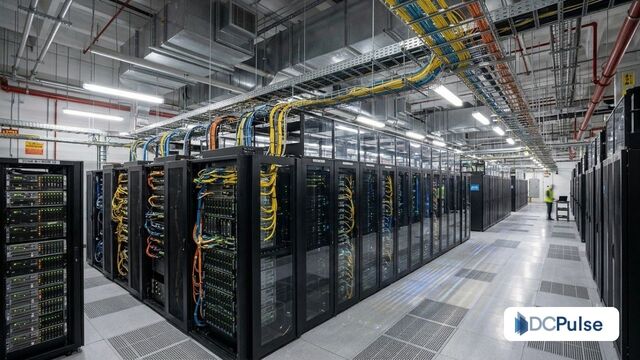
The concentration of high-performance processors and accelerators creates thermal challenges that conventional air-cooling designs may not be equipped to handle efficiently. As rack power density increases, removing heat from tightly packed computing components becomes a central engineering requirement.
Liquid cooling is consequently receiving greater attention in AI-focused data center design. Direct-to-chip systems transfer heat from processors through cold plates and circulating coolant, while immersion cooling places compatible computing equipment in a dielectric fluid. Each approach has different implications for equipment compatibility, maintenance procedures, facility plumbing, and heat rejection.
These technologies can support high-density deployments, but their integration requires more than installing cooling equipment inside a server rack. Operators must coordinate coolant distribution, pumps, heat exchangers, controls, leak detection, and facility-level thermal management. Existing facilities may require substantial mechanical modifications before they can accommodate these systems.
Cooling decisions also affect water consumption and energy efficiency. The appropriate design depends on local climate, water availability, cooling equipment, operating temperatures, and the balance between mechanical cooling and heat-rejection methods. AI infrastructure planning must account for these factors alongside computing performance and reliability.
Network Architecture Is Becoming More Critical
Generative AI workloads place different demands on data center networking than many conventional enterprise applications. Large-scale model training can involve thousands of accelerators exchanging data and coordinating computations across distributed systems. Network bandwidth, latency, congestion, and communication efficiency can therefore influence how effectively computing resources operate together.
Traditional data center networks designed primarily around general-purpose applications may require significant changes to support these environments. High-speed interconnects, specialized networking equipment, carefully designed switching architectures, and optimized communication paths can become essential components of AI infrastructure.
The network also affects facility design. High-performance networking equipment consumes power, generates heat, and requires physical space and cabling. These requirements must be incorporated into rack layouts, electrical budgets, and cooling calculations rather than treated as secondary considerations.
For developers planning large AI campuses, connectivity between buildings and data halls can be as important as connectivity within individual racks. Network topology and fiber infrastructure must support the intended distribution of computing workloads while maintaining the performance and reliability requirements of the application.
Hardware Procurement and Deployment Timelines Are Changing
AI data center projects depend on specialized equipment, including accelerators, high-bandwidth memory, advanced networking systems, and high-density power and cooling components. These systems have different procurement requirements from conventional server deployments and may involve tightly coordinated hardware and facility integration.
A completed building does not necessarily mean that AI computing capacity is ready for service. Electrical systems, cooling infrastructure, network equipment, and computing hardware must be available and compatible before the intended workload can be deployed. Delays in any one component can affect the commissioning schedule for the broader facility.
This makes phased deployment and modular planning increasingly relevant. Developers may bring individual data halls or infrastructure blocks online as power, cooling, and equipment become available. Such approaches can provide flexibility, although they require careful coordination to avoid stranded capacity or incompatible infrastructure.
Planning teams also need to consider the pace of hardware evolution. AI accelerators and associated server platforms continue to change, potentially altering rack power requirements, cooling configurations, and network needs during a facility's development cycle. Designs that allow future equipment upgrades may help reduce the risk of premature infrastructure limitations.
Utilization and Workload Forecasting Are Becoming More Complex
Traditional capacity planning often relies on historical utilization, expected customer growth, and established patterns of application demand. Generative AI introduces additional uncertainty because computing requirements can vary considerably by model, training strategy, inference volume, and deployment architecture.
Training workloads can require sustained periods of intensive computing, while inference workloads respond to user requests and application demand. Some deployments operate continuously, whereas others run in scheduled or burst-oriented patterns. These differences influence how operators should plan power, cooling, computing availability, and workload scheduling.
The distinction between training and inference also affects infrastructure choices. Training environments may prioritize large-scale accelerator clusters and high-throughput communication, while inference deployments may emphasize response latency, service availability, and efficient processing of user requests. Some facilities must accommodate both.
Software optimization, workload orchestration, and resource allocation can improve the utilization of available computing resources. However, planning teams cannot assume that every AI workload can be shifted freely between systems or locations. Data governance, latency requirements, hardware compatibility, and service-level commitments can constrain scheduling decisions.
Sustainability Must Be Integrated Into AI Capacity Planning
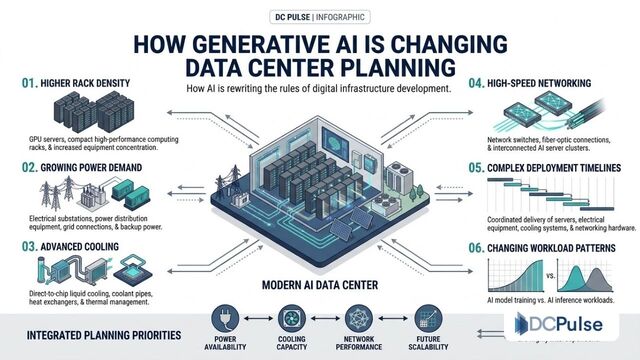
The growing energy and cooling requirements of generative AI are placing sustainability considerations closer to the center of infrastructure planning. Operators must evaluate how additional computing capacity affects electricity consumption, associated emissions, water use, and the environmental performance of the wider facility.
Renewable electricity procurement can help reduce the emissions associated with power consumption, while battery storage and energy management systems may support selected approaches to integrating variable renewable generation. Their effectiveness depends on local grid conditions, storage capabilities, operational requirements, and the availability of suitable energy resources.
Higher-efficiency computing equipment and workload optimization can also help reduce the energy required for particular AI tasks. Advanced cooling systems may improve thermal management, although their overall environmental performance depends on the complete system design rather than cooling technology alone.
Metrics such as power usage effectiveness and water usage effectiveness can help operators evaluate facility performance, but they need to be interpreted alongside total electricity demand, computing output, energy sourcing, and local water conditions. A facility can improve its efficiency ratios while still consuming more total resources as its computing capacity expands.
Data Center Planning Is Moving Toward Integrated Infrastructure Models
Generative AI is not eliminating the core principles of data center design. Reliability, security, redundancy, connectivity, and operational discipline remain fundamental. What is changing is the degree to which these elements must be coordinated around specialized, power-intensive, and rapidly evolving computing workloads.
Developers increasingly need to assess land, grid capacity, electrical infrastructure, cooling architecture, network connectivity, and hardware deployment as interconnected parts of a single planning process. Operators must also account for changing workload profiles, sustainability objectives, and future equipment requirements.
The implications extend across the digital infrastructure sector. Data center owners, utilities, equipment manufacturers, cloud providers, and AI companies must coordinate more closely to align computing demand with physical infrastructure capabilities.
As generative AI adoption expands, successful planning will depend on more than building additional data center space. The central challenge is creating infrastructure that can deliver the required computing performance with sufficient power, effective heat management, reliable connectivity, and the flexibility to accommodate future technological changes.