DCPulse
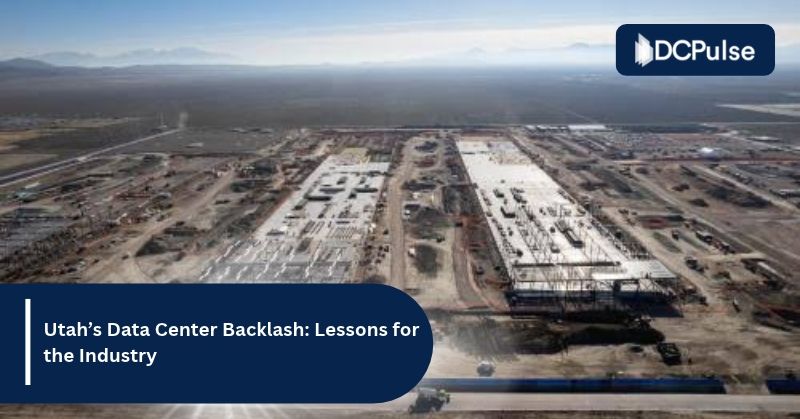
The rapid expansion of artificial intelligence infrastructure is creating a new challenge for data center developers: winning access to land, electricity, and capital is no longer enough to secure a project’s future. Community acceptance and confidence in the approval process are becoming equally important. Utah’s June 2026 Republican primary offered a striking example when voters rejected several political figures associated with advancing a controversial data center proposal in Box Elder County.
The defeat of Utah Senate President Stuart Adams, alongside two county commissioners who supported steps allowing the project to proceed, put local concerns about large-scale digital infrastructure at the center of a national debate. The outcome did not establish that every data center proposal will face electoral opposition. It did, however, demonstrate how quickly a development project can become a symbol of wider frustration when residents feel decisions are being made without sufficient transparency or meaningful public participation.
The Stratos Project and the Political Cost of Fast-Tracked Development
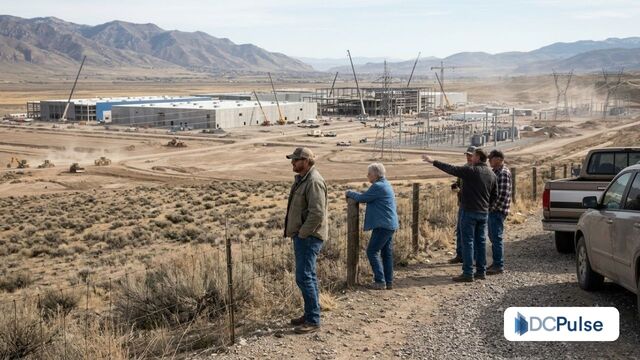
The proposed Stratos data center development in Box Elder County became a focal point for concerns about the scale, location, and approval of major computing infrastructure. The project was advanced through Utah’s Military Installation Development Authority, with Adams serving as the authority’s chair. The proposal drew criticism over its size, its proximity to the Great Salt Lake, and the process through which public support and incentives were organized.
For opponents, the issue extended beyond whether Utah should attract data center investment. It also concerned how much influence residents had over a project that could affect local land use, water resources, energy infrastructure, and the surrounding environment. The project became closely associated with political leaders who had helped move it forward, and that association carried consequences during the primary election.
Reporting from Utah described Adams’ defeat as an exceptional political upset, while two Box Elder County commissioners who voted for resolutions allowing the project to proceed also lost their primary contests. The results suggest that infrastructure decisions can become politically consequential when residents believe the costs and risks are being decided without their adequate input.
Economic Promises Need Local Credibility
Data centers can bring substantial investment, construction activity, tax revenue, and demand for local services. They also support the computing capacity behind cloud platforms, AI systems, digital commerce, and enterprise technology. For states competing to attract infrastructure, these benefits can make large campuses appear strategically compelling.
Yet the economic case is not always experienced equally by the people living closest to a project. Construction activity may be temporary, permanent employment can be modest relative to a campus’s capital cost, and the local consequences of new power and water demand may persist long after construction ends. Residents may also question whether tax incentives and public infrastructure commitments produce benefits proportionate to the resources a project requires.
Developers and public officials therefore need to explain not only the headline investment figure but also how benefits and costs will be distributed. Credible answers should cover expected permanent jobs, local procurement, tax arrangements, infrastructure upgrades, utility costs, and the measures used to protect existing customers. General promises about economic growth or national competitiveness are unlikely to resolve questions about a community’s immediate interests.
Water, Power, and Land Are Community Issues
The Utah controversy reflects a practical reality of data center development: infrastructure requirements are also public-resource questions. Large computing facilities can require substantial electricity, grid connections, backup power systems, cooling capacity, and land. Depending on the design and local conditions, water use and air emissions can also become major concerns.
These questions are particularly sensitive in water-constrained regions. In Utah, the proximity of the proposed Stratos development to the Great Salt Lake amplified public scrutiny. Residents wanted more clarity about the potential environmental consequences and the commitments developers would make to manage resource use.
A September 2026 study from Utah State University’s Community and Natural Resources Institute found broad opposition to additional data center development among surveyed Utah residents. The accompanying reporting said nearly 76% opposed or strongly opposed building more data centers in the state, while 84% felt the development process was moving too quickly. The findings suggest that concern about process is not separate from concern about environmental and infrastructure impacts.
For developers, that means resource planning should be visible early. Project teams should be prepared to explain expected electricity demand, the source and timing of new power supply, cooling design, water withdrawal and reuse plans, backup generation, and the effect on existing utility customers. Where details remain uncertain, identifying what is known, what is still being studied, and when the information will be available can be more credible than offering broad assurances.
Transparency Is Part of Project Delivery
Large infrastructure projects routinely require coordination among land authorities, utilities, environmental regulators, and other public agencies. In Utah, state officials have noted that no single agency independently approves every aspect of a data center. Different reviews can cover zoning, water, wastewater, air quality, power, and building requirements, with public participation varying by decision type.
That complexity can make it difficult for residents to understand who is responsible for a decision, where they can raise concerns, and whether their feedback can change a project. When a proposal appears to move forward before the public understands its implications, the resulting information gap can undermine trust even when developers are complying with applicable rules.
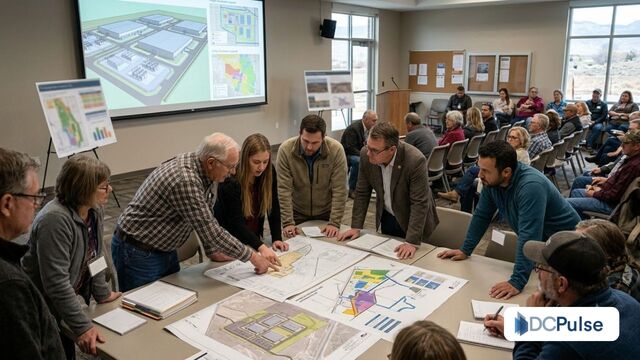
A stronger approach would make the approval pathway understandable from the beginning. Developers and public authorities can publish accessible project summaries, identify decision-makers, explain the role of public hearings and comment periods, disclose incentives and resource assumptions, and maintain a clear record of how concerns are addressed. Community engagement should begin before the most consequential decisions have effectively been settled.
The Industry Needs a Different Model of Expansion
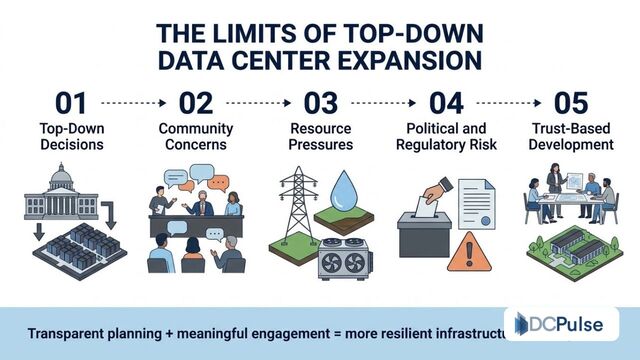
The Utah experience is a warning against treating public engagement as a communications exercise that begins after a site has been selected and a development strategy established. By that stage, communities may see consultation as an attempt to sell a predetermined outcome rather than an opportunity to influence it.
A more resilient model brings community questions into site selection and project design. Early engagement can help developers identify concerns about water, grid capacity, road access, land use, environmental effects, and emergency planning before they become entrenched opposition. It can also reveal whether the proposed location has the infrastructure and public support needed for a project of its intended scale.
This approach does not mean every objection should automatically halt development. Data centers are important components of modern digital infrastructure, and some projects can deliver meaningful economic and technological benefits. But engagement must be substantive: concerns need documented responses, alternatives should be considered where feasible, and project commitments should be specific enough to measure.
Regulation and Accountability Are Becoming Strategic Factors
Utah’s political backlash also increased pressure for clearer oversight. In August 2026, Governor Spencer Cox indicated that changes to the approval process and additional data center regulation could be considered in the 2027 legislative session. Separately, Utah’s new large-data-center water reporting requirements took effect on July 1, 2026 for qualifying new developments, requiring specified pre-construction and operational water-use disclosures.
For the industry, this points toward a development environment in which accountability, resource disclosure, and community participation can influence both regulatory risk and project timelines. Early transparency may require more work before construction, but it can help reduce the chance of late-stage disputes, political intervention, redesigns, or delays.
The Lesson: Infrastructure Must Earn Its Social Licence
Utah’s primary election did not settle the future of data center development in the state, nor does one election establish a universal public view of AI infrastructure. It did reveal the risks of allowing a project to become identified with a process that many residents consider too fast or insufficiently open.
As AI-related demand drives larger campuses and more intensive power requirements, the industry’s ability to build will depend on more than securing land and grid connections. Developers will need to demonstrate that projects are responsibly designed, local impacts are understood, public concerns receive meaningful consideration, and promised benefits can be evaluated.
The central lesson is straightforward: top-down decisions may accelerate early approvals, but they cannot manufacture durable public trust. In an era of expanding digital infrastructure, transparency and community participation are not optional extras. They are part of the foundation for delivering projects that can proceed and continue operating with lasting legitimacy.