DCPulse
The digital divide is often discussed as a problem of connectivity: communities without reliable broadband, households unable to afford internet service, and regions where digital infrastructure remains limited. But as data centers, cloud platforms, artificial intelligence (AI), and connected services become more deeply embedded in everyday life, access alone does not guarantee meaningful participation in the digital economy.
Ilissa Miller, founder and CEO of iMiller Public Relations and a digital infrastructure industry advocate, has emphasized the importance of community engagement, AI literacy, infrastructure planning, and informed decision-making in addressing the digital divide. Her perspective highlights a challenge for an industry whose physical infrastructure is essential to modern services but often remains invisible to the people who depend on it.
Data centers and connectivity networks can expand a region’s technical capacity, yet communities also need the knowledge and opportunities to understand and benefit from those investments. Bridging the divide therefore requires more than extending networks. It calls for helping people understand how digital systems work, how they affect communities, and how individuals can participate in the digital economy.
The Digital Divide Extends Beyond Connectivity

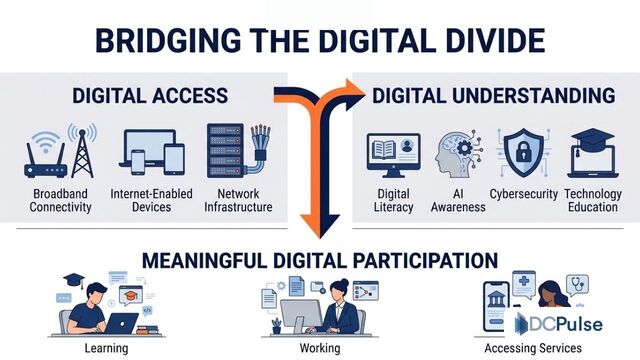
Reliable internet access remains a fundamental requirement for digital participation. Without suitable connectivity, people can face barriers to education, employment, healthcare, public services, and business activity. Expanding broadband coverage and improving affordability therefore remain important objectives.
However, access is only one part of the challenge. People also need suitable devices, digital skills, accessible services, and the confidence to use technology effectively. The ability to distinguish trustworthy information from misleading content and understand how digital services handle information can also influence whether connectivity translates into practical benefits.
These differences matter as digital services become more complex. A person may use cloud-based applications every day without knowing that data centers store and process information, fiber networks transport traffic, and power and cooling systems help keep computing equipment operational. That knowledge is not necessary for every user to operate a basic application, but broader understanding can help people make more informed decisions about technology and its role in society.
The distinction is especially relevant as AI tools become more widely available. Access to an AI application does not automatically provide the skills to assess its outputs, recognize its limitations, protect sensitive information, or apply it productively. Digital inclusion increasingly requires opportunities to build that understanding alongside access itself.
Why Data Centers Need to Be Part of the Conversation
Data centers are central to the digital services used by households, businesses, educational institutions, and governments. They provide the computing, storage, and networking environments that support websites, cloud platforms, enterprise systems, streaming services, and AI workloads.
Despite that role, the infrastructure behind digital experiences can be difficult for the public to see. Users interact with applications through screens, while the facilities and networks supporting those applications are often located elsewhere. This separation can make it harder to understand how digital services are delivered and why infrastructure investment matters.
The Nomad Futurist Foundation, which works to demystify digital infrastructure through education and community engagement, identifies a lack of industry awareness as a challenge for public understanding and workforce development. Its educational approach connects digital technologies to the physical systems and careers that make them possible.
For data center operators and developers, better public understanding can support more informed conversations about new projects. Communities evaluating a proposed facility may have questions about electricity demand, water use, land, noise, construction, employment, tax revenue, and long-term local impacts. Those questions deserve clear, project-specific answers rather than broad assurances about the benefits of technology.
Education does not mean persuading every community to support every development. Instead, it can give residents the context needed to evaluate proposals, understand trade-offs, ask informed questions, and participate in decisions that affect their area.
Community Engagement Starts Before Construction
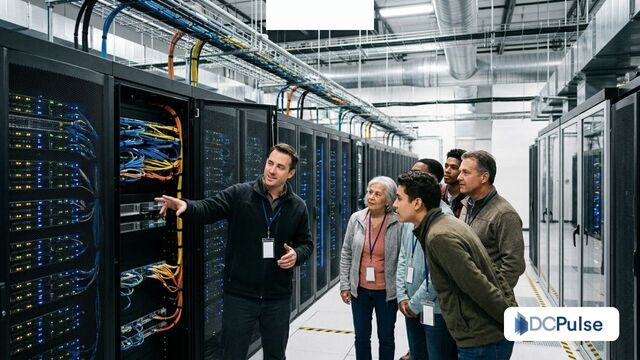
As digital infrastructure expands into new markets, community engagement becomes an important part of project planning. A development that appears straightforward from an engineering or investment perspective may raise different questions for residents, local authorities, schools, utilities, and nearby businesses.
Early communication can help explain what a proposed data center is designed to do, what infrastructure it requires, and which impacts are expected locally. Developers can describe power arrangements, cooling approaches, water requirements where applicable, backup systems, construction timelines, and the nature of the jobs associated with a project. Where details remain uncertain, acknowledging that uncertainty is more useful than presenting assumptions as settled facts.
Miller’s work with the OIX Association’s Digital Infrastructure Framework Committee reflects this need for better planning resources. The committee was established to help community planners and economic development professionals assess existing infrastructure, identify future needs, and evaluate proposals against local development goals. The initiative recognizes that local governments may lack the technical information or specialist resources needed to assess increasingly complex infrastructure decisions.
For operators, this approach can also reveal issues that may otherwise emerge late in planning. Local stakeholders may identify concerns about transport, land use, workforce availability, or utility capacity. Listening early does not remove every conflict, but it can make the discussion more substantive and help establish realistic expectations.
AI Literacy Is Becoming Part of Digital Inclusion
AI is adding another dimension to the digital divide. As AI-enabled services spread through workplaces, schools, public services, and consumer applications, people need more than the ability to open a tool and enter a prompt. They need a practical understanding of what these systems can do, where they may fail, and when human judgment remains essential.
AI literacy can include evaluating generated information, checking important claims, recognizing bias, understanding privacy risks, and knowing when a task requires expert review. These capabilities influence how effectively people can use AI and how confidently they can assess its consequences.
For employers, uneven AI literacy can also affect adoption. Providing access to software without appropriate training may leave employees uncertain about how to incorporate it into existing work. Organizations need to consider governance, security, training, and workflow design alongside technology procurement.
The infrastructure industry faces a related educational challenge. AI systems depend on computing capacity, data storage, networking, electricity, and cooling. Understanding those connections can help students and community members see AI not as a purely virtual service, but as a technology supported by physical facilities, specialized skills, and significant operational requirements.
This broader perspective can also support career awareness. Digital infrastructure needs expertise across engineering, operations, cybersecurity, networking, energy, construction, logistics, finance, and communications. Introducing people to the ecosystem may help them recognize career options they had not previously considered.
Turning Infrastructure Investment Into Local Opportunity
The benefits of digital infrastructure are not automatic. A new data center can increase computing capacity and support digital services, but the wider economic and social outcomes depend on factors such as local workforce skills, utility planning, connectivity, education, and how the project fits into regional priorities.
Community leaders therefore need ways to assess infrastructure proposals in the context of their long-term plans. Questions about future electricity requirements, network resilience, employment opportunities, land use, and public services should be considered alongside the commercial objectives of a development. Transparent information can help communities weigh potential benefits against costs and constraints.
Education can also connect residents with the employment opportunities surrounding digital infrastructure. Data centers rely on more than specialized IT roles. Construction trades, electrical work, mechanical systems, facilities management, network operations, security, project management, and supply-chain services all contribute to the ecosystem. Clear explanations of these career pathways can help schools, training providers, employers, and job seekers identify where skills development may be useful.
For communities with limited technical resources, accessible educational material and independent expertise can make complex proposals easier to evaluate. The objective is not to turn every resident into an infrastructure specialist. It is to ensure people have enough context to ask relevant questions, understand the answers, and participate meaningfully in decisions.
A More Complete Approach to the Digital Divide
Connectivity remains essential, and underserved communities still need reliable, affordable broadband and appropriate devices. But the next stage of digital inclusion must also consider what people know, what support they can access, and whether they have the skills to use technology safely and effectively.
Miller’s emphasis on community engagement, AI literacy, and informed infrastructure planning points to a broader understanding of inclusion. Networks and data centers create the technical foundation for digital participation; education and public engagement help people understand that foundation and make informed choices about its future.
For the data center and digital infrastructure sector, that means treating communication and education as important parts of responsible development. Clear explanations, early engagement, accessible learning opportunities, and realistic discussions of local impacts can help narrow the distance between infrastructure investment and public understanding.
The digital divide cannot be solved through awareness campaigns alone, just as connectivity projects cannot resolve every barrier to participation. Both physical access and practical understanding matter. A more inclusive digital future will depend on building the networks people need while giving them the knowledge, skills, and voice to benefit from the systems those networks support.