DCPulse
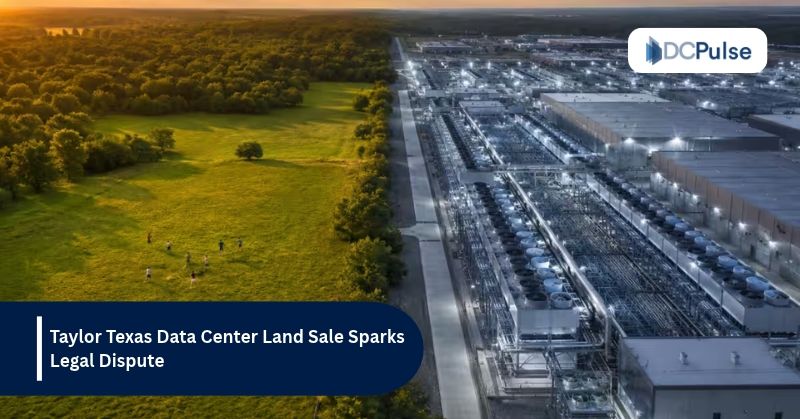
A proposed artificial intelligence data center in Taylor, Texas, has become the focus of a legal dispute over the sale of land originally conveyed for future public parkland. The Taylor Economic Development Corporation sold the property to a data center developer for $10 million in April 2025, but questions over the land's original designation have prompted an investigation by the Texas Attorney General and continued opposition from nearby residents. The dispute highlights the growing importance of land-use history, community engagement, and legal due diligence as data center developers compete for sites to support expanding AI and cloud infrastructure demand.
Taylor Data Center Project Draws Attention Over $10 Million Land Sale
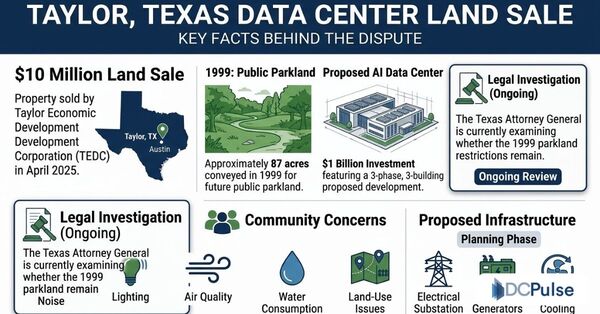
The proposed Blueprint Projects Data Center is planned for the southeastern side of Taylor, near Carlos G. Parker Boulevard and Martin Luther King Jr. Boulevard. According to the city's project information, the development is expected to cover approximately 135,000 square feet and support data storage, website hosting, and AI processing.
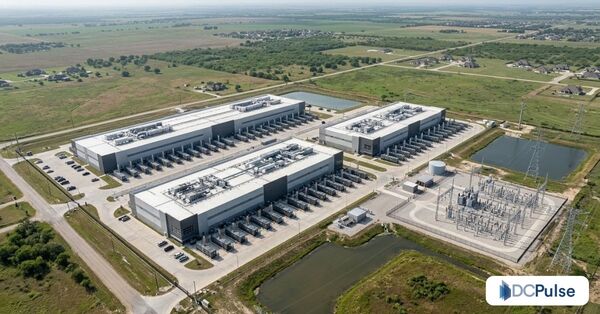
The project is planned in three phases, with a stated total investment of $1 billion. Proposed infrastructure includes three buildings, an electrical substation, backup generators, and a closed-loop cooling system. These systems are intended to support the facility's computing operations while addressing power reliability and cooling requirements.
The land transaction has become a central issue in the project's development. In April 2025, the Taylor Economic Development Corporation sold the property to the developer for $10 million. The Texas Attorney General's September 2026 announcement identified NCP Travis TPP Project LLC as the entity behind the proposed development. The city project page separately refers to BPP Projects LLC in its development timeline.
Land Originally Conveyed for Future Parkland
The dispute dates to July 1999, when members of the Bland family transferred approximately 87 acres to the Texas Parks and Recreation Foundation for $10. The original deed stated that the property was to be held in trust for future use as parkland by Williamson County.
The property subsequently passed through other entities before reaching the City of Taylor and, later, the Taylor Economic Development Corporation. The city maintains that the original language was not a continuing deed restriction and points to subsequent property transfers that did not repeat the parkland provision.
The Texas Attorney General's investigation is examining whether the original trust or restriction was legally modified, released, or terminated. If the investigation determines that an enforceable restriction remains, the attorney general has indicated that court intervention may be pursued.
The central legal question is whether the land can lawfully be used for private data center development despite the language in the original deed. The investigation does not itself establish that the sale or proposed development was unlawful.
Residents Challenge the Proposed Development
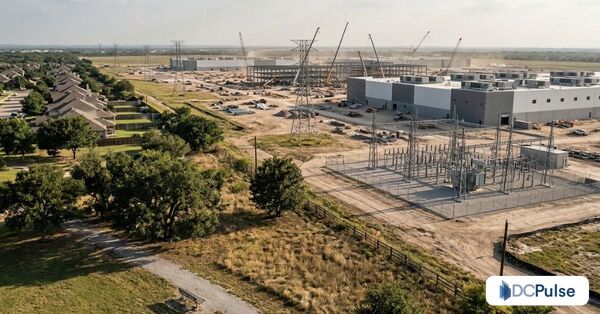
The project has also faced opposition from residents concerned about the potential effects of a data center near residential neighborhoods. Issues raised include noise, lighting, air quality, water use, and the character of the surrounding area.
Several residents filed a lawsuit challenging the development and arguing that the original parkland commitment should be enforceable. A district court dismissed the case in October 2025 on standing grounds, according to reporting by KUT. The residents subsequently appealed, leaving the dispute unresolved at the appellate level in the latest reporting reviewed for this article.
The controversy illustrates the challenges that can emerge when land previously associated with public use is considered for large-scale digital infrastructure. Even when a project receives municipal approvals, historical property documents and questions about public commitments can introduce legal uncertainty.
For developers, these issues can affect project schedules, financing decisions, construction planning, and relationships with local authorities and communities.
Power and Cooling Infrastructure Form Part of the Proposal
Beyond the land dispute, the Blueprint project reflects the infrastructure requirements associated with modern data centers. AI processing and other computing applications depend on reliable electricity, adequate thermal management, and resilient facility systems.
The city describes an electrical substation and backup generators as part of the proposed development. The project is also expected to use a closed-loop cooling system, which circulates coolant within a system rather than relying on continuous water consumption in the same way as some evaporative cooling configurations.
According to the city's published assessment, the project would connect to the electric grid, with backup generators intended to support operations during outages. The city also states that the proposed cooling arrangement is expected to limit water demand. These are descriptions of the planned design and assessments published by the city, rather than independently confirmed operating results from a completed facility.
The development's eventual infrastructure requirements will be relevant to the local power network, permitting process, and surrounding community. The status of the legal investigation remains a separate consideration from the project's technical design.
Data Center Expansion Raises Questions for Local Planning
Taylor has attracted growing interest from data center developers as demand for AI computing and cloud infrastructure expands. The city has also acknowledged broader concerns about the regulation of data centers, including noise, water use, lighting, and buffers between facilities and residential areas.
In June 2026, the city reported that it was working on potential amendments to its comprehensive plan and land development code to address intensive uses, including data centers. Its published materials describe an effort to establish clearer requirements and provide opportunities for community input.
The Blueprint dispute demonstrates why land acquisition and legal review are important parts of data center development. Site selection involves more than access to power, fiber connectivity, and suitable land. Developers must also examine ownership records, applicable restrictions, zoning, permitting requirements, and potential community concerns.
For municipalities, the challenge is balancing investment and infrastructure development with transparent planning and enforceable safeguards for residents.
Legal Uncertainty Remains a Key Project Consideration
The proposed Blueprint Projects Data Center combines a substantial planned investment with a land-use dispute that reaches back more than two decades. The $10 million sale and the Texas Attorney General's investigation have placed the property's ownership history at the center of a wider debate about how communities manage land intended for public benefit.
The project is proposed rather than a confirmed operational data center, and the legal investigation should not be interpreted as a final ruling against its development. The outcome will depend on the relevant legal documents and any subsequent proceedings.
For the wider data center industry, the case offers a reminder that successful infrastructure development depends on more than technical capability and access to electricity. Legal certainty, community engagement, and transparent land-use decisions can be equally important in determining whether a project progresses as planned.