DCPulse
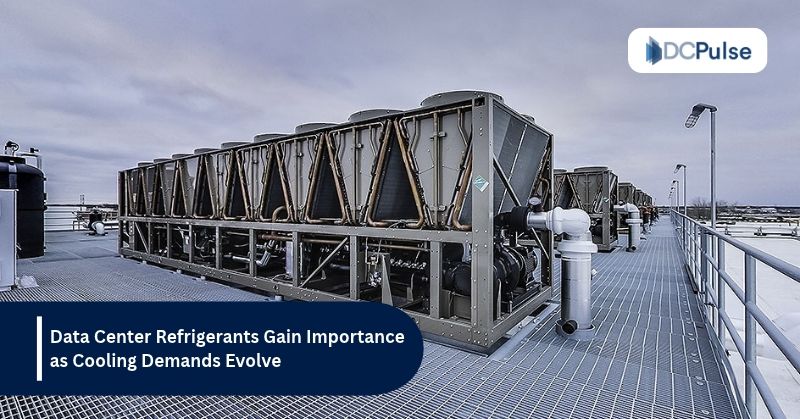
The expansion of cloud computing, artificial intelligence (AI), and high-performance computing is increasing the importance of thermal management across the global data center industry. As operators accommodate growing computing workloads, cooling infrastructure has become a critical consideration in facility design, energy management, and operational reliability. Refrigerants, which transfer heat within cooling systems, play an important role in maintaining the temperatures required for data center equipment to operate within specified conditions.
The data center refrigerant market is projected to surpass USD 1.62 billion by 2035, reflecting the growing relevance of cooling technologies to digital infrastructure development. The market outlook highlights an important area of the data center supply chain, where refrigerant selection can influence cooling-system performance, regulatory compliance, maintenance requirements, and environmental considerations.
The market's development is closely connected to the evolution of data center cooling architectures. Conventional air-cooled facilities, chilled-water systems, and newer liquid-cooling configurations have different thermal management requirements. Refrigerants remain particularly relevant to refrigeration-based equipment, including chillers, direct-expansion systems, and heat pumps used in facility cooling applications.
For data center developers and operators, the challenge extends beyond selecting a refrigerant that provides effective cooling. Long-term planning also requires consideration of equipment compatibility, refrigerant availability, applicable environmental regulations, system efficiency, and the potential costs associated with future transitions.
AI Infrastructure Is Reshaping Data Center Cooling Requirements
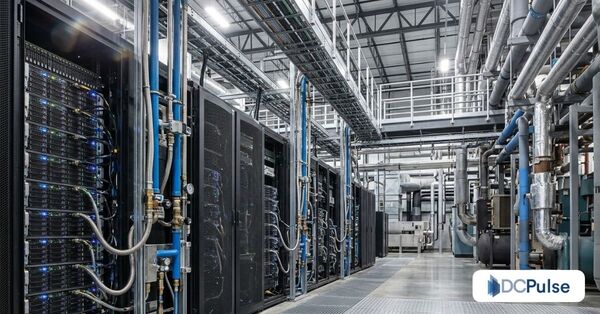
AI infrastructure is changing how operators approach data center capacity planning. High-density computing deployments can concentrate substantial heat generation within individual racks, increasing the importance of effective heat removal and predictable operating conditions.
Traditional air-cooling systems remain relevant across many facilities, but their suitability depends on equipment density, facility design, environmental conditions, and operational requirements. Some deployments require complementary approaches, including liquid cooling at the rack or server level, to manage heat more effectively.
These changes have implications for refrigerant demand, although the relationship is not direct. Liquid cooling does not necessarily eliminate refrigerants from a facility because heat may still be transferred to external cooling equipment, such as chillers or heat-rejection systems. The refrigerant requirements depend on the overall system architecture and the technologies selected for heat removal.
As operators develop infrastructure for AI training, inference, and other computationally intensive workloads, cooling-system designers must evaluate performance across the entire thermal chain. Refrigerant-based equipment can remain an important component of that chain, particularly where chilled-water production or mechanical refrigeration is required.
The implications extend to new construction and existing facilities. New projects can incorporate cooling requirements during the design phase, while operators of established data centers may need to assess whether their current equipment can accommodate changing rack densities and cooling loads.
Refrigerant Selection Moves Toward Lower Environmental Impact
Environmental regulations are another factor influencing refrigerant selection across the cooling industry. Hydrofluorocarbons (HFCs), widely used in refrigeration and air-conditioning equipment, are subject to phasedown measures in several markets because of their global warming potential.
In the United States, the American Innovation and Manufacturing Act establishes a phasedown of regulated HFC production and consumption to 15% of baseline levels by 2036. These measures have implications for refrigerant supply chains, equipment planning, and the long-term servicing of installed cooling systems.
For data center operators, refrigerant transitions require careful coordination between environmental objectives and operational requirements. A replacement refrigerant must be compatible with the intended equipment and meet applicable safety and performance standards. Changes may also affect system components, servicing procedures, technician training, and maintenance planning.
Lower-global-warming-potential refrigerants are attracting attention as equipment manufacturers and cooling-system designers respond to changing regulatory requirements. Hydrofluoroolefins (HFOs), selected HFO blends, and other alternatives are among the options being evaluated for different refrigeration applications. However, no single refrigerant is suitable for every data center cooling configuration.
The transition also creates planning considerations for facilities with long equipment lifecycles. Operators must assess the refrigerants used in existing chillers and precision air-conditioning systems, understand applicable restrictions, and determine whether future servicing or equipment replacement could require a change in refrigerant strategy.
Refrigerant management is therefore becoming an important element of infrastructure procurement and lifecycle planning, rather than a decision confined to the mechanical engineering team.
Cooling Architecture Will Influence Market Demand
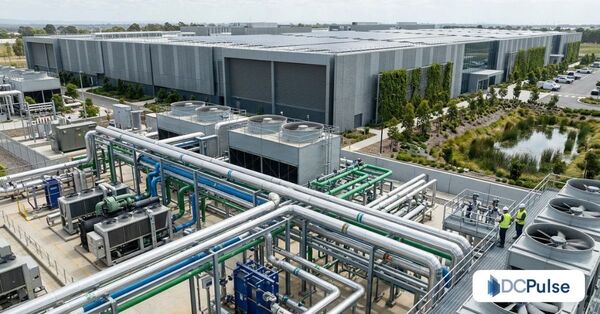
The growth of the data center refrigerant market depends not only on the number of facilities being built but also on the cooling technologies installed within them. Chillers and direct-expansion cooling equipment use refrigerants differently, while liquid-cooling systems can reduce the need for conventional air-conditioning at the server level.
In direct-to-chip liquid cooling, a fluid circulates through cold plates to remove heat from processors and other high-power components. The captured heat is then transferred to a facility-level heat-rejection system. Depending on the design, that system may still incorporate refrigeration equipment and refrigerants.
Immersion cooling and other alternative approaches introduce further differences in heat-transfer arrangements. Their effect on refrigerant consumption depends on the wider facility architecture, including whether mechanical refrigeration is required and how heat is rejected outdoors.
Air-side and water-side economization can also reduce compressor operating hours when outdoor conditions permit. The American Society of Heating, Refrigerating, and Air-Conditioning Engineers identifies economization and climate-appropriate cooling strategies as important considerations for improving data center thermal efficiency.
These developments make the market's trajectory dependent on several variables: new data center construction, installed cooling capacity, refrigerant charge requirements, maintenance demand, regulatory changes, and the pace of technology adoption.
For suppliers, this environment creates a need to serve multiple cooling architectures rather than relying exclusively on conventional refrigeration applications. For operators, it reinforces the importance of evaluating refrigerant demand alongside broader decisions about power consumption, cooling efficiency, and facility design.
Regional Expansion Creates Diverse Market Opportunities
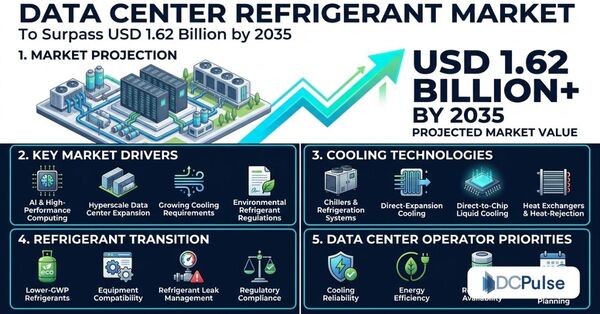
Regional data center development will influence demand for refrigerants and related cooling technologies. North America, Europe, and Asia-Pacific have different infrastructure investment patterns, regulatory frameworks, climatic conditions, and approaches to energy efficiency.
North America has an established hyperscale and colocation ecosystem, alongside continued investment in cloud and AI infrastructure. These facilities require cooling systems designed around their computing loads, local climate, and power availability. Refrigerant selection is increasingly relevant to equipment procurement and compliance planning.
Europe's market is shaped by environmental requirements and the need to improve the efficiency of energy-intensive infrastructure. Refrigerant regulations and sustainability targets can influence the choice of cooling equipment, particularly for new developments and major refurbishment projects.
Asia-Pacific presents opportunities associated with expanding digital infrastructure, cloud adoption, and the development of new data center capacity. However, requirements differ substantially between markets. Climate conditions, electricity costs, local regulations, and the availability of cooling technologies all influence facility design and refrigerant selection.
Across these regions, developers must balance cooling performance with long-term operating costs and environmental considerations. Refrigerant suppliers and cooling-equipment manufacturers will need to account for these differences when developing products and supporting customers.
Supply Chains and Lifecycle Management Become Strategic Priorities
The projected expansion of the data center refrigerant market also highlights the importance of reliable supply chains and specialist maintenance services. Data centers depend on continuous cooling, making refrigerant availability and the ability to maintain refrigeration equipment important operational considerations.
Refrigerant leakage, where it occurs, can reduce system charge and require investigation, repair, and recharging. Effective leak detection, appropriate handling, and maintenance procedures can help operators manage refrigerant losses and maintain equipment performance.
The availability of trained technicians and compatible replacement products is another consideration, particularly as equipment manufacturers introduce systems designed for alternative refrigerants. Operators with large portfolios may need to coordinate refrigerant policies across facilities while accounting for differences in equipment age, design, and local regulatory requirements.
Procurement teams may also need to assess refrigerant availability over the expected service life of cooling equipment. A system's initial purchase price is only one part of its lifecycle cost; servicing requirements, energy consumption, replacement options, and compliance obligations can also affect long-term economics.
For developers building large campuses, these considerations can be incorporated into cooling specifications and maintenance contracts before facilities become operational. Existing operators can review their installed equipment and identify potential refrigerant-related risks as part of routine infrastructure planning.
Market Outlook
The data center refrigerant market is positioned at the intersection of digital infrastructure expansion, cooling-system innovation, and environmental regulation. The projected market value of more than USD 1.62 billion by 2035 indicates the scale of the opportunity identified in the market forecast, although the outcome will depend on how cooling technologies and refrigerant requirements evolve.
AI computing and hyperscale infrastructure are increasing the importance of thermal management, but the resulting demand for refrigerants will depend on the cooling architecture adopted by each facility. Liquid cooling, economization, and other heat-removal approaches may change the amount and type of refrigerant required across different applications.
For data center operators, the priority is to select cooling systems that support reliable computing performance while meeting energy-efficiency objectives and applicable environmental requirements. For refrigerant manufacturers and equipment suppliers, the opportunity lies in developing compatible, efficient, and regulation-ready solutions for a changing infrastructure market.
As data centers become increasingly important to cloud services, AI workloads, and the wider digital economy, refrigerant management will remain a relevant consideration in the design, operation, and long-term sustainability of cooling infrastructure.