DCPulse
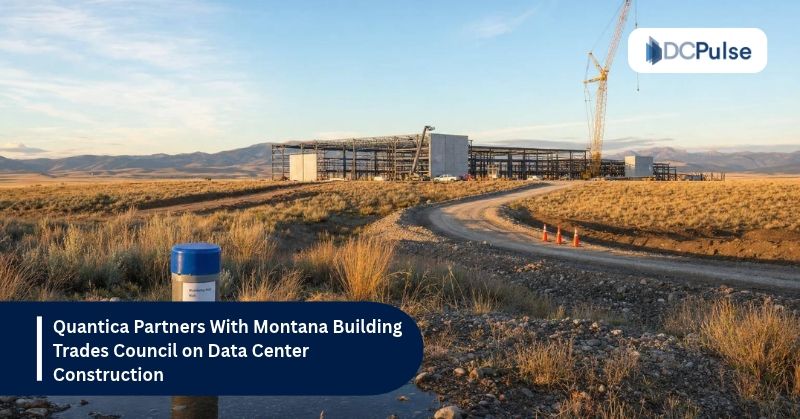
The development of large-scale data centers is creating new demands for skilled construction workers, electrical specialists, and infrastructure contractors across the United States. In Montana, Quantica Infrastructure is seeking to address these workforce requirements through a labor partnership supporting its proposed Big Sky Digital Infrastructure campus near Broadview, approximately 30 miles northwest of Billings.
In June 2026, Quantica and the Southeastern Montana Building and Construction Trades Council signed a memorandum of understanding (MOU) establishing a framework for union-backed construction, apprenticeship opportunities, workforce training, and the prioritization of qualified local workers. The agreement places workforce development at the center of a project designed to combine data center capacity with new energy and connectivity infrastructure.
The partnership comes as the proposed campus attracts attention for its potential economic benefits, substantial electricity requirements, and implications for surrounding communities. Although the labor agreement establishes a foundation for cooperation, the number of construction jobs, wage arrangements, and detailed workforce commitments have not yet been publicly finalized.
Quantica and Montana Trades Council Establish a Labor Framework
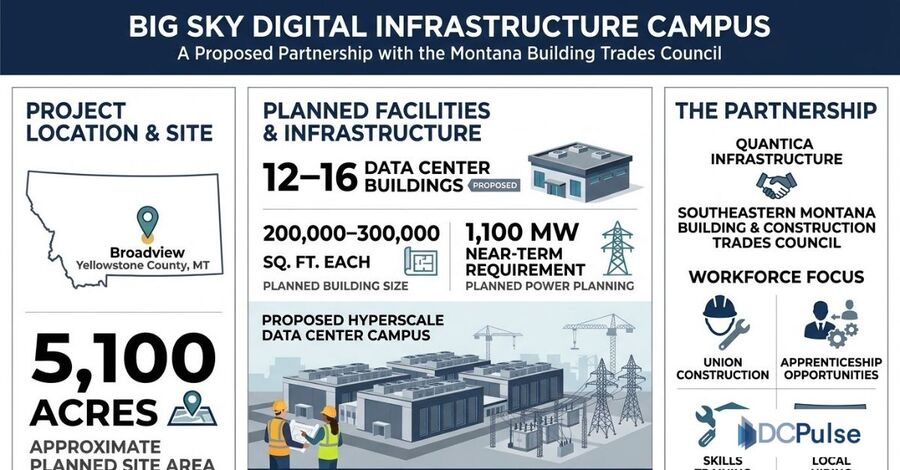
The agreement brings together Quantica Infrastructure, a digital infrastructure developer, and the Southeastern Montana Building and Construction Trades Council, an AFL-CIO-affiliated federation representing construction and craft unions across the region.
Under the MOU, the organizations intend to cooperate on union construction, apprenticeship programs, training pathways, and the recruitment of qualified local workers. The framework also identifies opportunities to expand participation in the construction trades, including for people from communities that have historically faced barriers to entering these occupations.
For Quantica, the agreement supports the development of a skilled workforce capable of building complex digital and energy infrastructure. Data center construction involves a range of specialized trades, including electricians, pipefitters, carpenters, concrete specialists, and other workers responsible for installing and maintaining critical facility systems.
The council's participation provides a framework for connecting the project with established apprenticeship and training networks. However, the MOU should not be interpreted as a finalized employment contract covering every contractor, position, or construction phase. Specific workforce arrangements are expected to develop as the project advances.
Big Sky Campus Targets Large-Scale AI and Digital Infrastructure
The proposed Big Sky Digital Infrastructure campus is planned for approximately 5,100 acres in Yellowstone County, near Broadview, Montana. The development is intended to combine a large-scale data center campus with electricity generation, energy storage, and network connectivity infrastructure.
According to the project's official information, the campus is being designed to support technology companies requiring substantial computing capacity. Quantica's approach includes developing power resources and connectivity infrastructure alongside the data center site rather than treating electricity and network access as separate considerations.
The scale of the proposed development creates substantial construction and engineering requirements. Project plans reported by Montana Free Press include 12 to 16 buildings, each approximately 200,000 to 300,000 square feet. The developer has described near-term power requirements of approximately 1,100 megawatts, with a much larger potential requirement over the longer term. These figures reflect proposed capacity and planning assumptions rather than an operational facility.
The combination of buildings, electrical infrastructure, cooling systems, and connectivity networks means that construction would require coordination across multiple technical disciplines.
For Montana's construction industry, the project could create opportunities to participate in a major digital infrastructure development. The extent of those opportunities will depend on the project's final configuration, construction schedule, contractor requirements, and workforce agreements.
Apprenticeships and Local Hiring Take Center Stage
Workforce development is one of the central objectives of the Quantica partnership. The MOU establishes a framework for apprenticeship and training opportunities while prioritizing qualified local labor where possible.
The approach could help connect Montana residents with skilled construction occupations needed for data center and energy infrastructure. Electrical installation, piping, concrete construction, structural work, and related activities require specialized knowledge and adherence to technical and safety requirements.
Apprenticeship programs can provide a structured route into these occupations by combining practical experience with trade-specific instruction. For a project expected to develop across multiple phases, workforce training could also help establish a pipeline of workers available for future construction activities.
The partnership identifies opportunities for local hiring and broader participation in the skilled trades. However, publicly available information does not establish a final number of apprentices, a guaranteed share of local hires, or a detailed schedule of employment opportunities.
In reporting by Montana Free Press, a representative of the trades council said that job numbers and wages would become clearer once the developer secured an end user for the campus. The distinction is important because the final workforce requirements will depend on how the project develops and which companies ultimately occupy or use its facilities.
Construction Activity Has Begun, but Major Project Details Remain Open
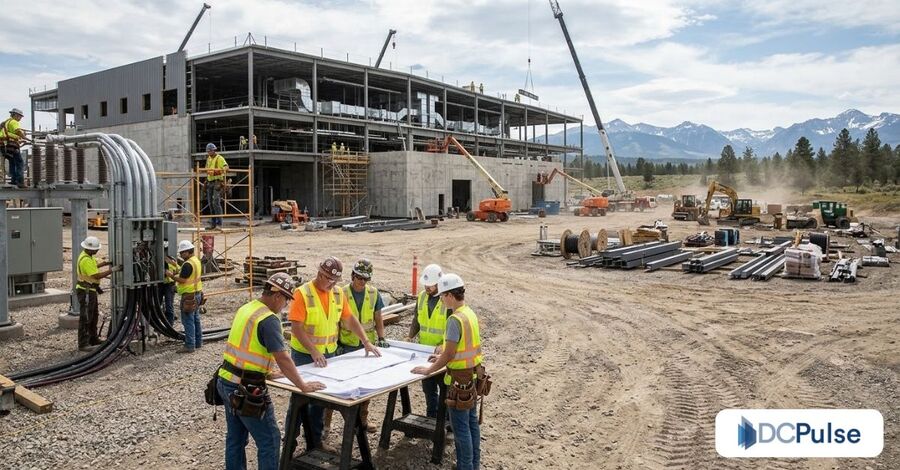
The Big Sky Campus has moved beyond preliminary planning in some areas. According to Montana Free Press, the developer began initial on-site work in September 2026, including preparations for access roads and a well. These activities represent early infrastructure work rather than completion or operation of the planned data center buildings.
Yellowstone County also finalized an agreement in October 2026 requiring the developer to cover specified road-related costs associated with the initial phase of construction. The agreement addresses the use and maintenance of designated county roads during the movement of construction materials and equipment. County officials clarified that the arrangement does not constitute approval of the project's land use, water supply, or electricity plans.
The project's progression illustrates the multiple stages involved in developing a large data center campus. Initial site preparation, access infrastructure, water planning, electricity arrangements, and permitting must advance alongside the eventual construction of buildings and technical systems.
For the labor partnership, this phased approach means that employment requirements are likely to evolve over time. Early site work involves different skills and contractor needs from the later installation of electrical distribution equipment, cooling systems, and data center infrastructure.
Power and Water Requirements Remain Important Considerations
The proposed campus is expected to require substantial electricity, making energy infrastructure a central part of its development strategy. Quantica has said it intends to fund the generation and infrastructure needed to serve the project, with a planned mix of renewable generation and firm power resources. The final energy mix and associated infrastructure requirements remain subject to further development and regulatory processes.
Water planning is another important consideration. In September 2026, the Montana Department of Environmental Quality requested public comment on a proposed well intended to supply the campus during construction and potentially provide water for future operations. The department identified estimated water requirements of approximately 150,000 gallons per day during construction and 20,000 gallons per day once operational. These are project estimates, not confirmed consumption figures for an operating facility.
The proposed well targets the Madison aquifer, which lies deeper than the Eagle Sandstone aquifer used by many nearby properties. The application and associated environmental review are part of the regulatory process governing the proposed water supply.
These issues demonstrate that workforce development is only one element of a much larger infrastructure undertaking. Construction schedules and labor requirements will also depend on the progression of energy planning, water approvals, engineering work, and other necessary authorizations.
Community Impact Will Influence the Project's Development
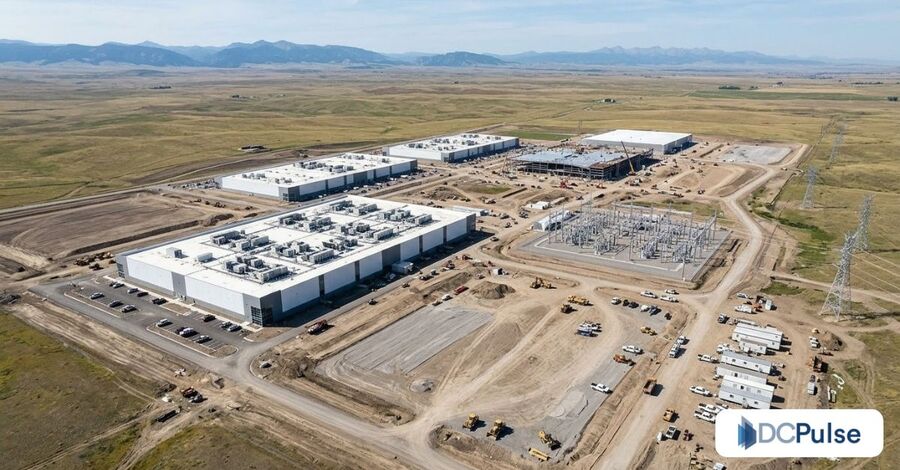
The proposed campus has attracted opposition from some residents concerned about electricity demand, water resources, environmental effects, and the potential consequences of large-scale industrial development near Broadview.
The labor partnership offers a potential economic benefit through construction employment and trade training, but its existence does not resolve broader questions about the project's environmental or community impacts.
For local communities, the practical significance of the agreement will depend on how its commitments translate into actual employment opportunities, training placements, contractor participation, and long-term economic activity.
For the developer, maintaining constructive relationships with workers, local authorities, and residents will remain important as the project moves through its development stages.
The distinction between announced commitments and measurable outcomes will be particularly relevant as more information becomes available about the campus's construction schedule and eventual end users.
Union Partnership Connects Workforce Development With Digital Infrastructure
The agreement between Quantica Infrastructure and the Southeastern Montana Building and Construction Trades Council establishes a framework for connecting a major proposed data center development with Montana's skilled construction workforce.
Its emphasis on union construction, apprenticeship pathways, and qualified local labor reflects the range of specialized capabilities required to build large digital infrastructure facilities. At the same time, the project's proposed scale means that workforce commitments will need to develop alongside decisions about construction phases, electrical capacity, water supply,