Pranav Hotkar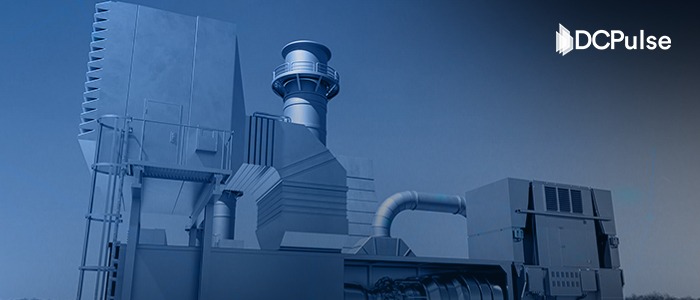
Houston, United States - February 24, 2026 - Baker Hughes has secured an order to supply 25 electric generators for a large-scale AI data center power platform being developed by Boom Supersonic, expanding an earlier agreement and bringing the total contracted capacity to roughly 1.21 gigawatts.
The generators, BRUSH DAX 7 units with associated voltage regulation equipment, will operate alongside Boom’s 42-megawatt “Superpower” natural-gas turbines. The combined system is designed to provide dedicated on-site electricity for AI infrastructure built for Crusoe. Deliveries are scheduled from mid-2026 through 2028.
Boom said the project adapts aircraft engine core technology into stationary turbines intended to run continuously, allowing high-density compute campuses to operate independently of regional grid limitations.
“We are bringing a new category of scalable, onsite power to market so that the growth of AI is no longer constrained by the grid,” said Boom founder and CEO Blake Scholl in the announcement.
The order expands a 2025 contract for six generators and raises Boom’s total commitment to 31 units. The equipment is expected to serve as primary baseload generation rather than backup capacity, a departure from conventional data center power architecture, where diesel or gas systems typically operate only during outages.
Baker Hughes said the air-cooled two-pole generators are engineered for continuous industrial operation and have thousands of installations worldwide. Chairman and CEO Lorenzo Simonelli said the collaboration addresses “the energy needs of the data center industry,” which is rapidly scaling due to AI demand.
The project reflects a broader shift in infrastructure strategy as operators move toward building data centers around dedicated power sources instead of relying solely on utility interconnections. Rapid growth in AI workloads has created multi-hundred-megawatt and gigawatt-scale demand levels that often exceed local grid expansion timelines.
Crusoe, known for deploying compute infrastructure near energy sources, is expected to use the system to support high-density AI workloads requiring consistent, high-availability electricity.
Industry analysts say such integrated generation projects could become increasingly common as developers seek predictable capacity, faster deployment timelines, and insulation from transmission constraints while long-term grid upgrades are built out.

.jpg)