Pranav Hotkar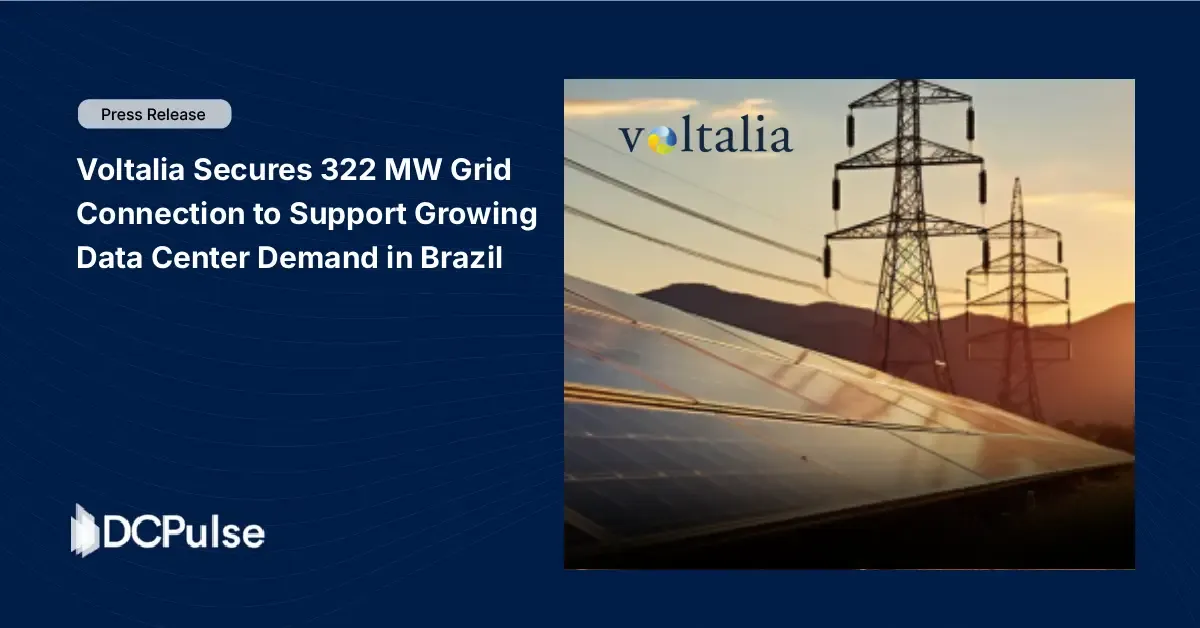
Paris, France - June 8, 2026 - Renewable energy developer Voltalia has secured a 322 MW grid connection at the Pecém industrial and port complex in northeastern Brazil, positioning the company to support rising electricity demand from data centers and other energy-intensive digital infrastructure projects in the region.
The company said the new transmission capacity will support future power supply agreements tied to large-scale data center developments and industrial customers as Brazil emerges as an increasingly attractive market for hyperscale and AI infrastructure investment.
Located in Ceará state, the Pecém complex has become one of Brazil’s fastest-growing industrial and logistics hubs, benefiting from expanding renewable energy resources, international connectivity, and growing interest from digital infrastructure operators. Voltalia said the secured grid connection provides strategic access to high-voltage transmission infrastructure capable of supporting major long-term electricity demand.
According to the company, the project aligns with accelerating global demand for AI-ready data center capacity and the increasing importance of renewable energy in hyperscale infrastructure planning. AI and cloud operators are increasingly prioritizing locations with scalable power availability and access to lower-carbon electricity supplies.
Voltalia said the connection agreement strengthens its ability to provide renewable power solutions for digital infrastructure customers requiring long-term energy capacity. The company has been expanding its presence across Brazil’s renewable energy sector, including wind, solar, and hybrid power developments.
The announcement comes as Latin America attracts growing interest from hyperscale cloud providers and data center developers seeking new regional expansion opportunities. Brazil, in particular, has become a strategically important market because of its large digital economy, expanding cloud adoption, and relatively high renewable energy penetration.
Industry-wide, electricity availability has become one of the biggest constraints facing AI infrastructure growth. Large GPU clusters and high-density AI workloads are significantly increasing power consumption, prompting operators to pursue direct energy partnerships and long-term grid capacity agreements.
Voltalia said the Pecém project could support future digital infrastructure investments in the region, particularly as global operators continue exploring new markets capable of supporting power-intensive AI deployments.
The company did not disclose specific data center customers linked to the 322 MW capacity allocation but noted that demand for renewable-powered infrastructure continues growing across the digital economy.
Brazil’s northeastern region has increasingly attracted infrastructure investment because of its strong renewable energy potential and improving connectivity into global markets. Ceará has also positioned itself as a growing technology and subsea connectivity hub, supported by international cable systems and expanding industrial infrastructure.
As hyperscale operators continue expanding globally, projects such as Voltalia’s Pecém grid connection highlight the growing convergence between renewable energy development and next-generation digital infrastructure planning. Access to scalable, reliable, and lower-carbon electricity is increasingly becoming a decisive factor in where future AI and cloud campuses are built.

.jpg)