DCPulse
Data center infrastructure is becoming more distributed, software-defined, and operationally complex. Hyperscale facilities, colocation campuses, edge sites, cloud platforms, and AI-oriented infrastructure increasingly operate across environments with different power, cooling, networking, compute, and security requirements.
Data center automation provides an operational layer for managing this complexity. Automated systems can coordinate infrastructure processes, monitor equipment, apply predefined policies, and support faster responses to changing workloads or operating conditions. The approach is becoming increasingly relevant as operators seek greater consistency without relying entirely on manual intervention.
The importance of automation extends beyond routine task reduction. For next-generation data centers, automation can influence how infrastructure is provisioned, monitored, maintained, and scaled throughout its operational lifecycle.
Automation Connects Physical and Digital Infrastructure
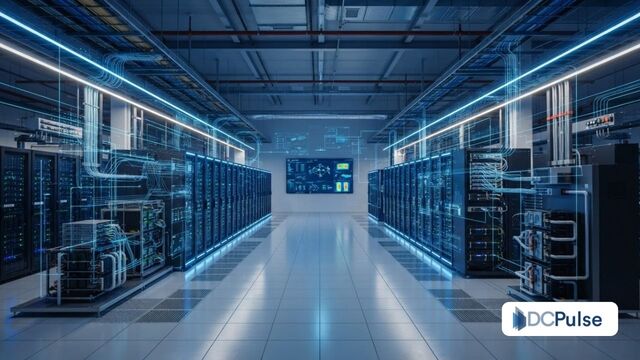
Traditional data center operations often involve separate management processes for servers, storage, networks, power systems, cooling equipment, and facilities. Greater automation allows these domains to become more closely connected through centralized management platforms, software-defined controls, monitoring systems, and orchestration tools.
This connection is particularly important for infrastructure where IT workloads and facility conditions continuously interact. Computing requirements affect power consumption and thermal loads, while available power and cooling capacity can influence where and how workloads are deployed.
An automated operating model can provide visibility across these infrastructure layers. Data from sensors, management platforms, building systems, and IT equipment can support operational decisions while reducing dependence on disconnected monitoring processes.
For digital infrastructure operators, the result is a more coordinated approach to managing physical facilities and computing environments.
AI Infrastructure Is Increasing Operational Complexity
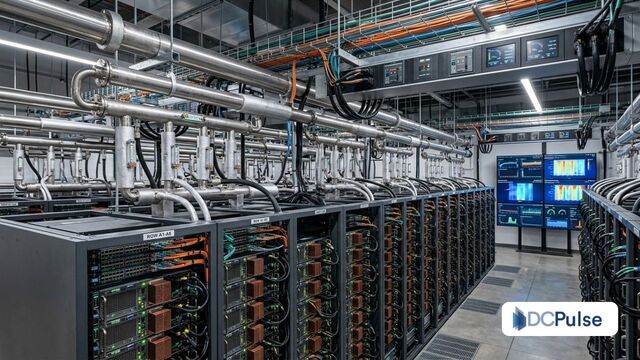
AI infrastructure introduces additional pressure on data center operations. High-performance computing environments can require substantial computing resources and place greater demands on power delivery, cooling, networking, and equipment management.
The operational challenge is not limited to deploying accelerated computing hardware. Infrastructure teams also need to maintain appropriate operating conditions as workloads change and equipment utilization fluctuates.
Automation can support this environment by connecting workload management with infrastructure monitoring and control systems. Automated processes can help operators identify changing conditions and apply predefined responses where appropriate.
The precise level of automation varies by facility and application. Critical infrastructure still requires appropriate safeguards, human oversight, and operational controls. However, automation can reduce the amount of repetitive intervention required from engineering and operations teams.
Power and Cooling Management Become More Dynamic
Power availability has become a central consideration in data center development and operation. Electricity infrastructure must support IT loads while maintaining appropriate levels of resilience and operational flexibility.
Cooling presents a similar challenge. Different computing architectures can generate different thermal profiles, while AI-oriented deployments may require cooling approaches that differ from conventional enterprise environments.
Automation can provide continuous monitoring of power and cooling conditions and help coordinate responses based on predefined operating parameters. Such systems can support the identification of abnormal conditions, equipment performance changes, and capacity constraints.
The value of automation therefore extends into facility management. Greater coordination between IT workloads and building infrastructure can help operators understand how changes in computing activity affect physical infrastructure.
Network Automation Supports Distributed Data Centers
The expansion of cloud services, edge computing, and distributed digital infrastructure is increasing the number of locations that operators may need to manage. A centralized operational model becomes more difficult when infrastructure spans multiple facilities and geographic regions.
Network automation can help standardize configuration and operational processes across these environments. Software-defined networking and orchestration technologies can provide mechanisms for managing network resources according to established policies.
Distributed infrastructure also creates a stronger requirement for consistent monitoring. An issue at a remote edge facility may require rapid identification even when an engineering team is located elsewhere.
Automation can provide a common operational framework across locations, helping teams manage infrastructure through standardized workflows rather than relying exclusively on site-specific procedures.
Automation Can Improve Operational Consistency
Human expertise remains essential to data center operations, particularly for complex incidents and critical infrastructure decisions. However, repetitive manual procedures can introduce variation between operators, shifts, and facilities.
Automated workflows can establish consistent procedures for tasks such as provisioning, configuration, monitoring, alert handling, and selected maintenance activities. Standardization can become especially valuable for organizations operating multiple facilities.
Operational consistency also supports documentation and governance. When processes are defined through software and policies, organizations can establish clearer controls around how infrastructure changes are introduced and managed.
The effectiveness of these systems depends on the quality of the underlying policies, monitoring data, integration architecture, and operational procedures. Automation does not eliminate the need for sound infrastructure management.
Predictive Operations Are Becoming More Relevant
Monitoring provides visibility into current infrastructure conditions, while more advanced automation can support operational decisions based on historical and real-time data.
Predictive approaches can help identify patterns associated with equipment performance or changing infrastructure conditions. Maintenance teams can then investigate potential issues before they develop into more significant operational events, where the available data and system design support such analysis.
Such capabilities can be relevant across power, cooling, networking, storage, and compute environments. The broader objective is a shift from purely reactive operations toward more proactive infrastructure management.
Data quality remains an important consideration. Incomplete telemetry, inconsistent device interfaces, and isolated management systems can limit the effectiveness of automated and predictive workflows.
Security Must Remain Central to Automation
Greater automation also expands the importance of cybersecurity. Automated systems can have access to infrastructure controls, network configurations, workloads, and operational data.
Unauthorized access to these systems could therefore create consequences beyond conventional software environments. Security controls, identity management, access restrictions, audit mechanisms, and appropriate separation of operational responsibilities remain important components of an automated data center architecture.
Automation platforms also require careful integration with existing infrastructure. Legacy equipment may use different interfaces or management protocols, creating challenges when operators attempt to introduce unified automation across older and newer systems.
A practical automation strategy consequently needs to account for interoperability and security rather than focusing only on operational efficiency.
Automation Is Becoming Part of Data Center Design
Automation is increasingly relevant before a facility becomes operational. Modern data center projects can incorporate monitoring, controls, orchestration, and digital management capabilities into the infrastructure design rather than adding them after deployment.
This approach can influence how operators structure facility management systems, network architecture, equipment interfaces, and operational workflows.
For developers and operators, automation can therefore become a design consideration alongside power, cooling, connectivity, physical security, and resilience.
The significance is particularly strong for facilities expected to support rapidly changing workloads. Infrastructure designed with automation capabilities can provide operators with more mechanisms to respond to changes without rebuilding the entire operational model.
The Next Generation of Data Center Operations
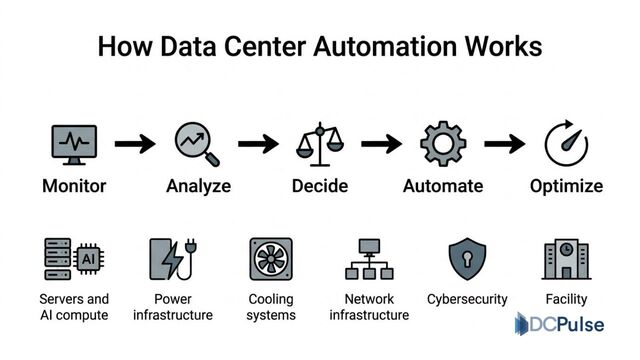
Data center automation is moving from a supporting operational function toward a broader component of digital infrastructure strategy. Its role spans IT provisioning, network management, power and cooling coordination, monitoring, maintenance, security, and distributed facility operations.
The technology does not remove the need for skilled engineers. Instead, its value lies in allowing teams to manage increasingly complex infrastructure through standardized processes, continuous visibility, and controlled machine-assisted operations.
Next-generation data centers will likely require closer coordination between computing resources and the physical systems that support them. Automation provides one of the mechanisms for creating that coordination.
As data center architectures continue to evolve around cloud services, distributed computing, and AI infrastructure, operational models will need to evolve alongside them. The ability to manage infrastructure consistently, securely, and responsively will remain a critical consideration for data center operators and the wider digital infrastructure ecosystem.