DCPulse
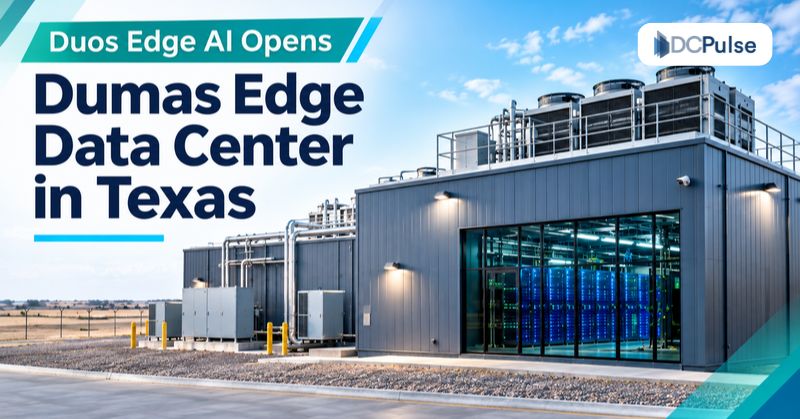
Duos Edge AI, a subsidiary of Duos Technologies Group, Inc. (NASDAQ: DUOT), announced plans to host an open house at its Dumas Edge Data Center in Texas on June 16, 2026. The event was designed to introduce community leaders, education stakeholders, business representatives, and industry participants to the company's localized computing infrastructure serving the Texas Panhandle.
Located at 421 W. 4th Street in Dumas, Texas, the facility supports Dumas Independent School District (Dumas ISD) and provides regional digital infrastructure for education, healthcare, telecommunications, and local businesses. The deployment reflects the growing role of edge data centers in extending computing capabilities beyond major metropolitan data center markets.
The open house was scheduled from 9:00 a.m. to 11:00 a.m. Central Daylight Time on June 16, 2026. The company subsequently reported community participation at the Dumas event, alongside a separate opening event in Hereford, Texas, on June 18, 2026.
Edge Infrastructure Supports Regional Digital Services
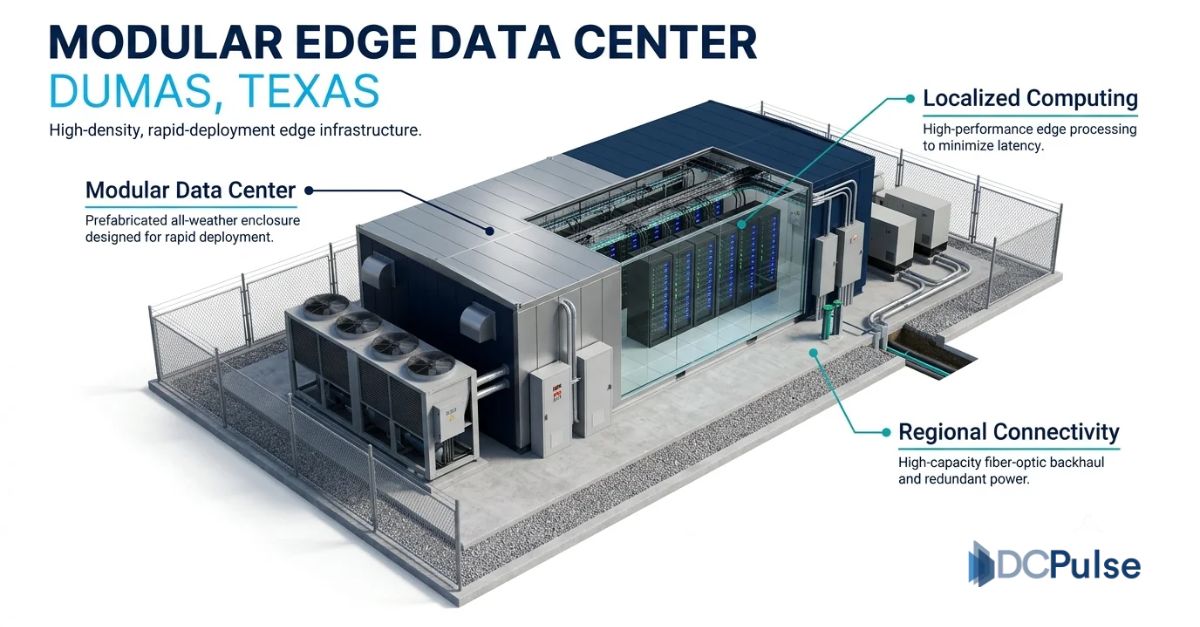
The Dumas Edge Data Center is designed to bring computing resources closer to organizations and users in the Texas Panhandle. Unlike large centralized facilities that serve geographically dispersed customers, edge data centers position computing and network infrastructure nearer to the locations where data is generated and consumed.
This approach can support applications requiring low latency, localized data processing, and dependable connectivity. Potential applications include education technology, healthcare services, enterprise computing, telecommunications, and artificial intelligence workloads.
According to Duos Edge AI, the Dumas deployment supports approximately 4,300 students across seven Dumas ISD campuses. The facility also serves as a regional infrastructure hub for healthcare providers, carriers, network operators, and businesses.
Modular Data Center Model Targets Underserved Markets
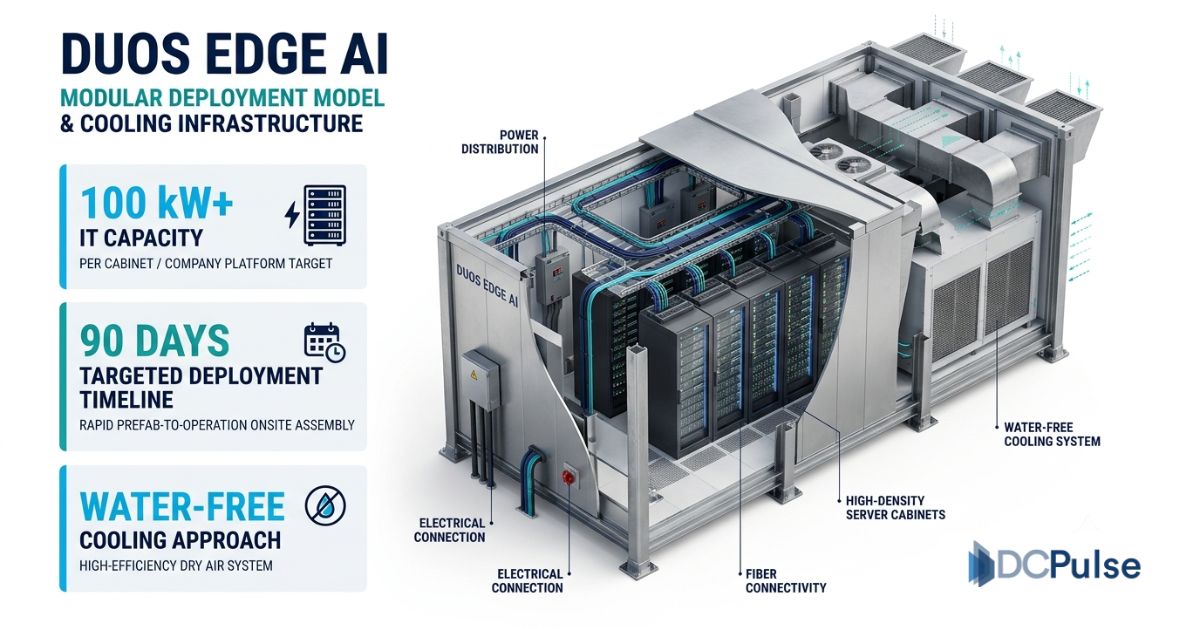
Duos Edge AI is developing a modular Edge Data Center (EDC) model intended to bring enterprise-grade computing infrastructure to smaller cities and underserved markets. The approach focuses on deploying compact facilities that can integrate with existing network infrastructure and expand as regional demand develops.
According to the company's published description, its modular facilities are designed to support more than 100 kW of IT capacity per cabinet, with a targeted deployment timeline of approximately 90 days. The company also aims to position its edge facilities within 12 miles of end users or connected devices. These are stated capabilities and deployment objectives of its platform rather than independently verified specifications for the Dumas installation.
The modular approach offers a different development model from conventional hyperscale campuses. Rather than concentrating large amounts of computing capacity in a single location, operators can deploy smaller infrastructure hubs closer to regional demand. This can help address connectivity gaps and provide local organizations with access to computing resources without requiring them to develop and operate their own data center facilities.
Education and Healthcare Among the Key Applications
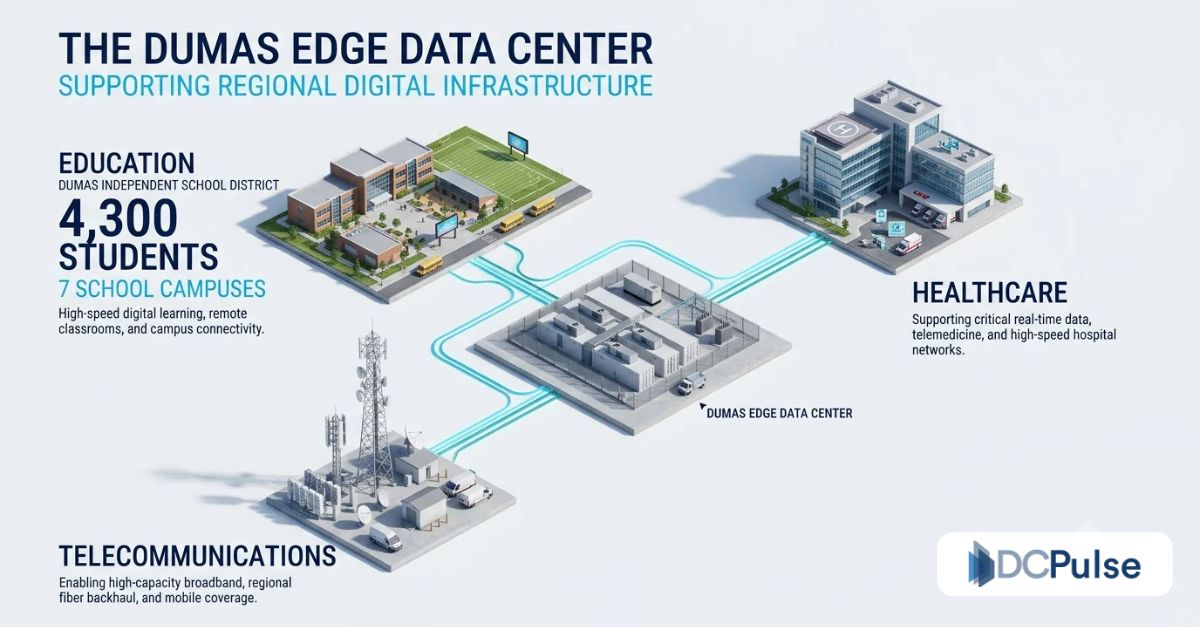
Education is a central application of the Dumas deployment. Dumas ISD serves approximately 4,300 students across seven campuses, and the facility is intended to strengthen the district's access to digital infrastructure and technology services.
Reliable computing and network infrastructure can support digital learning platforms, educational applications, data management, and connectivity between school campuses. Localized infrastructure may also help institutions access services that depend on consistent network performance.
Healthcare represents another potential application area. Medical organizations increasingly depend on digital records, connected systems, telemedicine platforms, and data-intensive applications. Regional edge infrastructure can support local processing and connectivity requirements, although the company announcement does not identify specific healthcare customers or deployed medical workloads at the Dumas facility.
For local enterprises and telecommunications providers, the facility offers an additional infrastructure option for network services and computing requirements. Its regional positioning is particularly relevant to communities where access to large data center markets may be limited.
Water-Efficient Operations and Infrastructure Design
Cooling and resource management remain important considerations for data center operators, particularly as digital infrastructure expands into regions with different environmental and utility requirements.
Duos Edge AI describes its Dumas facility model as operating without operational water consumption for cooling. The company also highlights a compact infrastructure footprint and integration with existing network infrastructure as characteristics of its modular approach.
Water-efficient cooling approaches can be relevant to data center development in regions where water availability is an important planning consideration. However, water consumption is only one aspect of environmental performance. Electricity requirements, cooling efficiency, power sourcing, equipment utilization, and lifecycle management also influence the overall sustainability of a facility.
For regional data center developers, modular infrastructure can provide flexibility in site selection and deployment. Nevertheless, power availability, fiber connectivity, physical security, cooling design, and operational reliability remain essential factors when evaluating new edge facilities.
Duos Edge AI Expands Its Texas Edge Data Center Presence
The Dumas facility forms part of Duos Edge AI's broader strategy to expand localized computing infrastructure across regional markets. The company's portfolio includes deployments and market locations in Texas communities such as Amarillo, Victoria, Waco, Corpus Christi, Lubbock, Abilene, Pampa, Dumas, and Hereford. Its published locations also include Westchester, Illinois.
The company's additional Texas open house announcements in 2026 demonstrate its efforts to introduce modular edge infrastructure to different regional markets. These deployments are intended to support education, businesses, network providers, and other organizations requiring localized computing resources.
This strategy reflects a broader infrastructure consideration for the data center industry: digital capacity is not limited to large metropolitan hubs. Smaller regional facilities can complement centralized cloud and colocation infrastructure by providing local connectivity, computing, and data-processing capabilities.
For Duos Technologies Group, the expansion of Duos Edge AI also represents an opportunity to develop its presence in the growing edge computing segment. The company's infrastructure strategy focuses on serving markets where localized digital services can address regional requirements.
Implications for the Edge Data Center Market
The Dumas deployment illustrates how smaller data center facilities can contribute to the development of digital infrastructure outside established technology corridors. Regional education systems, healthcare providers, telecommunications companies, and businesses increasingly depend on reliable connectivity and computing resources.
Edge facilities can complement hyperscale and colocation data centers rather than replace them. Large centralized facilities remain important for cloud platforms, large-scale AI training, and extensive computing workloads. Smaller edge locations can support applications that benefit from proximity to users, devices, and local networks.
The commercial opportunity will depend on regional demand, infrastructure costs, power availability, network partnerships, and the ability to maintain reliable operations. For operators, the challenge is to balance smaller deployment footprints with the redundancy, security, and service standards expected from professional data center infrastructure.
Outlook
Duos Edge AI's Dumas deployment highlights the potential of modular edge data centers to strengthen digital infrastructure in smaller communities. Its focus on education, healthcare, enterprise services, and regional connectivity demonstrates how localized computing can address infrastructure requirements beyond major metropolitan markets.
As AI adoption and cloud services expand, demand for distributed computing infrastructure may create additional opportunities for edge data center operators. The long-term success of these deployments will depend on commercial demand, reliable power and connectivity, operational efficiency, and the ability to deliver services at competitive costs.
For the wider data center industry, the Dumas facility represents an example of how distributed infrastructure can complement hyperscale and centralized cloud environments while extending digital capabilities to underserved regions.