DCPulse
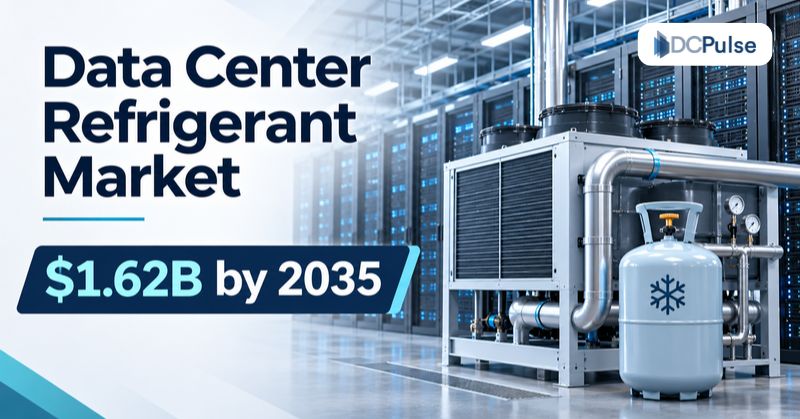
The global data center refrigerant market is projected to reach USD 1.62 billion by 2035, driven by increasing investments in data center infrastructure, growing demand for AI computing, and the need for efficient cooling technologies. The expansion of hyperscale facilities, cloud computing infrastructure, and high-performance computing (HPC) environments is increasing the importance of advanced thermal management systems. Refrigerants play an essential role in cooling equipment by transferring heat away from critical IT environments and supporting reliable facility operations.
As data centers accommodate increasingly demanding workloads, operators are evaluating cooling technologies that balance energy efficiency, equipment performance, and environmental requirements. The transition toward refrigerants with lower global warming potential (GWP), alongside developments in liquid cooling and advanced chiller systems, is creating new opportunities across the data center cooling supply chain.
Growing AI Infrastructure Increases Cooling Requirements
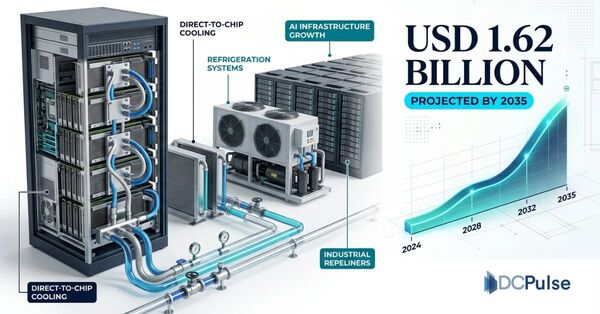
The rapid expansion of artificial intelligence, cloud computing, and high-performance computing is changing the thermal management requirements of modern data centers. AI training clusters and GPU-based computing systems generate substantial heat, requiring cooling infrastructure capable of maintaining suitable operating temperatures.
Traditional air-cooling systems remain widely used across existing facilities. However, increasing rack power densities are encouraging operators to consider alternative approaches, including direct-to-chip liquid cooling and immersion cooling. These technologies help manage heat closer to computing components while reducing dependence on conventional air-based cooling.
Refrigerants continue to have an important role in many facility-level cooling systems. Chillers and refrigeration equipment support chilled-water infrastructure, which can remove heat transferred from IT equipment. Consequently, the expansion of AI data centers is creating demand for cooling solutions that incorporate efficient refrigeration technologies.
Low-GWP Refrigerants Gain Industry Attention
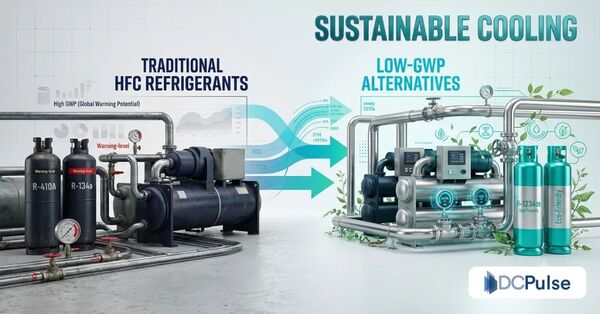
Environmental regulations are becoming an important factor influencing refrigerant selection. Traditional hydrofluorocarbons (HFCs) have been widely used in refrigeration and air-conditioning equipment, but several compounds have relatively high global warming potential.
Hydrofluoroolefins (HFOs), alternative refrigerant blends, and other lower-GWP options are attracting attention as manufacturers respond to environmental requirements. These alternatives are being evaluated for their environmental characteristics, cooling performance, safety classifications, and compatibility with existing equipment.
In the United States, Environmental Protection Agency regulations under the Technology Transitions Program introduce restrictions on certain high-GWP refrigerants in specific applications. Requirements affecting new data center and information technology equipment cooling systems are scheduled to take effect from January 1, 2027, for relevant equipment categories.
These regulatory developments could influence equipment procurement and infrastructure planning. Data center operators must consider refrigerant availability, equipment compatibility, servicing requirements, and long-term regulatory compliance when selecting cooling systems.
Liquid Cooling Reshapes Refrigeration Requirements
The growing adoption of liquid cooling is introducing new approaches to data center thermal management. Direct-to-chip cooling circulates specialized fluids through cold plates attached to processors, allowing heat to be removed directly from high-performance components. Immersion cooling uses dielectric fluids to manage heat from servers and other IT equipment.
However, liquid cooling does not necessarily eliminate the requirement for refrigerants. Facility-level cooling infrastructure may continue using chillers and refrigeration systems to remove heat transferred from IT equipment through secondary cooling loops.
The overall requirement for refrigerants depends on facility design, cooling architecture, climate conditions, operating temperatures, and heat-rejection technology. Economization systems can also reduce dependence on mechanical refrigeration when suitable outdoor conditions are available.
Regional Data Center Expansion Supports Market Growth+
Regional differences in data center construction, energy availability, environmental regulations, and climatic conditions are expected to influence refrigerant market development through 2035.
North America represents an important market, supported by its established hyperscale data center ecosystem, cloud infrastructure investments, and expanding AI computing capacity. The growing number of large-scale facilities is creating demand for refrigeration equipment, chillers, and supporting cooling technologies.
Europe is another significant market, where environmental regulations and energy-efficiency objectives are influencing cooling infrastructure decisions. Data center operators are increasingly considering refrigerant management, equipment efficiency, and environmental compliance when developing or upgrading facilities.
Asia-Pacific is expected to experience strong growth as cloud adoption, digital services, and hyperscale infrastructure investments expand across the region. Increasing data center development in major technology markets is supporting demand for cooling equipment and associated refrigerant solutions.
Refrigerant Management Becomes an Operational Priority
Refrigerant management is an important component of data center facility operations. Continuous cooling availability is essential for protecting critical IT equipment, making maintenance, leak detection, refrigerant handling, and equipment servicing important operational requirements.
Refrigerant leakage can contribute to greenhouse gas emissions, particularly when cooling systems use substances with high global warming potential. Regular inspections, appropriate maintenance procedures, and refrigerant recovery practices can help operators reduce avoidable losses.
Existing data center portfolios also present equipment replacement challenges. Facilities may operate cooling systems using different refrigerants depending on their installation dates and technical specifications. Transitioning to alternative refrigerants can require equipment modifications or complete system replacement rather than simply changing the refrigerant.
Opportunities for Cooling Equipment Manufacturers
The expanding data center refrigerant market is creating opportunities for refrigerant producers, HVAC manufacturers, chiller suppliers, and specialist cooling service providers. Demand for efficient refrigeration equipment and lower-GWP alternatives is encouraging manufacturers to develop solutions suited to evolving infrastructure requirements.
Product development will increasingly need to address conventional air-cooled facilities, chilled-water systems, and emerging liquid-cooling architectures. Refrigerant availability, equipment compatibility, operating efficiency, and safety requirements will remain important considerations for suppliers and data center developers.
Additional opportunities may emerge in refrigerant recovery, leak detection technologies, maintenance services, and specialized technician training as operators place greater emphasis on equipment lifecycle management.
Market Outlook
The data center refrigerant market is positioned for continued expansion as AI computing, cloud services, and hyperscale infrastructure increase global demand for advanced cooling systems. The projected market value of USD 1.62 billion by 2035 highlights the growing importance of refrigeration technologies within the digital infrastructure industry.
Future market development will depend on data center construction activity, cooling technology adoption, environmental regulations, and the availability of suitable refrigerant alternatives. Although liquid cooling and economization will influence facility designs, refrigeration systems are expected to remain relevant across many data center applications.
For data center operators, refrigerant selection is becoming an important infrastructure consideration involving operational reliability, energy efficiency, environmental performance, and regulatory compliance. The evolving relationship between computing density and thermal management will continue to shape opportunities for refrigerant manufacturers and cooling technology suppliers.