DCPulse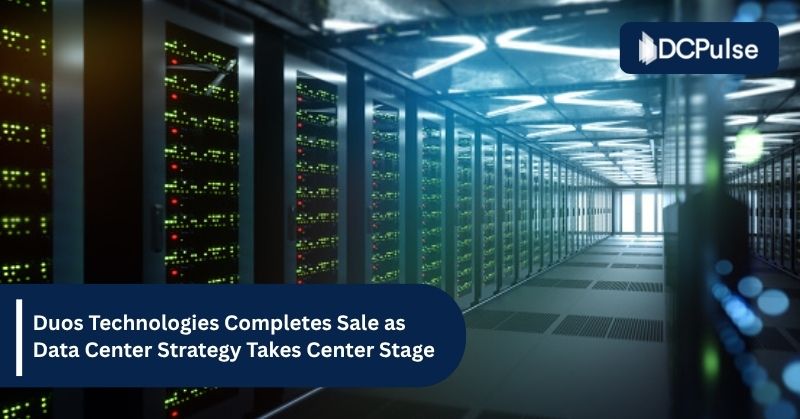
Duos Technologies Group has completed the sale of its wholly owned rail technology subsidiary, Duos Technologies, Inc., to Sandbank Acosta, LLC, separating the company’s legacy rail inspection business from its growing focus on data centers, edge computing, and digital infrastructure.
The transaction closed on August 5, 2026, with an effective date of June 30, 2026. Following the transaction, Duos Technologies, Inc. operates as an independent privately held company under the DuosTI brand, with Javier Acosta serving as president. Duos Technologies Group is now concentrating its operating activities around its data center and technology businesses.
For the data center industry, the transaction is significant because it further clarifies the direction of Duos Technologies Group. The company has been repositioning its business around edge data centers, AI infrastructure, and technology solutions, while the divestiture removes the rail technology subsidiary from its continuing operations.
A clearer focus on data center infrastructure
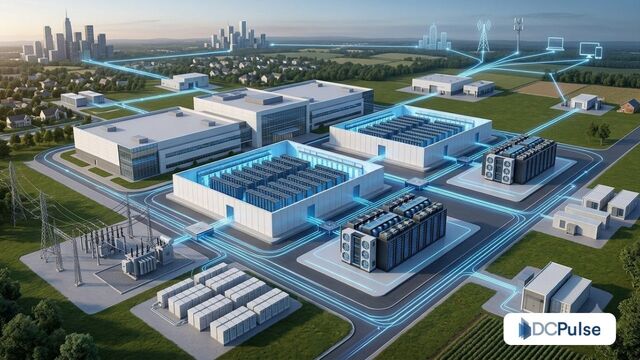
Duos Technologies Group has increasingly positioned itself as a digital infrastructure company rather than a diversified technology business.
The company’s latest regulatory filings state that, following the divestiture, its operations are conducted through Duos Edge AI, Inc. and Duos Technology Solutions, Inc., with those businesses focused on technology and colocation solutions for the data center market.
That transition matters as demand for distributed computing continues to expand. AI workloads, cloud services, and applications requiring low latency are creating requirements for compute capacity closer to users and data sources.
Edge data centers can play a role in that architecture by placing computing and networking resources in locations outside traditional large-scale hyperscale campuses. The model can support applications where latency, connectivity, and geographic distribution are important considerations.
Duos' strategy therefore places the company closer to the infrastructure layer supporting AI and cloud workloads rather than the rail inspection market that historically formed a major part of its business.
Rail technology moves into independent ownership.
The divested business will continue operating as DuosTI, preserving its focus on automated rail inspection technology while operating independently from Duos Technologies Group.
The separation means the rail technology operation will no longer be part of the public company's continuing operating structure. Duos Technologies Group is reporting the former Technologies segment as discontinued operations in its financial statements.
The transaction also includes arrangements intended to support the transition between the businesses. Duos Technologies Group and Sandbank Acosta entered into a transition services agreement and an employee leasing agreement as part of the closing.
The transaction is also classified as a related-party transaction because Adrian Goldfarb, Duos Technologies Group's interim chief financial officer, owns 50% of Sandbank Acosta. The company's filings state that the transaction was reviewed and approved by its board and was supported by an independent fairness opinion process.
Edge infrastructure becomes the strategic center.
The divestiture comes as Duos Technologies Group builds a larger presence in edge data center infrastructure.
The company's recent announcements show a series of developments around data center hosting and colocation. In August, Duos Technologies announced five-year hosting agreements with Axe Compute covering 55 MW of capacity, while another agreement announced in July involved a 10 MW colocation arrangement with a hyperscaler.
These developments illustrate the type of infrastructure market the company is targeting: facilities that can provide physical locations for compute capacity and support customers seeking additional infrastructure for AI and cloud workloads.
The focus on edge infrastructure also reflects a broader change in the data center market. Large centralized facilities remain critical for hyperscale computing, but distributed infrastructure can complement those campuses by providing capacity closer to regional demand.
For AI applications, geographic placement can become particularly important when workloads involve real-time processing, large data flows, or latency-sensitive services.
AI is reshaping requirements for distributed compute.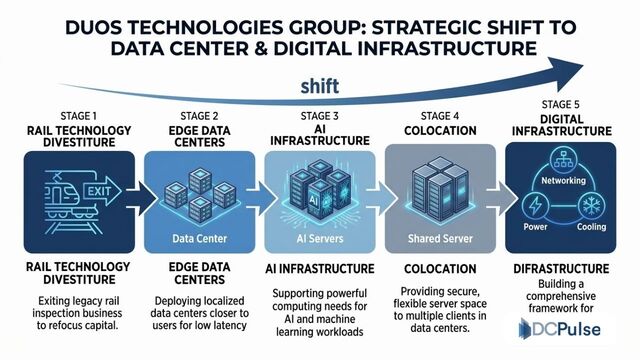
The growth of AI infrastructure is creating new requirements across the data center ecosystem.
High-performance computing workloads require substantial electrical capacity, advanced cooling systems, high-density rack infrastructure, and fast networking. Those requirements are driving investment in large AI campuses, but not every workload needs to be processed in a centralized hyperscale facility.
Edge AI represents another part of the infrastructure landscape. Processing data closer to where it is generated can reduce the need to move every workload to a distant cloud region and can support applications where response time or data locality matters.
Douglas Technologies Group's focus on edge data centers therefore places it within a broader infrastructure trend in which compute capacity is distributed across multiple locations.
The company has described its strategy as an expansion of its edge data center platform, alongside technology and colocation initiatives intended to support the growing data center market.
Power remains a critical consideration.
The shift toward data center infrastructure also brings the company's energy capabilities into closer alignment with its new direction.
Douglas Technologies Group's regulatory filings indicate that certain power and energy infrastructure expertise developed through its previous activities remains within the company and is being applied to support data center expansion initiatives, including evaluating power requirements and energy infrastructure for deployments.
That capability is relevant to the wider data center market because power availability has become one of the principal constraints on new capacity.
AI facilities can require significantly more power than conventional enterprise environments, while edge deployments face their own challenges around site selection, utility access, reliability, and operating costs.
For infrastructure developers, the ability to evaluate power requirements alongside site, networking, and compute considerations can therefore become an important part of deployment planning.
A more concentrated digital infrastructure strategy
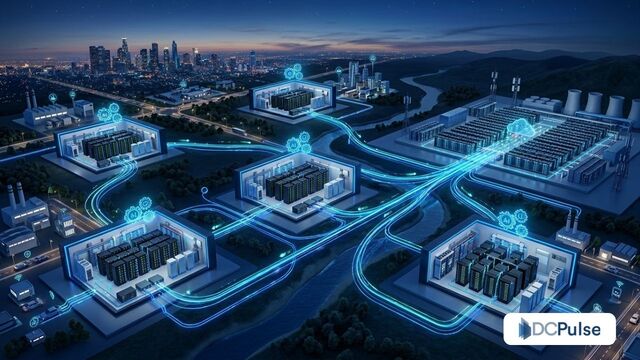
The sale of Duos Technologies, Inc., does not itself create new data center capacity. Its importance is strategic: it leaves Duos Technologies Group with a more concentrated operating structure around digital infrastructure.
The company's latest filing identifies Duos Edge AI and Duos Technology Solutions as the principal operating businesses following the divestiture, while Duos Energy Corporation continues work associated with the wind-down of its Asset Management Agreement with New APR.
That structure gives the company a more direct exposure to the data center market at a time when AI workloads are accelerating investment in compute infrastructure.
The approach also reflects a broader trend among infrastructure companies seeking to align their portfolios with long-term demand for computing capacity. Data centers increasingly sit at the intersection of real estate, power, networking, cooling, and software-driven workloads, making the sector substantially broader than traditional server hosting.
Execution will determine the next phase.
The divestiture provides greater strategic clarity, but the next stage will depend on how effectively Duos Technologies Group executes its data center expansion.
Edge facilities require more than physical buildings. Successful deployments depend on power availability, connectivity, cooling, customer demand, equipment procurement, and reliable operations. AI-orientated facilities add further requirements around high-density computing and networking.
The company's recently announced hosting and colocation agreements provide evidence of customer activity around its infrastructure strategy, but continued expansion will depend on converting planned and contracted opportunities into operating capacity.
For the broader digital infrastructure market, the transaction represents another example of a company reshaping its portfolio around the expanding demand for data centers and AI infrastructure.
With its rail technology business now operating independently as DuosTI, Duos Technologies Group has a more concentrated path toward edge data centers, AI infrastructure, and technology services. The significance for the industry will ultimately depend on how quickly that strategy translates into additional deployed capacity and how effectively the company competes in an increasingly crowded market for power, sites, and AI-ready compute infrastructure.