DCPulse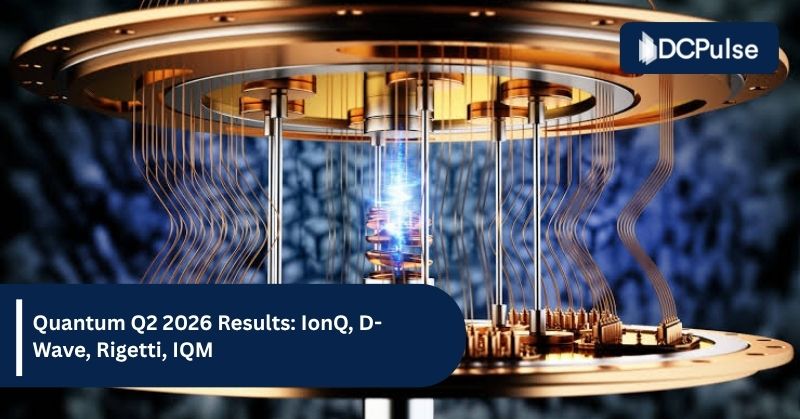
The second-quarter 2026 results from D-Wave Quantum, IonQ, Rigetti Computing and newly listed IQM Quantum Computers provide a snapshot of an industry moving from experimental systems toward commercial computing infrastructure. While the companies use different hardware architectures and business models, their latest results increasingly connect quantum computing with cloud services, high-performance computing, enterprise workloads and dedicated physical infrastructure.
The financial results also highlight a significant distinction between the companies. IonQ reported strong quarterly revenue growth, while D-Wave pointed to a sharp increase in first-half bookings. Rigetti continued investing heavily in research and development, and IQM reported its first financial results as a publicly traded company alongside an expanding order backlog.
For data center operators, the developments matter because quantum systems are increasingly being positioned alongside conventional CPUs, GPUs and high-performance computing environments rather than as completely separate computing platforms.
IonQ reports strong growth and expands its platform
IonQ recorded second-quarter revenue of $80.1 million, representing a 287% year-over-year increase. The company also raised its full-year 2026 revenue guidance to between $280 million and $290 million. IonQ said international, commercial and multi-product revenue all increased year over year during the quarter.
The quarter also followed IonQ's completion of its acquisition of SkyWater Technology on July 31, after the reporting period had ended. Consequently, the second-quarter financial results do not include SkyWater's financial contribution. The transaction nevertheless points toward a more vertically integrated approach to quantum hardware and semiconductor manufacturing.
From a digital infrastructure perspective, IonQ's platform strategy extends beyond quantum processors. The company describes its offering across computing, networking, sensing and security, while its quantum computing services are available through major cloud providers. That model places quantum resources within the broader cloud infrastructure ecosystem rather than requiring every customer to operate dedicated quantum hardware.
The development is relevant to data center operators because cloud-accessible quantum computing can create a model in which classical infrastructure handles conventional workloads while quantum resources are accessed as specialized compute services.
D-Wave sees bookings increase as commercial workloads develop
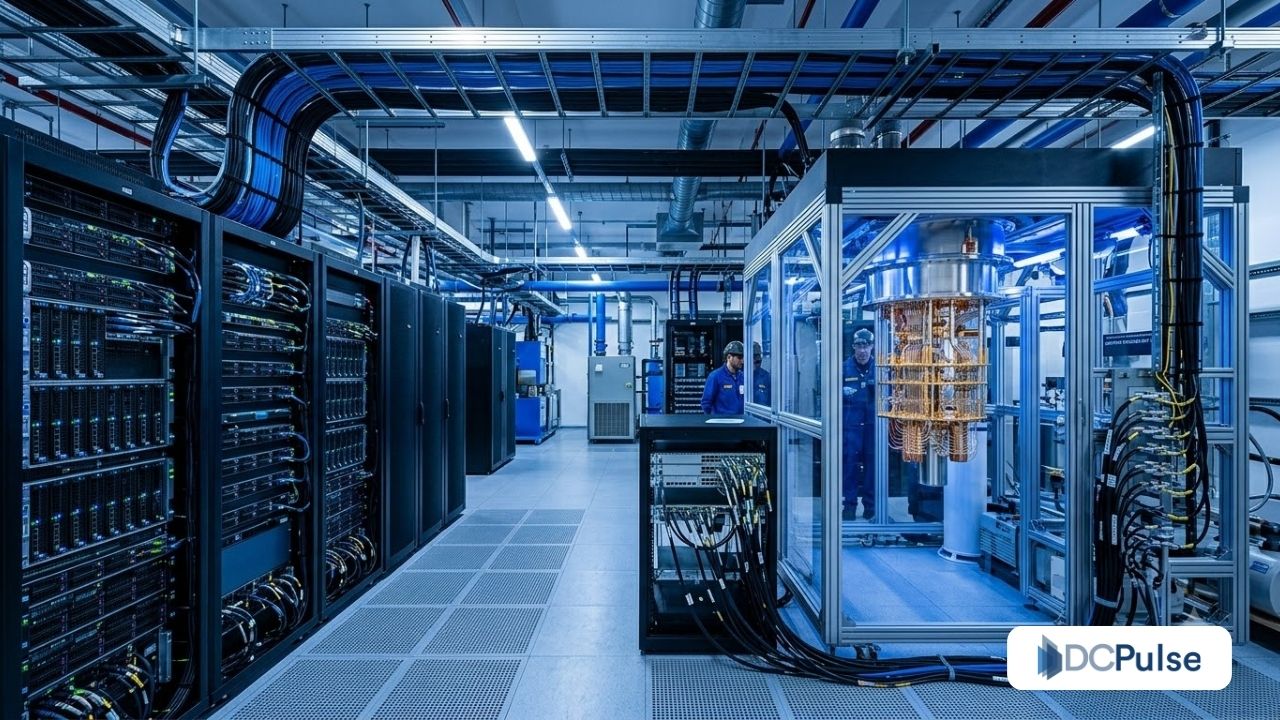
D-Wave reported second-quarter revenue of $3.1 million, essentially unchanged from the same period a year earlier. The company's first-half bookings, however, reached $35.5 million, compared with $2.9 million in the first half of 2025. D-Wave also reported $40.7 million in remaining performance obligations at the end of June.
The company reported that 62.4% of second-quarter revenue came from commercial customers. During the first half, D-Wave recognized revenue from more than 100 individual customers, with more than half classified as commercial enterprises. Its quantum-computing-as-a-service revenue from production applications also represented a larger share of QCaaS revenue than in the first half of 2025.
D-Wave's infrastructure roadmap is also becoming more relevant to system-scale deployment. The company is pursuing both annealing and gate-model systems, with its annealing roadmap involving multi-chip fabrics and superconducting interconnect technologies.
For data centers, this points toward a future in which quantum systems may require increasingly sophisticated physical infrastructure, including specialized interconnects, control electronics and cooling environments. The exact infrastructure requirements will vary considerably by quantum architecture, meaning quantum computing should not be treated as a single standardized data center workload.
Rigetti continues to invest in hardware development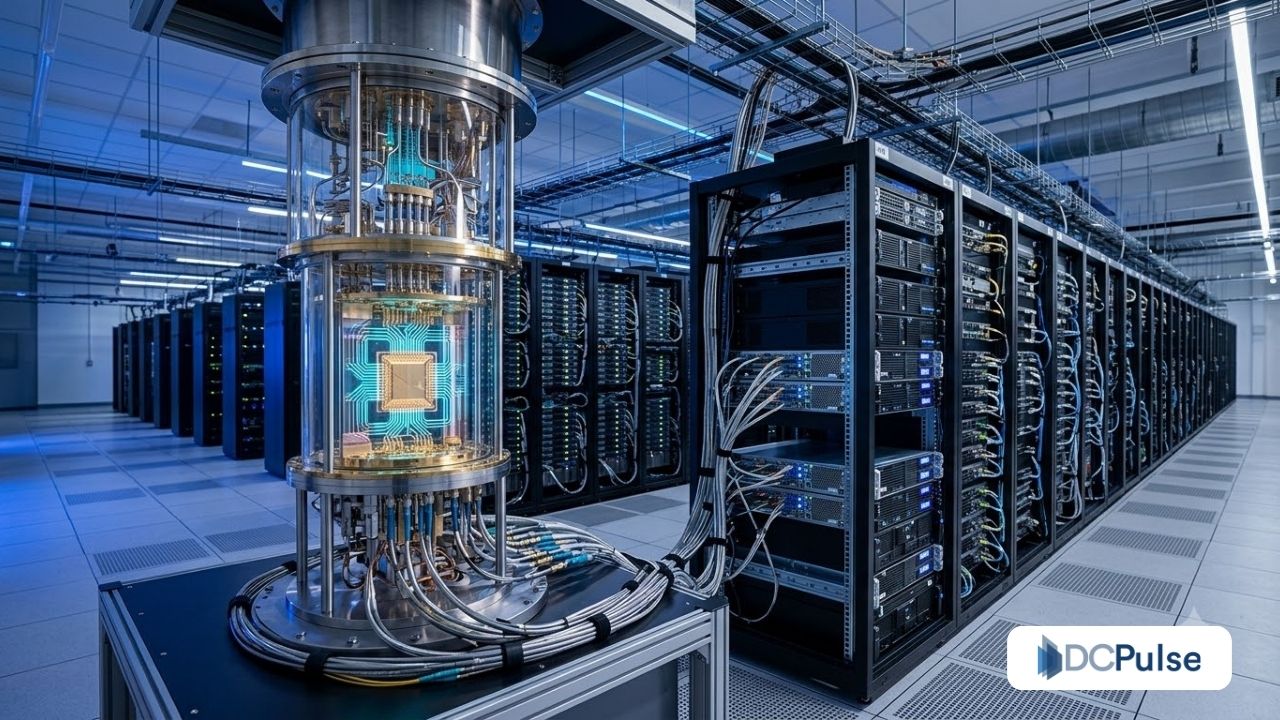
Rigetti reported second-quarter revenue of $5.1 million, compared with $1.8 million in the same quarter of 2025. Its operating loss was $28.1 million, while research and development expenses reached $20.7 million during the quarter.
The financial profile reflects the capital-intensive nature of developing superconducting quantum computing hardware. Rigetti's balance sheet included $27.8 million in cash and $365.9 million in short-term investments at June 30, 2026, alongside additional long-term investments.
Rigetti is also pursuing physical system deployments and hybrid quantum-classical computing. Its second-quarter update included progress on international expansion and a planned investment program in the United Kingdom aimed at quantum computing development, including physical systems, facilities and talent.
The infrastructure implications extend beyond the quantum processor itself. As systems move into customer facilities, operators need suitable space, power, cooling, networking and integration with conventional computing resources. Those requirements make quantum hardware increasingly relevant to the planning of specialized research data centers and HPC environments.
IQM enters public markets with an infrastructure-focused model
IQM Quantum Computers began trading on Nasdaq Helsinki on July 3, 2026, making its second-quarter results the company's first earnings report as a publicly listed company.
For the first six months of 2026, IQM reported revenue of €8.9 million and an operating loss of €60.5 million. Its order backlog stood at €69.1 million at June 30 and had increased to more than €102.1 million by August 3 following additional orders. The company also reported a cash balance of €309.4 million as of July 2, including listing proceeds.
IQM's business model is particularly relevant to data center infrastructure because the company focuses on on-premises quantum systems. Its systems are designed for enterprises, research institutions, high-performance computing centers and national laboratories, allowing customers to own and control quantum infrastructure directly.
The company also reported more than €40 million of investment in expanding its proprietary fabrication facility, with the stated objective of doubling cleanroom capacity and enabling production of up to 30 full-stack quantum computers per year.
HPC and quantum infrastructure are beginning to converge
One of the clearest infrastructure signals from IQM is its work to integrate quantum computers into existing HPC environments. The company launched an HPC Integration Service in May that allows its quantum systems to operate as computational nodes within an HPC environment using the Slurm workload manager.
The approach is significant for data center architecture because it treats a quantum processor as another specialized resource within a larger computing environment. CPUs, GPUs and quantum processors can potentially participate in coordinated workflows, with conventional systems handling tasks that remain better suited to classical computing.
The LUMI AI Factory provides a concrete example. IQM was selected to deliver the LUMI-IQ quantum computer for installation at CSC's data center in Kajaani, Finland. The system is intended to connect quantum computing with the LUMI AI Factory's existing HPC and AI environment, creating a hybrid platform for research and industrial applications.
Such deployments suggest that future quantum infrastructure may increasingly be colocated with supercomputing and AI resources. That could create new requirements for data center design, including dedicated space, specialized cooling, secure networking and interfaces between quantum control systems and conventional compute clusters.
Financial results point toward different infrastructure models
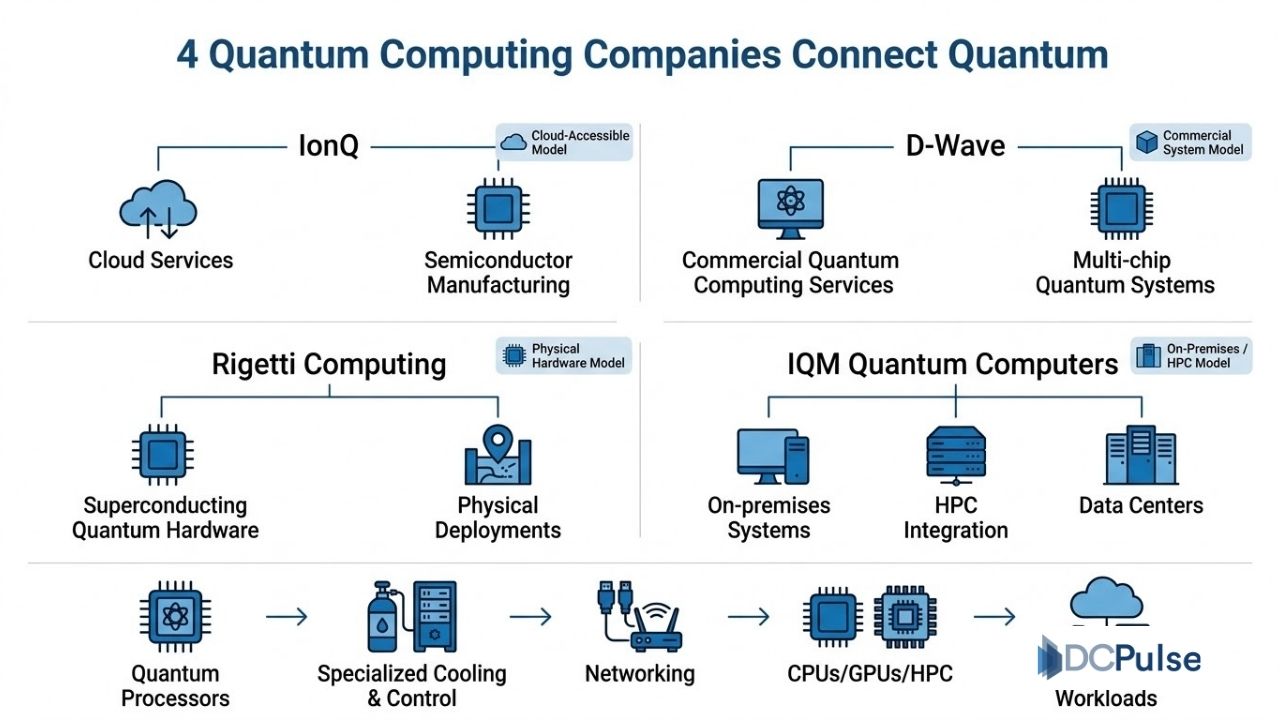
The four companies' second-quarter results demonstrate that there is no single commercial model emerging for quantum computing. IonQ is building a broader full-stack platform with cloud access and semiconductor capabilities. D-Wave is combining quantum computing services with system sales and an expanding commercial customer base. Rigetti continues to invest heavily in superconducting quantum hardware, while IQM is emphasizing customer-owned systems and integration with HPC environments.
For the data center industry, that diversity matters. Cloud-accessible quantum systems can be integrated into existing service environments, while on-premises systems require facilities capable of hosting specialized quantum hardware. HPC-integrated deployments sit between those models, linking quantum processors directly with established supercomputing infrastructure.
The next stage of the market will therefore depend not only on processor performance and qubit development, but also on how effectively quantum systems can operate alongside the digital infrastructure already supporting AI, HPC and cloud computing.
The second-quarter results show that this transition is already taking shape. Financial performance remains uneven across the sector, but commercial contracts, system deployments, manufacturing expansion and HPC integration are creating tangible connections between quantum computing and the physical infrastructure of the data center industry.