DCPulse
Ecolab is positioning its water management, cooling optimization, and operational services around one of the increasingly important infrastructure challenges facing data centers: how to support higher computing density while managing water, energy, equipment reliability, and operational risks. Through its Nalco Water business, the company provides data center-focused programs covering cooling water management, water safety, lifecycle planning, and operations management. Its role sits primarily around the non-IT infrastructure that enables computing facilities to operate reliably rather than around servers, networking equipment, or core IT systems.
The relationship between cooling and digital infrastructure has become more significant as data centers accommodate higher-performance computing. Ecolab's data center portfolio is designed around this intersection, with services intended to help operators manage cooling assets while addressing water usage, equipment health, and operational continuity. The company's offering spans from site selection and design through ongoing facility operations, giving it a role across multiple stages of a data center's lifecycle.
Cooling Management Moves Closer to the Core Infrastructure Strategy
Cooling systems are essential to maintaining operating conditions for data center equipment, and water quality can directly affect the performance and longevity of water-based cooling infrastructure. Ecolab's data center cooling programs focus on issues including corrosion, scale, microbiological growth, and equipment condition. Its 3D TRASAR cooling water technology is designed to monitor and manage cooling water conditions, while related programs address cleaning, disinfection, and water safety.
The operational implications extend beyond cooling efficiency. Poorly managed cooling-water conditions can affect heat-transfer equipment and contribute to maintenance requirements, making water treatment part of broader infrastructure reliability planning. Ecolab's approach therefore connects water chemistry and monitoring with operational objectives such as uptime, water usage effectiveness, power usage effectiveness, and asset health.
For data center operators, this approach becomes particularly relevant when cooling systems need to operate continuously under changing thermal loads. The challenge is not limited to maintaining temperature. Cooling infrastructure must also remain reliable, maintainable, and compatible with the facility's broader water and energy strategy.
AI Is Expanding the Cooling Challenge
Artificial intelligence is changing the thermal profile of data center infrastructure. High-performance computing systems can create greater heat densities than many conventional enterprise workloads, increasing the importance of cooling architecture and thermal management.
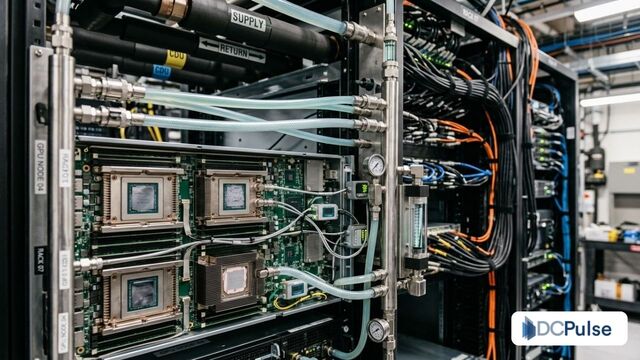
Ecolab has responded with technologies aimed at direct-to-chip liquid cooling. In May 2025, the company announced 3D TRASAR Technology for Direct-to-Chip Liquid Cooling, describing it as a system designed to monitor coolant health in real time through indicators including temperature, pH, and flow rates. The company positioned the technology as part of a broader site-to-chip cooling portfolio for high-performance data centers.
The shift toward liquid cooling creates a different set of infrastructure management requirements. Instead of relying only on conventional facility cooling systems, operators increasingly need to consider coolant quality, fluid circulation, heat rejection, monitoring, and interactions between IT equipment and facility-level cooling infrastructure.
Ecolab's expansion into direct-to-chip cooling places its water-management expertise closer to the computing equipment itself. That development is relevant to AI infrastructure because thermal management increasingly becomes a design consideration alongside electrical capacity, rack density, and network architecture.
Water Management Extends Beyond Cooling Towers
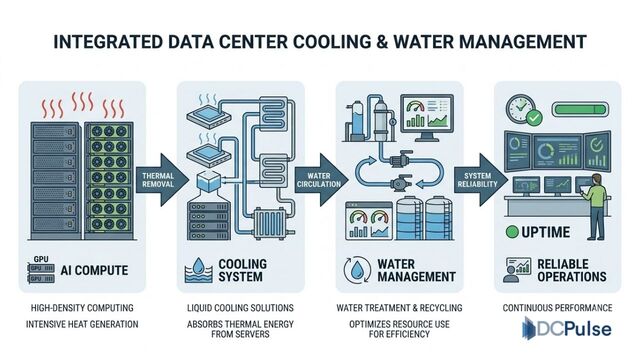
Water management in a data center is broader than cooling-tower treatment. Ecolab's lifecycle approach includes water entering and leaving the facility, alternative water supplies, water reuse, monitoring, and preparation for future water-related challenges. The company also describes services covering water treatment during installation and start-up, followed by ongoing optimization and assessment once a facility becomes operational.
This lifecycle perspective is important for new facilities because water considerations can influence site selection and infrastructure design before construction begins. Alternative water sources, treatment systems, reuse strategies, and discharge requirements can become part of the engineering discussion rather than being addressed only after a facility starts operating.
Existing facilities face a different challenge. Operators may need to improve water performance without replacing major cooling infrastructure. Ecolab's stated approach includes facility audits and ongoing monitoring intended to identify opportunities for water-use optimization while maintaining cooling-system performance.
Case Studies Illustrate the Operational Focus
Ecolab's published customer material provides examples of how water management can be integrated into data center operations. One case study describes a Singapore colocation facility that used highly treated reclaimed water as cooling-water makeup and sought to increase water reuse while improving cooling-water management. The solution combined changes to water-treatment chemistry, monitoring technology, and reverse-osmosis-based recycling.
Another published case study involving a data center in India describes an approach using ultrafiltration and reverse osmosis to treat facility effluent for reuse in irrigation and cooling-tower makeup. Ecolab reports that the project reduced annual water consumption and addressed discharge requirements, illustrating how treatment infrastructure can become part of a data center's broader water strategy.
These examples also demonstrate that water strategies can differ substantially between facilities. Local water quality, discharge requirements, available supply, cooling architecture, and site conditions influence the appropriate solution. A technology that works at one data center cannot automatically be treated as a universal operating model.
Operations Management Adds a Services Layer
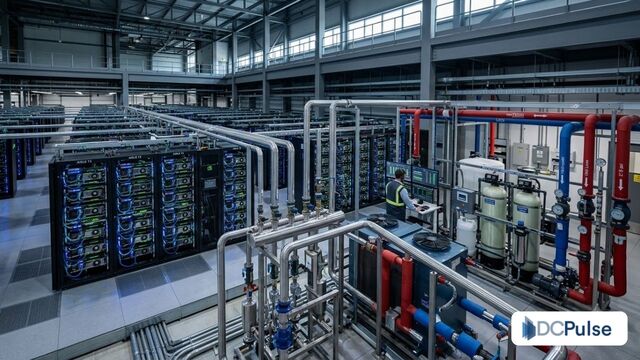
Ecolab's data center offering also extends into managed operations. Its Nalco Water operations management program provides on-site oversight for non-IT cooling assets, including routine maintenance, testing, sampling, and water-room management. The company says the service is intended to help reduce data center outages and support uptime objectives while allowing data center personnel to focus on core IT operations.
This services model reflects another challenge associated with scaling digital infrastructure: specialized cooling and water systems require specialized operational knowledge. As data centers become more complex, facility teams must manage interactions among electrical systems, mechanical equipment, cooling infrastructure, water treatment, environmental requirements, and IT loads.
For operators, outsourced expertise can represent one way to supplement internal facility capabilities. The value depends on the site's operating model, available technical staff, system complexity, and requirements for on-site support.
Responsible Scaling Depends on Local Infrastructure Conditions
Ecolab's role in data center infrastructure is ultimately tied to a broader question facing the industry: how can new computing capacity be developed without treating water and cooling as secondary considerations?
The answer varies by location and facility design. Data centers can use different combinations of air cooling, evaporative systems, closed-loop systems, direct liquid cooling, reclaimed water, treatment technologies, and heat-reuse approaches. Local climate, water availability, regulatory requirements, energy sources, and customer workloads all influence the appropriate configuration.
Ecolab's portfolio addresses several of these areas through water treatment, monitoring, lifecycle planning, cooling management, and operational services. Its expansion into direct-to-chip liquid cooling also reflects the changing relationship between high-density computing and facility infrastructure.
As AI and cloud infrastructure continue to require additional computing capacity, cooling and water management are becoming increasingly connected to data center planning. Ecolab's position in this ecosystem is therefore less about building the computing facility itself and more about helping operators manage the water, cooling, and operational systems that allow high-density digital infrastructure to function reliably. That distinction places the company within an important supporting layer of the global data center supply chain.