DCPulse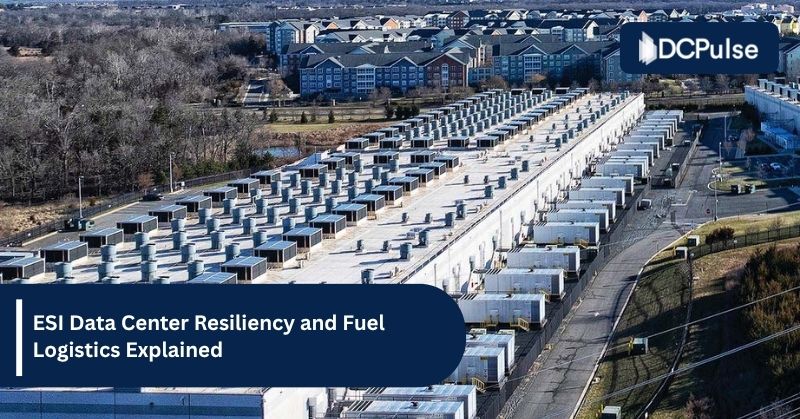
Data center reliability depends on more than electrical redundancy, backup generators, and cooling systems. Fuel availability, quality, and delivery are equally important to maintaining continuity when grid power is interrupted. As digital infrastructure expands and uptime expectations become more demanding, fuel management is gaining greater attention within mission-critical operations.
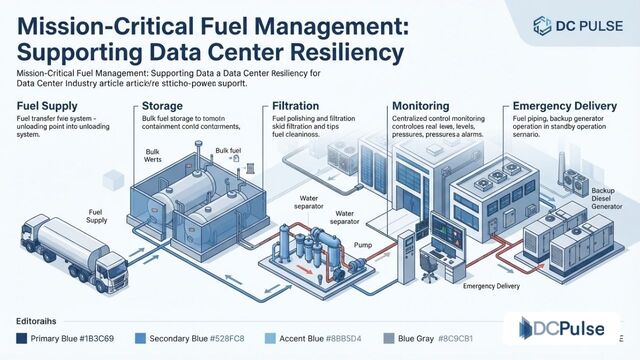
ESI Total Fuel Management is addressing this challenge through an integrated approach to fuel supply, storage, filtration, monitoring, and logistics. Its services focus on supporting the fuel infrastructure that enables standby generators to operate when facilities need backup power.
Fuel Management as a Resiliency Priority
Backup generators provide an essential layer of protection for data centers during power disruptions. However, generator capacity alone does not guarantee operational readiness. Fuel contamination, water, sediment, and equipment problems can affect the performance of diesel-powered systems, particularly when fuel remains stored for extended periods.
ESI’s fuel management offering includes fuel polishing, filtration, delivery, and equipment support. These services address different risks associated with fuel storage and generator operation.
For data center operators, the distinction between fuel quantity and fuel readiness is important. A facility may have sufficient fuel reserves but still face operational risks if fuel quality deteriorates or transfer systems fail to perform. Regular testing, filtration, maintenance, and monitoring can help identify issues before they affect emergency power operations.
The company’s total fuel management approach places these activities within a connected operational framework. That perspective is relevant to data center owners managing infrastructure where backup power reliability is closely tied to business continuity.
Connecting Fuel Logistics With Infrastructure
Modern data center campuses can include multiple generator sets, storage tanks, day tanks, pumps, controls, and monitoring systems. The reliability of the backup power chain depends on coordination across these components.
ESI’s total fuel management model connects fuel supply, delivery, storage, consumption, and maintenance. The company also provides engineering and support services for mission-critical fuel systems.
This approach has implications for both new developments and existing facilities. During construction, fuel system design must align with generator requirements, storage capacity, transfer arrangements, and operational procedures. Existing facilities may require upgrades, maintenance, or integration of additional monitoring and filtration equipment.
A coordinated approach can help operators better understand how fuel infrastructure supports overall power resilience. It can also create a clearer connection between fuel-related maintenance and broader facilities management.
Emergency Delivery and Supply Assurance
Fuel logistics becomes particularly important during prolonged power disruptions or regional emergencies. Severe weather, transportation challenges, and fuel supply shortages can complicate the replenishment of on-site reserves.
ESI’s services include fuel supply and delivery capabilities intended to support mission-critical customers. For data center owners, the value of these arrangements extends beyond routine deliveries.
Emergency planning may involve reviewing supplier relationships, delivery access, storage capacity, fuel consumption, and contingency procedures. These considerations help operators assess how long backup systems can remain operational and how quickly fuel reserves can be replenished.
The reliability of a fuel strategy therefore depends on both on-site infrastructure and external supply arrangements. A facility with substantial storage still requires dependable access to replenishment when an outage extends beyond planned operating assumptions.
For operators, fuel logistics can be evaluated alongside electrical and mechanical resilience planning rather than treated solely as a procurement function.
Monitoring and Operational Visibility
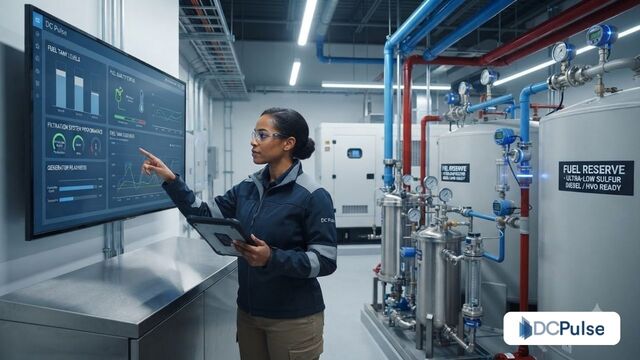
Fuel monitoring can provide data center teams with greater visibility into storage levels, consumption, and system condition. Such information can support maintenance planning and replenishment decisions.
ESI offers fuel consumption monitoring and describes data collection as part of its broader fuel management ecosystem. Its iFUELSECURE platform is positioned to provide visibility into fuel and backup power system health.
For facilities teams, this type of visibility can help connect fuel operations with broader infrastructure management. Consumption data may support runtime assessments, while maintenance records and fuel quality information can provide additional context.
Monitoring technology, however, is only one part of the resilience process. Accurate data, reliable sensors, trained personnel, and effective response procedures remain important to the value of any monitoring system.
The operational benefit depends on how information is used. Alerts that reach the appropriate teams, maintenance procedures that address identified issues, and replenishment plans that reflect actual consumption can all contribute to better preparedness.
Alternative Fuels and Future Resilience
Environmental considerations are also influencing backup power planning. Data center operators are evaluating ways to manage emissions while maintaining dependable emergency generation.
ESI has highlighted hydrotreated vegetable oil, or HVO, as an alternative fuel for suitable data center applications. HVO’s role depends on equipment compatibility, manufacturer approvals, supply availability, and operating requirements.
Alternative fuels may offer opportunities for emissions management, but their adoption must also account for storage, delivery, and emergency replenishment. Reliability remains a central consideration when evaluating any change to a standby power fuel strategy.
For data centers, fuel transitions may require coordination among equipment manufacturers, fuel suppliers, engineering teams, and facilities operators. The practical suitability of a fuel depends on the requirements of the specific installation rather than its environmental profile alone.
The Broader Implications for Data Centers
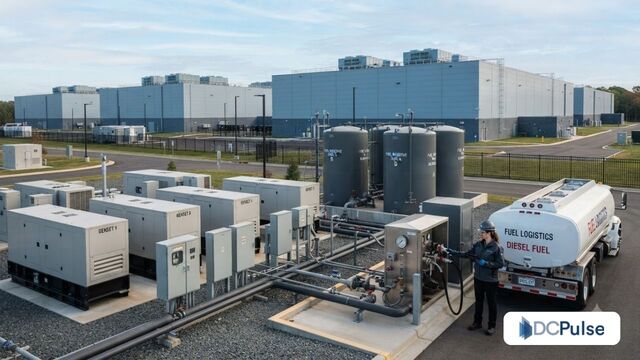
ESI’s approach reflects a wider shift toward treating fuel management as an integrated part of mission-critical infrastructure. Generator performance, fuel quality, storage, monitoring, and logistics are closely connected.
For data center owners and operators, this perspective can inform both project design and ongoing facility management. Fuel system reviews, maintenance planning, supply assurance, and emergency response procedures can all contribute to a more comprehensive resilience strategy.
The importance of this approach grows as operators manage larger campuses and more complex backup power arrangements. Different facilities may have different fuel requirements, operating conditions, and supply constraints, making a consistent management framework useful for coordinating these variables.
Fuel management also intersects with broader infrastructure priorities, including operational efficiency, environmental planning, and lifecycle maintenance. These connections place fuel systems within the wider discussion around reliable and sustainable digital infrastructure.
Building a More Comprehensive Resiliency Strategy
As digital infrastructure continues to expand, dependable backup power will remain a fundamental operational requirement. Fuel logistics is an important part of that equation, and integrated management approaches such as ESI’s highlight the need to consider the entire fuel lifecycle.
The central challenge is not simply storing enough fuel. It is ensuring that the fuel system, supporting equipment, and delivery arrangements remain ready to perform when mission-critical operations depend on them.
For data center operators, that means treating fuel quality, supply assurance, monitoring, and maintenance as connected elements of resilience planning. ESI’s model provides an example of how specialized fuel management services can support that objective while the industry continues to evaluate new technologies, operating practices, and energy options.