DCPulse
Neocloud financing is entering a new phase as lenders, chipmakers, infrastructure providers, and institutional investors develop structures designed to fund the enormous capital requirements of AI computing.
The model is increasingly built around contracted demand, GPU-backed assets, and financial commitments from major technology companies. Recent transactions show that AI infrastructure financing is becoming more sophisticated, with facilities structured around customer contracts and high-performance computing assets rather than conventional corporate balance sheets. CoreWeave, for example, has expanded its use of HPC infrastructure-backed financing, including an $8.5 billion facility announced in March and a further $3.1 billion facility in May.
Yet another question is becoming harder to ignore: what happens when the financial backstop works, but the infrastructure supporting the revenue does not?
Financing can secure demand without securing uptime.
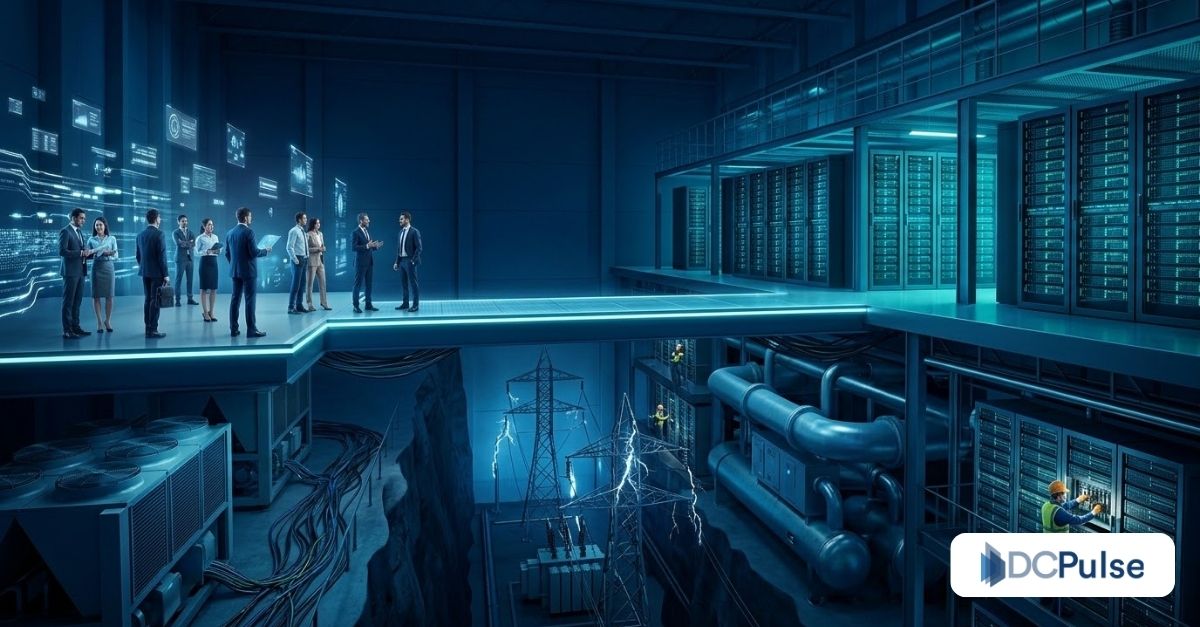
A neocloud's economics depend on a simple operational equation. GPUs must be available, connected, and sufficiently utilized for the provider to generate revenue from customers.
Financial arrangements can reduce uncertainty around demand. Long-term customer contracts can give lenders greater visibility into future cash flows, while GPU-backed structures can provide collateral and additional protection.
That protection does not automatically guarantee that a data center will deliver the computing capacity assumed in the financing model.
A GPU cluster can have a customer contract and financing in place while still being exposed to interruptions involving electricity, cooling, networking, hardware maintenance, or facility operations.
This distinction becomes important because neocloud customers generally purchase an outcome rather than a physical server. The customer expects usable compute capacity to be available when required. A financing agreement, by contrast, primarily addresses whether sufficient cash will be available to service debt.
Those are related risks, but they are not identical.
The operational layer becomes the critical link.
AI infrastructure is unusually dependent on tightly integrated physical systems.
High-density GPU deployments require substantial electrical capacity, sophisticated thermal management, and high-performance networking. A failure in one layer can affect the availability of the entire computing environment.
Power infrastructure therefore becomes more than a prerequisite for construction. It becomes part of the revenue-generation mechanism.
Cooling has the same importance. As GPU density increases, thermal management becomes increasingly central to maintaining predictable compute availability. Networking also matters because individual GPUs increasingly operate as components within large distributed clusters rather than isolated machines.
The result is a chain of dependencies.
A neocloud may have financing.
The financing may be supported by customer commitments.
The customer may have genuine demand.
But the expected revenue still depends on the physical infrastructure operating at the required level.
Data center operators become part of the credit equation.
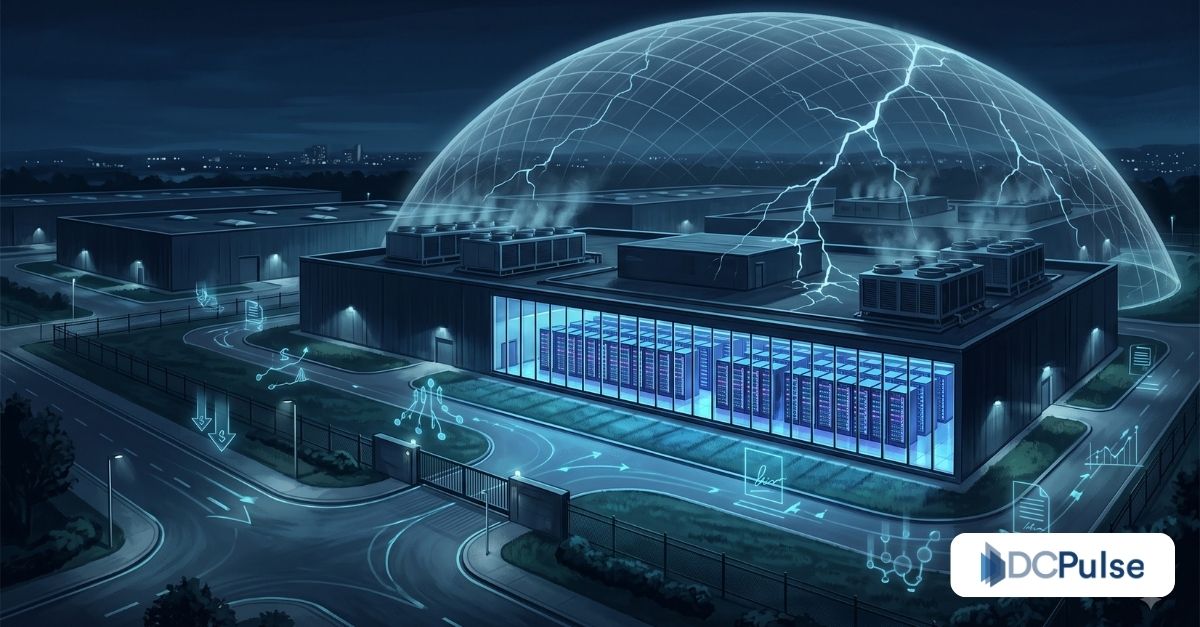
This structure changes the relationship between neoclouds and data center operators.
Traditional cloud economics can place much of the infrastructure risk on the cloud provider. Neoclouds, particularly those scaling rapidly through leased or dedicated capacity, can distribute that risk across multiple parties.
A neocloud may purchase or finance GPUs while leasing data center capacity from another infrastructure company. The resulting business model can involve separate agreements covering facility availability, GPU capacity, and customer compute delivery.
That creates an operational chain in which the weakest link can affect the financial outcome.
For lenders, assessing the creditworthiness of the neocloud alone may therefore be insufficient. The physical facilities, utility arrangements, cooling systems, network architecture, maintenance processes, and service-level agreements supporting the financed GPUs can all influence the ability to generate contracted revenue.
CoreWeave's financing disclosures illustrate how closely customer contracts and infrastructure assets are becoming connected in AI infrastructure financing. Its financing facilities have been structured to support infrastructure associated with contracted customer deployments.
The broader implication is that infrastructure performance is becoming increasingly relevant to credit underwriting.
SLAs could become financially significant.
Service-level agreements traditionally function as commercial commitments between infrastructure providers and customers.
In a highly leveraged neocloud environment, however, an SLA can have consequences beyond customer satisfaction.
A prolonged outage can reduce billable compute. Service credits can further reduce revenue. Additional costs may arise from emergency repairs, replacement equipment, or temporary capacity.
At the same time, debt obligations continue.
That creates a potential mismatch between operational disruption and financial obligations. Revenue can decline immediately when infrastructure availability falls, while debt service remains fixed according to the financing schedule.
The issue is particularly relevant for large AI clusters because the financial model can depend on sustained utilization over several years.
A financing structure that protects against insufficient customer demand is therefore addressing only one part of the downside scenario. Infrastructure availability represents another layer that must be considered independently.
The GPU is not the entire asset.
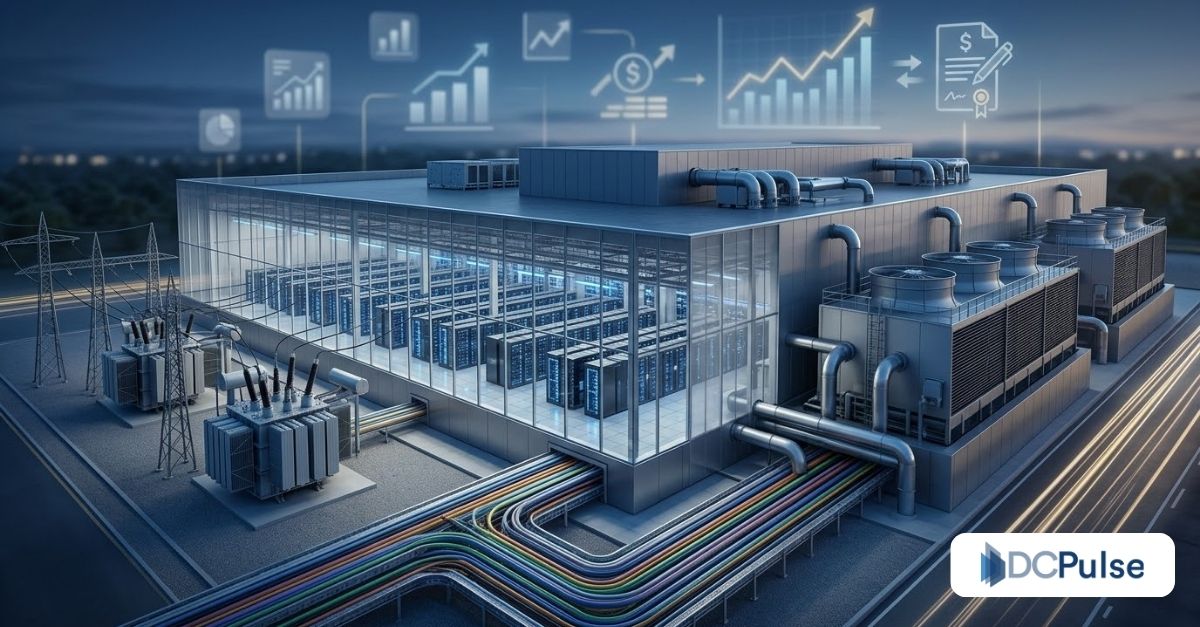
The growing use of GPUs as financing collateral also highlights an important distinction.
A GPU has identifiable physical value, but the economics of a neocloud depend on much more than the hardware itself. The equipment must be installed in an appropriate facility, supplied with sufficient electricity, cooled effectively, and connected to a network capable of supporting the intended workloads.
The commercial value is therefore tied to the functioning system.
This creates a different risk profile from conventional equipment financing. The lender is not simply relying on the resale value of a piece of equipment. The expected cash flow from that equipment can depend on an entire data center ecosystem.
That ecosystem includes the facility operator, utility infrastructure, network providers, maintenance teams, and technology suppliers.
As AI infrastructure financing develops, these dependencies are likely to receive greater attention from investors and lenders.
A new layer of infrastructure diligence
The expansion of AI infrastructure-backed financing could encourage a broader form of technical due diligence.
Financial institutions evaluating a neocloud project may increasingly need visibility into historical uptime, redundancy design, power resilience, cooling architecture, network diversity, and maintenance arrangements.
The question is no longer simply whether a customer has signed a contract.
It is whether the infrastructure can consistently transform that contract into billable compute.
That distinction could influence financing terms, insurance requirements, reserve structures, and contractual protections.
Independent operational monitoring may also become more important. Real-time visibility into availability and performance can provide lenders and infrastructure stakeholders with a clearer picture of whether the assumptions underlying a financing model remain valid.
What this means for data center development
For data center developers, the shift could create stronger demand for infrastructure designed specifically around financial-grade reliability.
AI facilities will need to demonstrate not only that they can accommodate dense GPU deployments but also that they can sustain those deployments under the operating conditions assumed in long-term commercial agreements.
Power redundancy, cooling resilience, and network architecture consequently become part of the economic proposition presented to customers and capital providers.
This could favor operators with established engineering capabilities and predictable operating histories, particularly as financing structures become more complex.
The development model may also encourage closer coordination between neoclouds, data center operators, utilities, equipment suppliers and financial institutions before construction begins.
The next question for AI infrastructure capital
The evolution of neocloud financing is significant because it can broaden access to capital for infrastructure that would otherwise require enormous corporate balance sheets.
Recent transactions involving GPU-backed and contract-supported financing demonstrate that investors are becoming more comfortable with AI infrastructure as a distinct financing category.
But financial engineering cannot eliminate physical infrastructure risk.
A demand guarantee can help establish a revenue floor. A financing facility can provide capital. A customer contract can provide visibility.
None of those mechanisms independently keeps a GPU cluster online.
The next stage of neocloud financing may therefore depend on bringing operational reliability into the same framework as capital, customer demand, and data center capacity.
For the AI infrastructure industry, that could make uptime more than a technical metric. It could become a core financial variable.